Madame M. is an octopus, a Swiss Army knife within the art world. Working across media from Brazil, their practice addresses violence in the cultural field, explicit and implicit norms in the art system, as well as domestic labour, memory, and love. They hold an M.A. in Art History, Theory, and Criticism and regularly participate in exhibitions while contributing to magazines and catalogues.
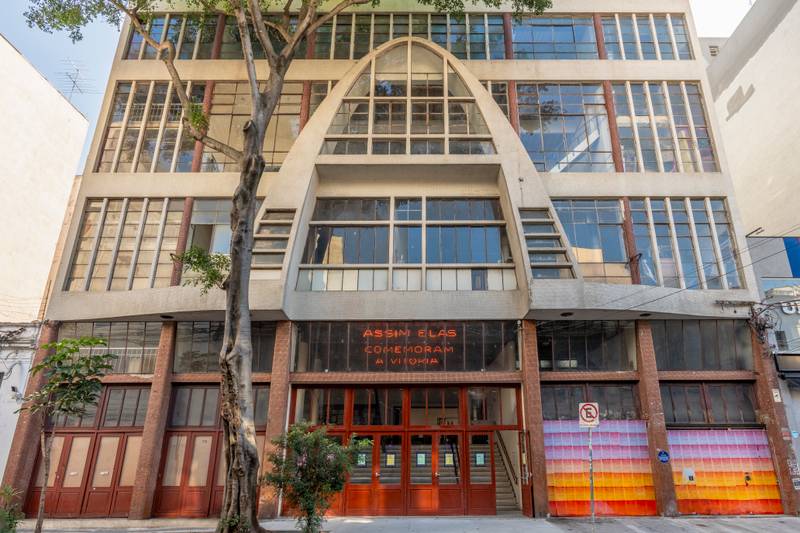
Casa do Povo—literally “House of the People”—was founded in São Paulo in 1953 by Jewish immigrants. Its original aim was to preserve the culture and memory of the violence endured by displaced Jewish communities throughout the twentieth century. It fostered activities such as a choir, a school, a newspaper, and political gatherings that aimed to promote Jewish traditions in social terms rather than religious ones. Nowadays, the institution aligns not only with its Jewish past but also with the trans, northeastern students, artists, and many others who live in the neighbourhood, as well as other oppressed ones, such as the Palestinians facing genocide in Israel.
The founding group was aligned with communist perspectives and with the progressive wing of Judaism. The choice to promote Yiddish—the language of the diaspora—rather than Hebrew— associated with a promised or messianic land—was not incidental. Many of its members were also connected to antifascist Jewish associations. This political positioning contributed to the decline of the institution during the Brazilian military dictatorship (1964–1985) and its oppressive behaviour.
In the early 2010s, after three decades of relative dormancy, a group of former participants, new sponsors, curators, artists, and collectives reactivated the house, reshaping it as an open structure connected to the neighbourhood and to other migrant communities. Bom Retiro—loosely “Good Shelter”—is the neighbourhood where Casa do Povo is located and has long been marked by successive waves of immigration. Throughout the twentieth century, it hosted Greeks, Arabs, Armenians, British, Italians, Portuguese, Lebanese, Koreans, Bolivians, Peruvians, Jews, and migrants from Brazil’s Northeast that suffered from waves of drought and impoverishment. In the twenty-first century, Chinese and Syrian communities joined this landscape. The area is known for its textile commerce and, consequently, for its multiplicity of foods, accents, and social practices. It also sits near major cultural institutions such as the Pinacoteca do Estado de São Paulo and SESC Bom Retiro, as well as technical schools and universities. At the same time, it faces growing social inequality and an increasing homeless population.
The revival of Casa do Povo in 2013 did not occur in a vacuum or in nostalgic pursuit of a lost past. São Paulo had changed, facing the groundbreaking protests for a zero-charge bus ticket, promoted by Movimento Passe Livre (MPL), which triggered a series of protests against several other political problems, such as education or corruption, which became known as the June Days of 2013, a movement that started with leftist purposes that soon were appropriated by far-right-wing debates. The neighbourhood had also changed: the interest of artistic communities and middle-class people in that context had created an increasing, albeit slow, movement of gentrification. Art institutions often bring risks of detachment from local realities, and several of them were being created in the center of the city at that time.
The meanings of the Jewish community in Brazil have also shifted, for even if the violent marks of displacement are central to their history, Jewish communities in Brazil have generally become established within the middle and upper classes, which places them in a position of privilege in relation to other displaced and persecuted communities in the country, such as Black and Indigenous ones. The country itself was entering a politically tense period, which came to a head in 2017 with the rising popularity of Jair Bolsonaro, a former president who is now imprisoned for an attempted coup, marking a sharp turn away from eight years of progressive governance toward a conservative backlash.
Casa do Povo could have ignored these tensions in favour of consolidating institutional power. Instead, it adopted another posture—not without mistakes or contradictions. It preserved a “minimal institutional structure,” as curators Ana Druwe and Benjamin Seroussi write in the book Modos de fazer, while keeping it porous: filtering what enters and leaves, yet allowing itself to be transformed by these exchanges. As they write, the challenge is “to look for a minimal unity of institutionalisation to reinvent it without the need to always begin again, as if it were the first time.”
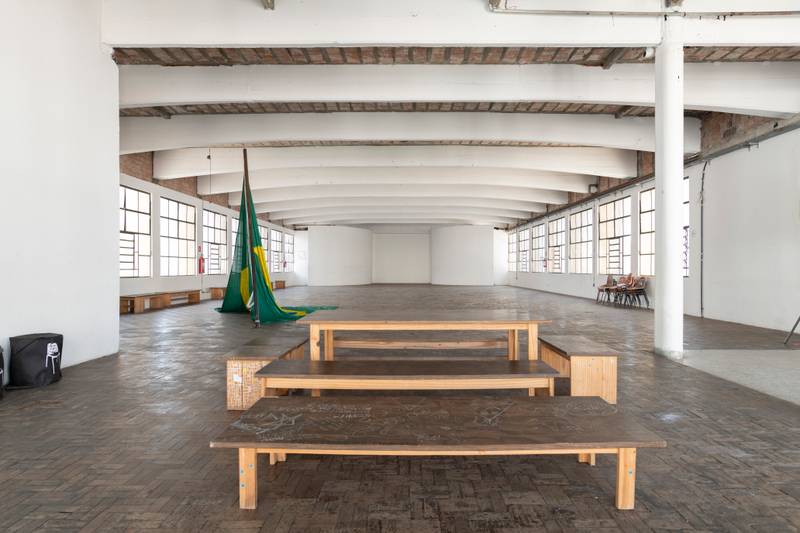
Since its reactivation in 2013, after nearly thirty years of inactivity, the building itself has remained largely unreformed, carrying its marks and limits, which is not just an economic or aesthetic decision, but, centrally, an ethical one. The architecture mirrors the institution’s mission: to preserve memory while transforming it into the path to new relations. “The past as a tool to build futures.”
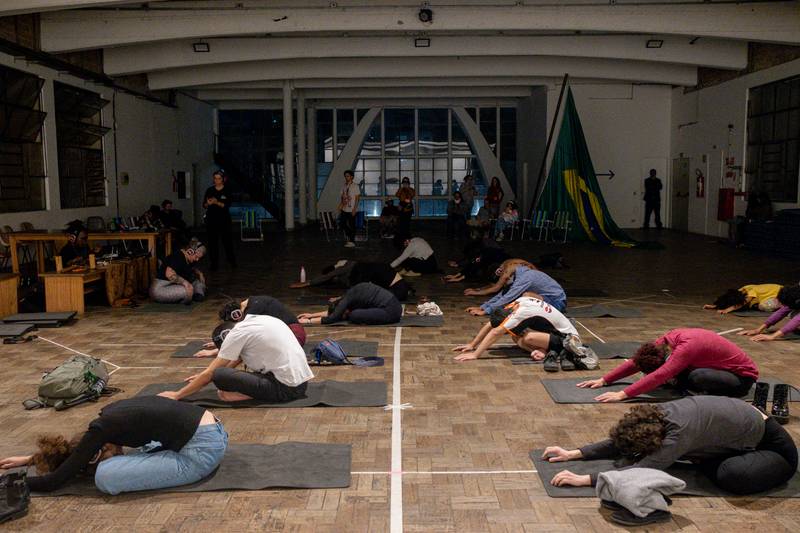
Yoga classes
Ways of doing
Released in 2025, the book Modos de fazer, which was officially translated to English as An institution in the making1, gathers a selection of projects, collectives, exhibitions, and social initiatives developed between 2013 and 2023—a symbolic year in Brazil, marking the beginning of President Lula’s third term after the far-right government of Jair Bolsonaro. Organised in a relatively chronological structure and produced in less than a year, the book is composed largely of testimonies and interviews with the “people of the house,” as participants are called. Perhaps those accounts could be more balanced with external views and critical analysis, bringing different tones and nuances to the debate. Nevertheless, the publication is divided into three sections. The first, Modos de fazer (Ways of Doing), describes how twelve projects were developed and in what contexts. The second, Modos de habitar (Ways of Inhabiting), gathers fourteen accounts from council members, collectives, artists, and technical staff, narrating how they engage with the space, with one another, and with the neighbourhood. The third, Outros modos (Other Ways), brings together reflections by four international collaborators on alternative ways of building institutions.
The graphic design is done by Laura Daviña, herself a member of the collective Parquinho Gráfico—loosely “Little Printing House”— and part of the council. The project embodies the institution’s logic: On the one hand, there is structure; on the other, openness to overlaps, interruptions, detours, and even misunderstandings born of friction. Throughout the book, among the accounts and interviews, cards and entries with words and expressions interrupt the narrative flow, appearing with their definitions according to the collective agreements developed by the people of the house. “Agreement” is a particularly striking one: a shared and negotiated version of what might otherwise be an authoritarian “rule.” Other key terms include alterity, open floor plan, protest music, table, living monument, place of memory, hospitality, active listening, doubt, and commons. Those concepts guide the house’s functioning and the relationships among those who inhabit it, whether for a theatre rehearsal, a boxing class, a choir performance, or a political meeting without headquarters. The plates of images also overlap in sequences that suggest contamination among projects, reinforcing the idea of continuity among the initiatives.
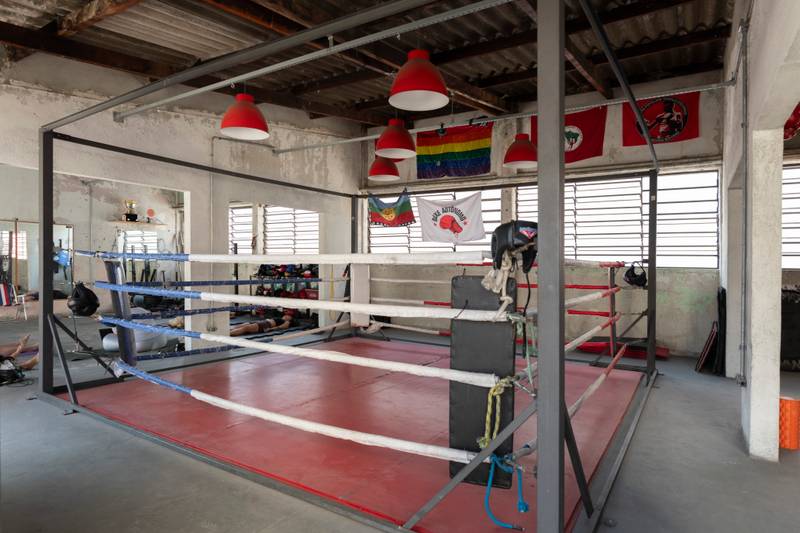
Boxe autônomo
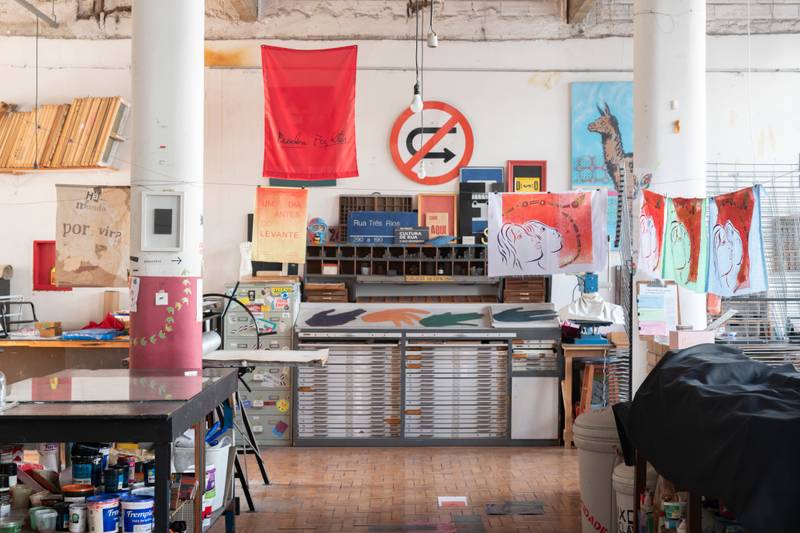
Parquinho gráfico
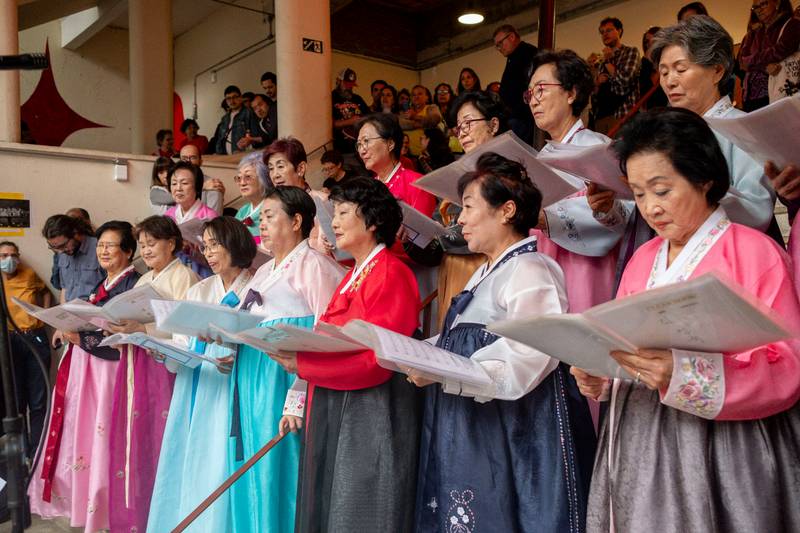
Corean mother’s choir
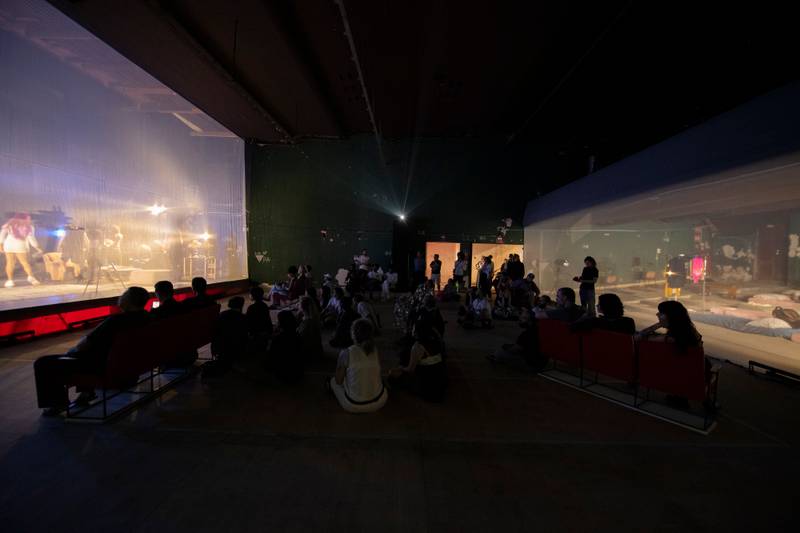
Grupo Mexa
Organising the Organic
The groups that inhabit the house—‘inhabit’ being a crucial word, since this is not a relationship of mere use or consumption—hold keys to the building and are responsible for everyday tasks such as cleaning and making coffee, acting within collectively defined parameters. One can imagine the laborious mediation such openness requires, and even though specific tensions are not mentioned in the book, there are several nods to the daily conflicts and negotiations, especially when contrasting the different points of view in the publication. If some institutions impose rigid, top-down programmes, Casa do Povo adopts a more organic model, resembling a plant that gradually turns toward the light. It is telling that “organisation” and “organicity” share a linguistic root.
The space and its social, historical, and cultural contexts are central to its programming and transformation. Casa do Povo also continually redesigns its governance model, which is neither purely horizontal nor vertical. Different instances of decision-making, dialogue, and critique intersect in a singular dynamic. Discontinuities are embraced in favour of life rather than rigid structures that privilege power over people. Decisions may be temporary yet meaningful or discreet yet transformative, whether for someone learning about food education or for a group of seamstresses producing masks during the Covid-19 pandemic. If such an arrangement sounds romantic, perhaps the institution’s merit lies not in achieving a perfect organic harmony but in sustaining dissent within apparent homogeneity. This sharply contrasts with museums and galleries that simply present predefined programs to a generalised, abstract, and passive audience.
The house’s vibrancy may make it more properly inhabited by artists working with the body and movement, such as performance, theatre, and music making, rather than by those focused on contemplation. Few exhibitions appear in the book, and those selected tend to carry an explicit, if sometimes subtle and linguistically complex, political dimension. Beyond exhibitions, Casa do Povo also hosts student assemblies, sewing pattern archives, an open psychoanalysis clinic, and other initiatives that allow it to be political without being partisan.
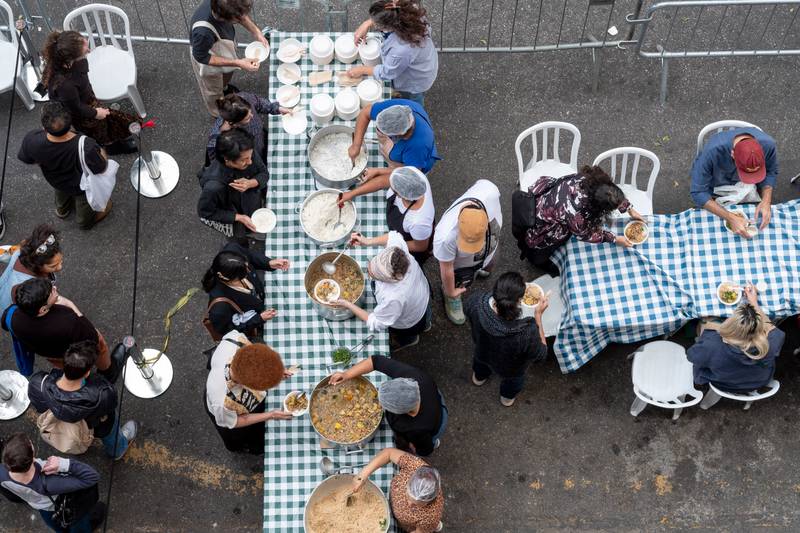
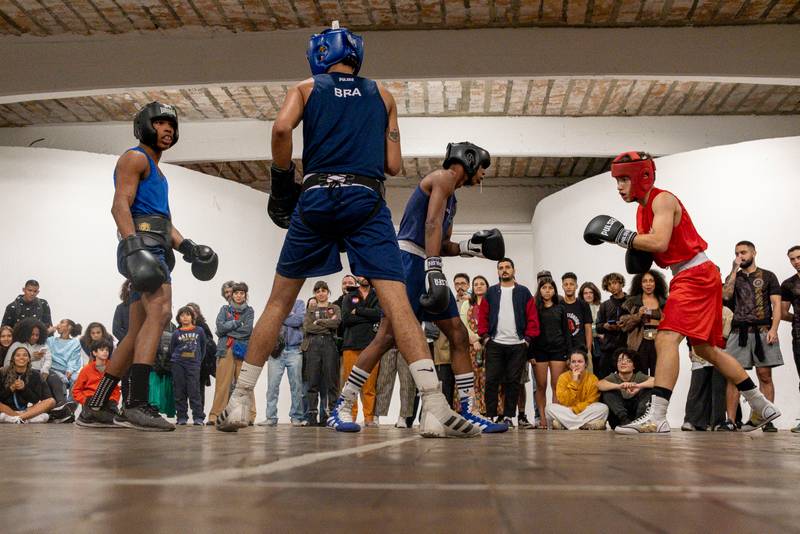
Boxe autônomo
Tactical Dependence
In operational terms, such openness is demanding. Benjamin Seroussi proposes the idea of “tactical dependence” instead of “independence.” He says, “There is no such thing as a truly independent space—nor should there be. We want to depend on the context we help to create. We want interdependence with other initiatives. In the absence of grand strategies, building autonomy requires that we carefully choose our dependencies.” 2 This implies cultivating relationships with sponsors and institutions based on shared values rather than marketing logic or tokenism—a recurring problem in the art world, where communities are often instrumentalised while labour and environmental abuses persist.
Where art is often used as compensation for political impotence, at Casa do Povo, the symbolic and the real dimensions are blurred. Art does not replace politics; it coexists with it. As researcher and artist Diogo Moraes—himself a member of the council— writes in the text Casa do Povo and Its Social Foundations: A Culturally In(ter)dependent Institution,3 “Each source is an alliance, shaping what the institution is and what it can do, say, and dream.” Therefore, the search for supporters is not pursued at any cost. On the contrary, it is guided by carefully constructed criteria, since it necessarily generates “dependencies,” and these must not obliterate the institution’s political commitment to critical thinking.
it is interesting to note the position the house took after October 7, which was to denounce what is happening in Gaza as genocide and to affirm that there is no contradiction in a Jewish institution taking a stance in support of Palestine. At the same time, the house sought to explain to the community what Israel has historically been, since Zionism is clearly a colonial project.
In an interview conducted for this text, Benjamin Seroussi suggested that his training in ethnology, particularly his engagement with authors such as Bruno Latour, informed his view that there is no distinction between what one is and the networks one constructs. “It’s not possible to separate fundraising, revenue generation, and curatorial work, because they are intertwined, even though they are not flattened into one another.” He says. “What defines the institution is precisely who it depends on and how. There is a wide diversity of income streams at Casa do Povo, which ensures a greater degree of autonomy. We use the same tools that are available to everyone: the Rouanet law4, friends’ programs, foundations, contributions from people of the house when they have the means, occasional rentals, fundraising events, among others. What may be exceptional is that we draw on many of these fronts at once, which is uncommon for a small institution, and we work extensively with individual donors, which perhaps distinguishes us from other institutions that rely more heavily on corporate support. The house is largely sustained by the individuals who pass through it, and these questions are addressed in the annual reports.”
The nineteen collectives that hold the keys to the space do not necessarily have to contribute with counterparts to inhabit the house, but, occasionally, when they have means, they contribute however they can. The programs developed by the house’s curatorial team rely on their own budget, which includes the fees for invited artists and collectives that may even be the ones that inhabit the space. All of this includes lots of negotiation, which implies a kind of subjectivity that is open to it and to other points of view.
In this sense, it is interesting to note the position the house took after October 7, which was to denounce what is happening in Gaza as genocide and to affirm that there is no contradiction in a Jewish institution taking a stance in support of Palestine. At the same time, the house sought to explain to the community what Israel has historically been, since Zionism is clearly a colonial project. “Casa do Povo has never been on the side of power, and this is in the house’s state. It does not align itself with certainties and instead embraces contradictions and dissent. There is no dialogue without conflict. So, within clear limits — antifascist, pro-democracy, and anti-racist, as stated in the institution’s charter — we welcome these contradictions.” Since then, they lost two wealthier patrons but gained almost forty, usually people from the middle classes and connected to decolonial agendas who understand the importance of the house.
A refreshed Jewish institution
The book historicises Casa do Povo without presenting it as a dogmatic model. One of its greatest merits is making its internal functioning explicit—a rare gesture in the opaque politics of cultural institutions and their public-private arrangements. With so many institutions shaped by centralised—ultimately colonial—models that merely impose a programme onto a space without necessarily building a deeper relationship with the community in that context, transparency in governance, access, influence, and participation seem to open up alternative political possibilities between institutions, publics, artists, and other agents within this dynamic.
Despite its Jewish origins, Casa do Povo maintains a deep connection to the neighbourhood and its diasporic communities today. “If Jews were seen as ‘others’ in Europe in past centuries, a diasporic Jewish home in the twenty-first century must be open to radical otherness.” Autonomy, trust, and alterity form the roots of its institutional politics. Beyond exhibitions and collaborative projects, the house’s greatest achievement may be its engagement with a specific community: the neighbourhood of Bom Retiro itself.
In issue 1025 of the journal Nossa Voz—literally, Our Voice—Casa do Povo published the text “We Need New Jewish Institutions” by Arielle Angel, editor of Jewish Currents, in which she argues for the necessity of new spaces and frameworks for the exploration of an antifascist Jewish life. Founded to preserve the culture of a historically oppressed group, Casa do Povo does not restrict itself to safeguarding Jewish traditions; it welcomes those who approach the house: trans performers in theatre collectives, migrant workers, designers, political activists, and many others. Judaism itself contains multiple currents, being, in a sense, a historically multicultural culture. Today, tensions between Zionist and non-Zionist perspectives are especially visible with the genocide in Gaza. Casa do Povo’s symbolic reference is less the religious dogma of the first than the political resistance of the last, such as the Warsaw Ghetto Uprising, which is annually remembered and celebrated by the people of the house, but in new and more contemporary approaches, such as collective lunches. Whereas art is often deployed as symbolic compensation for social and political crises, at Casa do Povo the boundary between symbolic and real seems temporarily blurred to open a progressive future while recognizing its traumatic past.
-
 READ
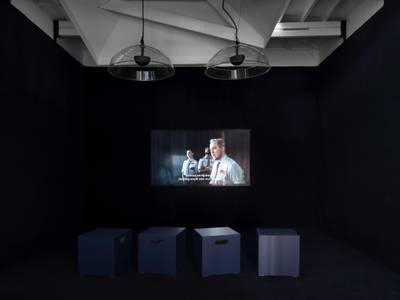
READClose Watch exhibited at the National Finnish Pavilion at Venice Biennale, 2022, is a multimedia installation that, at its core, utilises the artist themself as an embodied intervention within a focused area of artistic research and apparent critique. In the context of this work presented as an exhibition at the national pavilion and its implications of somehow representing Finnish Art, this text seeks to question whether issues pertaining to embodiment and social intervention – and by extension, research conducted and artistic practice developed through it – can ever be free of the power relations implicit in the political, identity-driven understanding of society today.
Who Watches Whom? Ruminations on Power, Gaze, and Field Through Pilvi Takala’s Close Watch
-
 READ
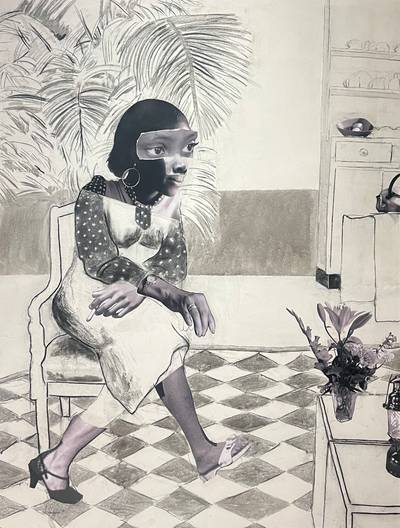
READThe struggle and violence that When We See Us attempts to circumvent is not self-inflicted. The exhibition as a format presents liberal humanism’s trajectory, highlighting how it is, at its foundation, a vehicle for a particular genre of being. To highlight joy through liberal humanist grammars contributes to this trajectory. In times of concurrent genocides, in an effort to interrupt liberal humanism, it would be more honest to acknowledge and take a critical position against it.
Black Joy™ in the White Cube: A Review of ‘When We See Us’
-
 READ
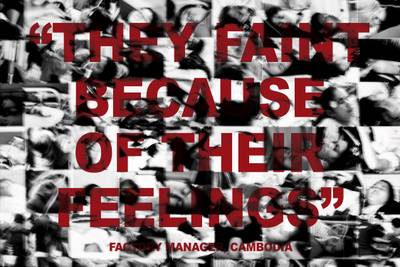
READIf the problems that individuals face in their personal lives are rooted in systemic issues, then it is unrealistic to expect them to find lasting solutions solely through individual self-improvement efforts. Individual change is not simply a matter of personal effort but is also shaped by the broader social conditions that individuals find themselves in. Abril’s work highlights this hypocrisy of the oppressor in a perverted patriarchal society in which women are blamed and ridiculed for showing symptoms of distress—Mass Hysteria.
Our Bodies Protest on Our Behalf: A Review of ‘Laia Abril – On Mass Hysteria’
-
 READ
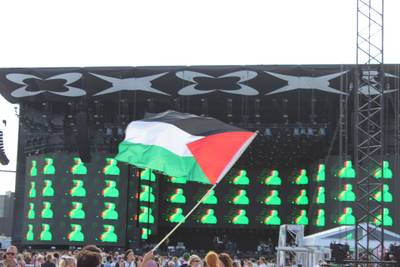
READHow will Flow Festival respond to criticisms about its relationships with its free workforce, security contractors, Helsinki Police and its Zionist holding company? Will it align with or distance itself from the actions and affiliations of its financial backers?
Flow Festival: A Retrospective