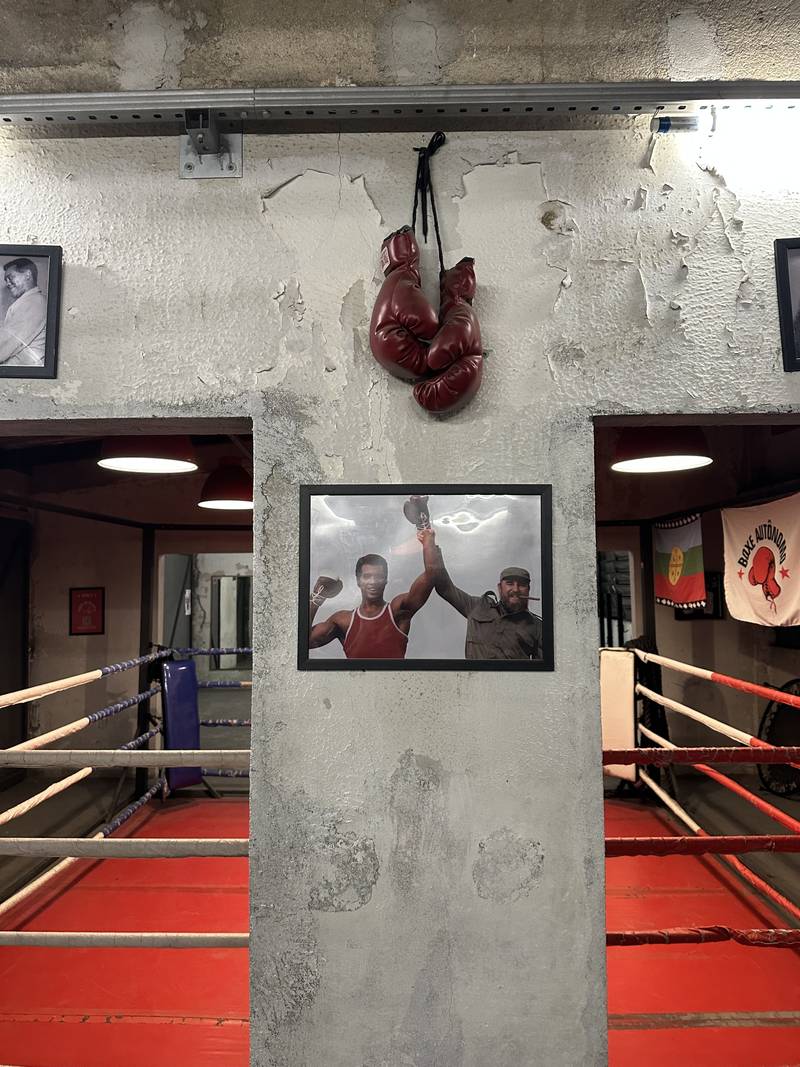
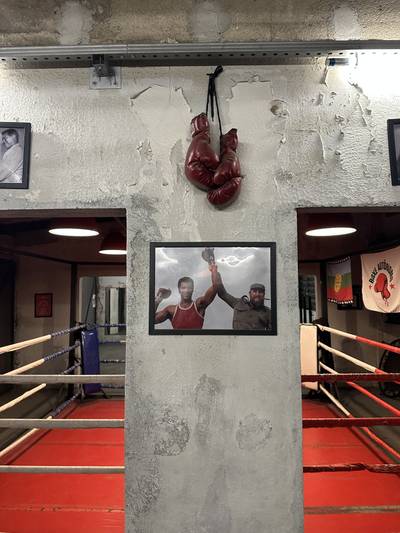
Boxe autônomo at Casa do Povo, 2025
Elham Rahmati (b. 1989, Tehran) is a visual artist based between Helsinki and Tehran. She is the co-founder and co-editor of NO NIIN, an independent online monthly magazine at the cusp of art, criticality, and love. She has worked as the curator and producer of the Academy of Moving People & Images (AMPI), an independent film school in Helsinki, and as a curator at Third Space. Elham holds an MA in Visual Arts from the Accademia di Belle Arti di Firenze and an MA in Visual Culture, Curating, & Contemporary Art from Aalto University.
NO NIIN Issue 34: To Make the Problem a Horizon of Counter-conduct is a collaboration between NO NIIN and Celeste — a Brazilian contemporary art and culture magazine. The issue grew out of a study trip to São Paulo and Rio de Janeiro, supported and organised by Frame Contemporary Art Finland and the Finnish Cultural Foundation. Our guide, Camilla Rocha Campos, had listened carefully to each participant’s interests and curated a program that gave everyone something they were looking for. In my application, I had expressed two particular interests to pursue in the trip: getting to know the art criticism scene, and understanding what grassroots art and cultural initiatives in these cities look like.
In the first couple of days, I met Celeste’s editor, Paula Alzugaray, during a visit to their office on the opening morning of the São Paulo Bienal. She showed me the book edition Arte e Política, its cover carrying Time Magazine Lula. I opened it and within moments came across articles on Rojava and Palestine — and immediately knew I had come to the right place. To find a long-running magazine with a similar critical internationalist approach to arts to NO NIIN was exciting enough that I asked Paula on the spot for a meeting and proposed a joint issue. I didn’t yet know what it would contain, but I was certain we’d figure that out. We met the next day at the Bienal, and luckily she was equally keen.
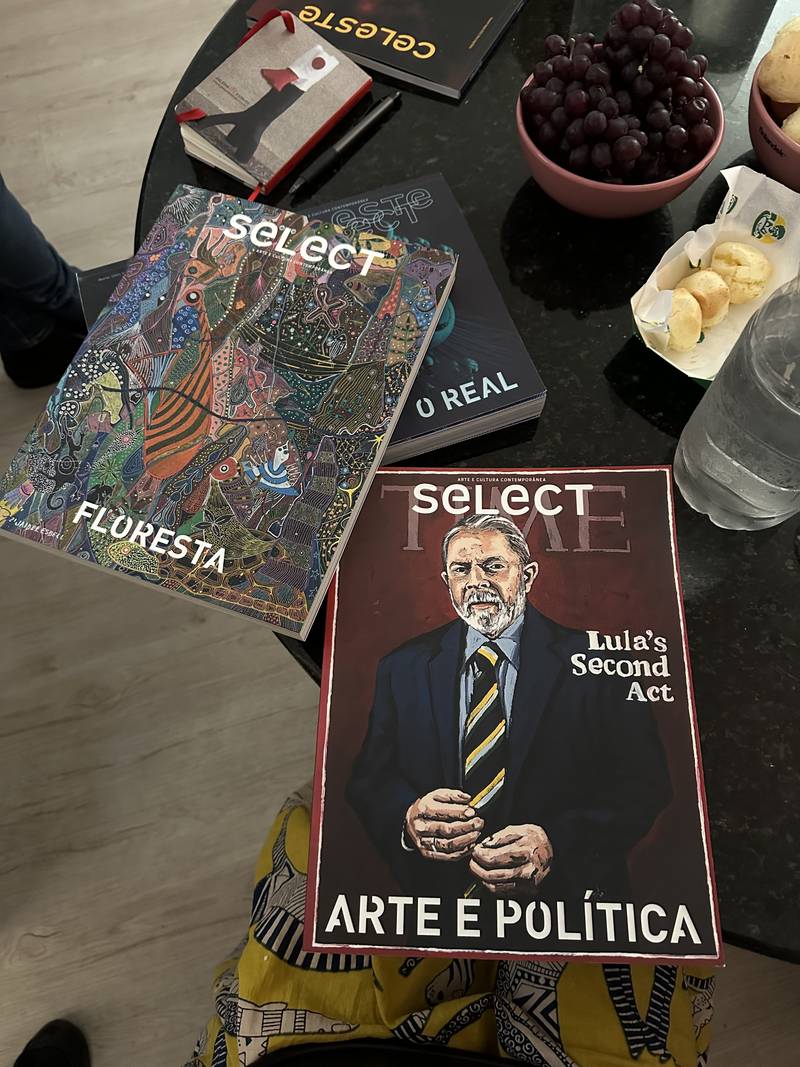
Arte e Política, the print edition of seLecT_ceLesTe magazine published in 2022
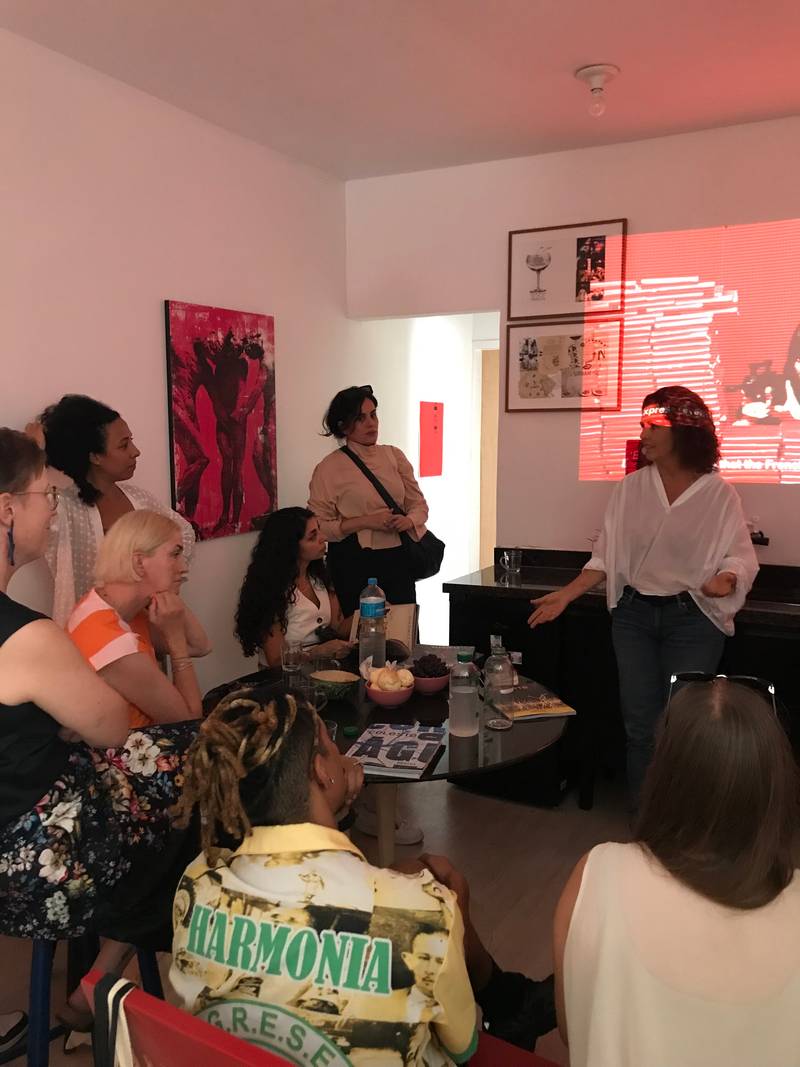
Our visit at Celeste’s office
In the days that followed, beyond the Bienal, we visited many spaces: Casa do Povo, literally “House of the People,” an anti-Zionist Jewish institution in the Bom Retiro neighbourhood. Founded in 1953 by Jewish immigrants to preserve the culture and memory of displaced Jewish communities, it had gone dormant during the military dictatorship before being reactivated in 2013 — not as a museum of its own past, but as something alive and porous: a space where as many as twenty collectives comprised of a Yiddish choir, trans theatre collectives, a boxing academy, political assemblies and much more coexist, and where the neighbourhood itself is understood as a co-author of the institution. There, I asked Benjamin Seroussi, the institution’s artistic director, what had changed for them since the genocide began. He corrected me immediately: the genocide didn’t begin on October 7. It began with the occupation.
That idea of porosity of an institution that holds its history without being imprisoned by it, stayed with me as we met JAMAC, the Jardim Miriam Arte Clube. Founded in 2004 by artist Mônica Nador and run collectively by artists and educators, JAMAC operates from the conviction that art and life are not separate registers and that aesthetics and politics, education and community, are always already entangled. This extends to how resources circulate: any commission or opportunity that comes to JAMAC is shared with the community rather than retained by its founders or facilitators. It was a reminder of something that should be obvious but rarely is: that collective work is only genuinely collective when its material benefits are collective too.
From there, something shifted in how I was seeing the relationship between institutions and their communities, between art and politics, between care as an ethic and care as a practice, and it only deepened when we met Vilanismo, the Brotherhood of Black and Favela Men in Contemporary Art. Here was a formation that rejected the category of collective in favour of something older and more radical: a brotherhood rooted in Afro-diasporic traditions of mutual care, hacking the archetype of the “villain” as peripheral Black man into a philosophical framework and a pact of solidarity. They were also clear about their influences: Black women, they said, had been their most crucial references — making clear that this reimagining of Black masculinity toward care, tenderness, and solidarity does not emerge in isolation, but is shaped by and indebted to a longer tradition of Black feminist thought and practice.
Later, we reached Rio and visited Lanchonete<>Lanchonete, in Gamboa, in the region known as Pequena África. A counter-colonial contemporary art practice rooted in the territory’s Black and Indigenous ancestry, built not on institutional charity but on a radical two-way alliance with communities historically excluded from the art system: the same refusal, the same insistence, arriving from a different place. When we met Thelma Vilas Boas, who initiated L<>L in 2016, she offered an interesting comparison: the Evangelicals, she said, had understood something that the left and the art world had not. By building a chapel in every neighbourhood, they forged real, sustained connections with communities — they were present. She believed that artists and cultural workers, rather than chasing opportunities within institutions, should have used their knowledge, proximity and skills to do the same: to grow closer to people, on their terms, in their territories.
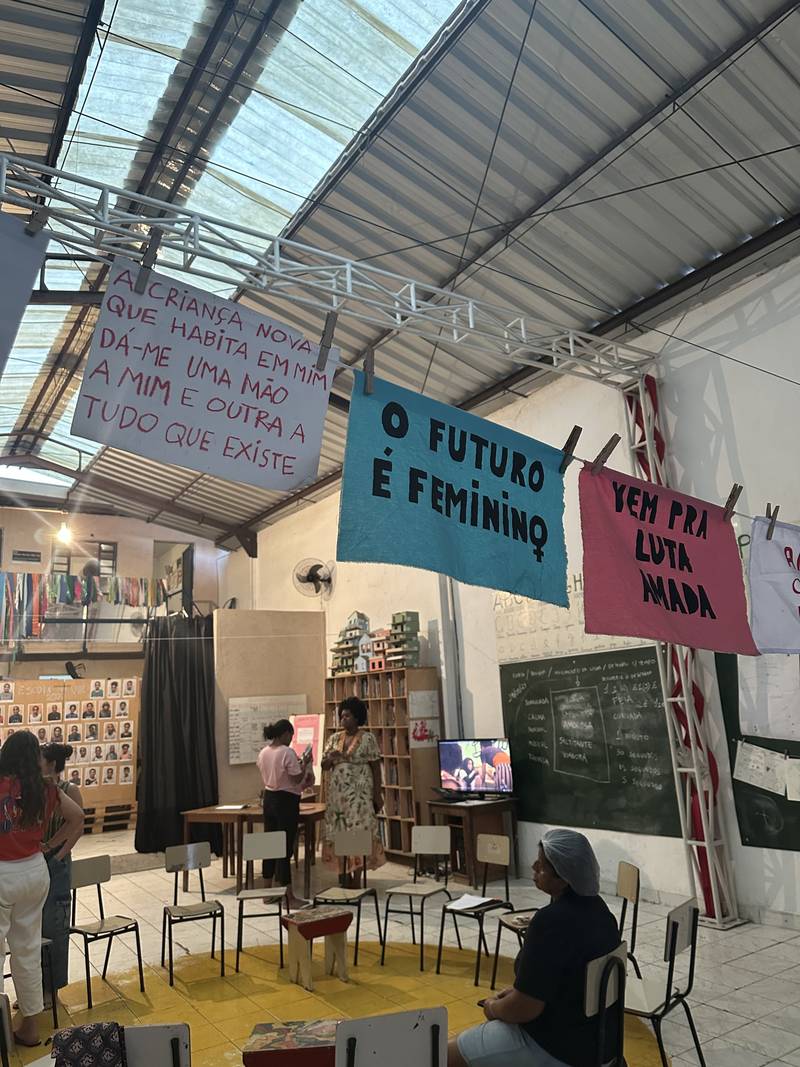
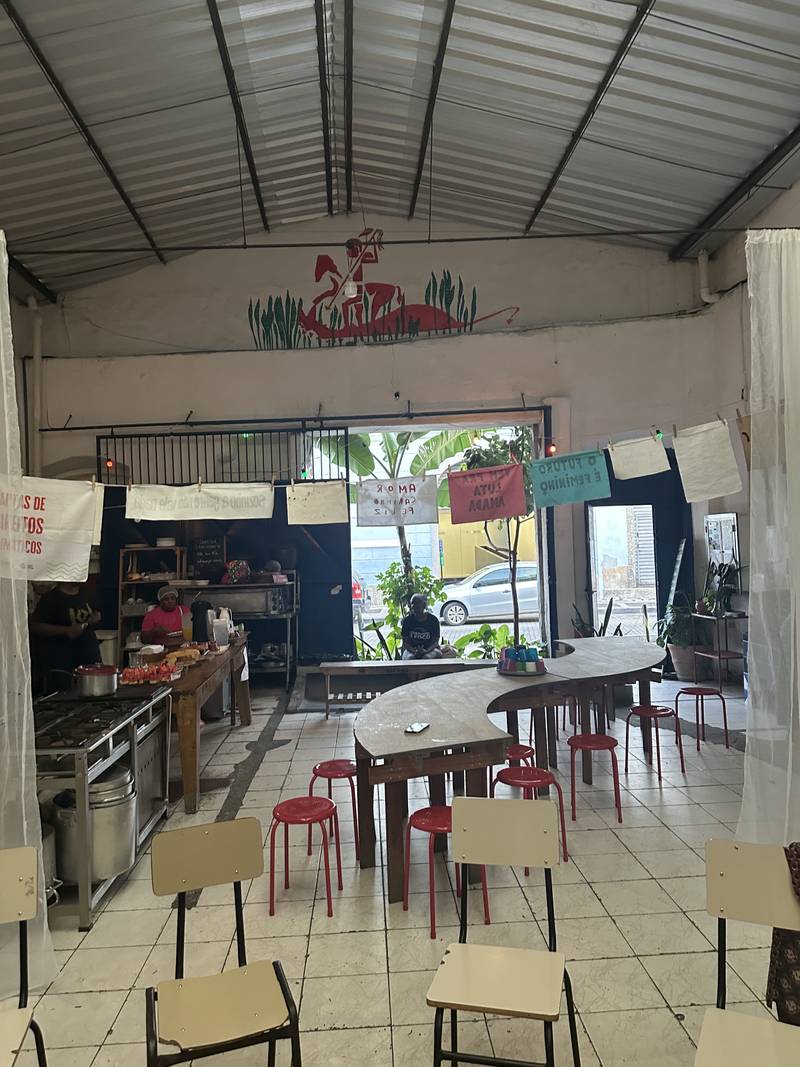
Lanchonete<>Lanchonete in Pequena África, 2025
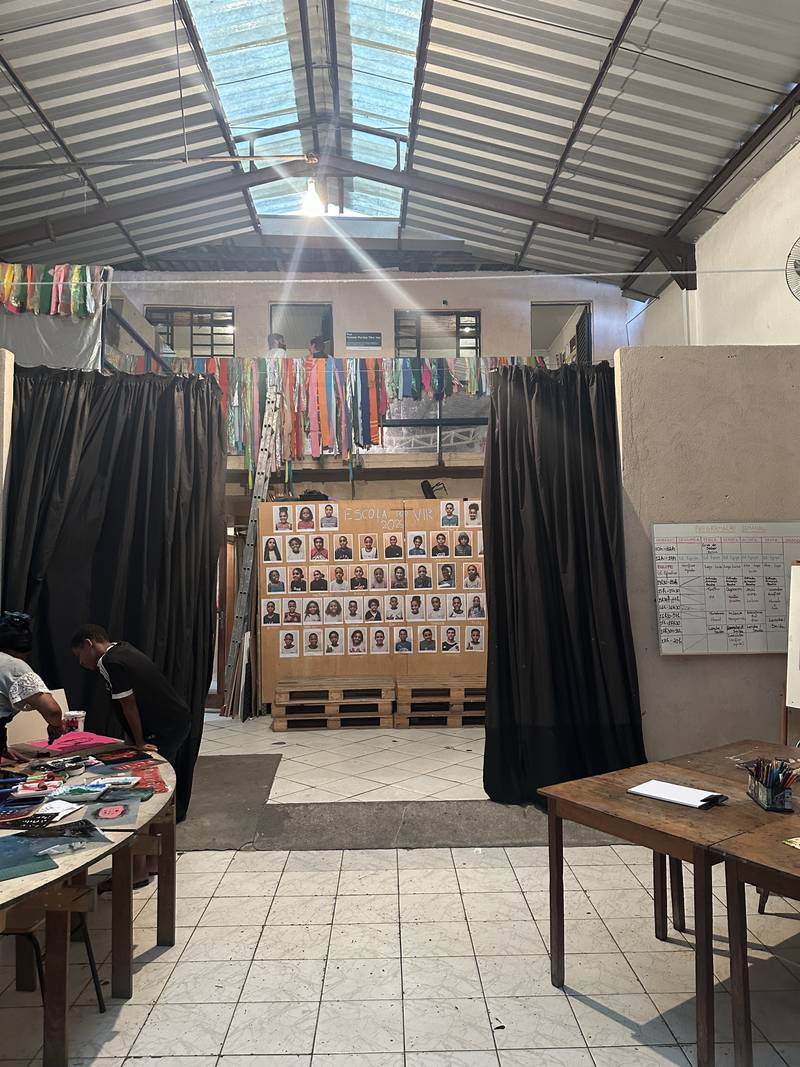
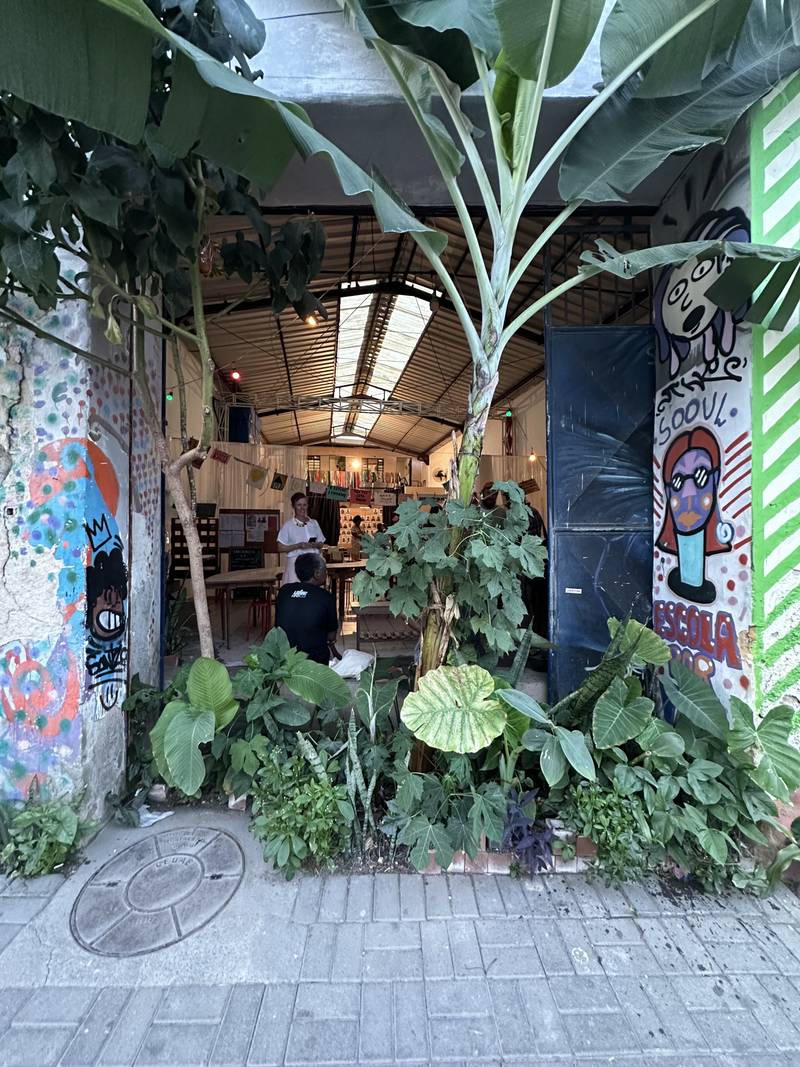
Lanchonete<>Lanchonete in Pequena África, 2025
Through the Bienal–which Joonas Pulkkinen has wrote an interesting review of–, museum visits, and through conversations and encounters with works I hadn’t anticipated, I found myself confronted with the extraordinary richness and depth of Indigenous art and thought in Brazil. Their presence is pedagogical, as curator and artist Naine Terena puts it, in the fullest sense of the word. A presence that doesn’t merely occupy space within existing institutions but puts pressure on the very conditions that define what counts as art, who gets to make it, and on whose epistemological terms. What I saw in works that refused the separation between the human and the more-than-human, in cosmologies where rivers and seeds carry memory, in languages reasserting themselves against centuries of erasure, laid bare how deep the colonial wound in Brazil runs, and that Indigenous artists and communities are not waiting for institutions to heal it.
At Celeste’s office, I also met Dora Longo Bahia — some of her zines were spread across the table, and one of her video works, New Babylon (2024), was screening in the background. Paula mentioned that the last three issues of Celeste had been titled “To Destroy the Interview,” each one exploring alternative formats for conversation and dialogue. It was only natural, then, that the interview with Dora Longo Bahia included in this issue takes the form it does: a dialogue where every question and answer is composed of plagiarized, copied, or modified texts — because plagiarism, as Dora argues, is not theft but the undoing of property itself. I’ll admit I tend to be cautious about experimental interview formats. At their worst, they risk becoming exercises in formal cleverness that leave the general reader behind, more impressed with their own structure than with what they have to say. But I’m glad Paula brought this one into the issue. The form here is inseparable from the argument: to make art politically demands that even the interview, that most convention-bound of forms, be put under pressure.
This issue could not conclude without shining a light on Celeste magazine itself. Reading Paula Alzugaray and Juliana Monachesi’s conversation, one is reminded of how crucial it is for a periodic editorial publication to listen, to evolve, and to resist the temptation of its own established identity. Celeste began in 2011 as seLecT and has since undergone a transformation that mirrors the shifts in Brazilian society: from a magazine whose early covers featured white artists from elite backgrounds, to one that places Ayọ̀kàndé’s AXÉ in neon on its fifteenth anniversary issue; from a Debordian critique of spectacle, to a full embrace of decolonial thought and Indigenous epistemologies. What Paula describes is not a magazine that simply follows culture — it is one that understands itself as part of it. The commitment to periodicity, to duration and continuity, is itself a political act in a neoliberal context designed to make such commitments unviable. That Celeste has sustained this for fifteen years, through precarity, political ruptures, and the loss of sponsors, is what Paula and Juliana call acrobatic skills. I would call it something closer to necessity.
NO NIIN Issue 34: To Make the Problem a Horizon of Counter-conduct came together while I was in Iran, navigating internet shutdowns, deadly protests, and ultimately the ongoing US-Israeli war of aggression on Iran. The conditions under which this editorial was written are not incidental to its content, they are part of the same continuum this issue traces. I am grateful to this issue’s co-editor, Paula Alzugaray and all the writers of this issue for their patience and their invaluable contribution to NO NIIN. May all of us resisting colonial and imperial violence in their myriad forms, continue defying the odds and insist on building connections and networks across continents, for every act of liberation is entangled with another — somewhere, in a land we may never visit but whose struggle is already part of our own.
-
 READ
READAfter a long period of silence in live artistic acts since last year, we have realized how powerful live art can be to build a sense of kindness among strangers that are standing at the same place, same time, enjoying the same live act. A kindness that could be an initial point for a radical care action. Art can make visible that care is not only a human relationship, and that is the central point of the Baltic Circle Festival and this current Issue.
Guest Editorial / November 2021
-
 READ
READOur work is not separate from the life we are living: it is threatening and at the same time very very satisfying.
Editorial / March 2021
-
 READ
READNO NIIN Issue 34: To Make the Problem a Horizon of Counter-conduct came together while I was in Iran, navigating internet shutdowns, deadly protests, and ultimately the ongoing US-Israeli war of aggression on Iran. The conditions under which this editorial was written are not incidental to its content, they are part of the same continuum this issue traces.
Editorial: To Make the Problem a Horizon of Counter-conduct
-
 READ
READThe dual mode of imagination that an outsider is compelled to maintain is neither reductive nor simple. Their silenced voices are always looking to re-occupy the spaces which have been denied to them or are being appropriated by those who claim to speak on their behalf. These various types of knowledges must be able to be performed in our voices. At NO NIIN, we are looking at the peculiarities of urgent and necessary voices, their chaos, and meaningful instances of the contributors’ non-standard, personalized orthography of every issue.
Editorial / June 2021