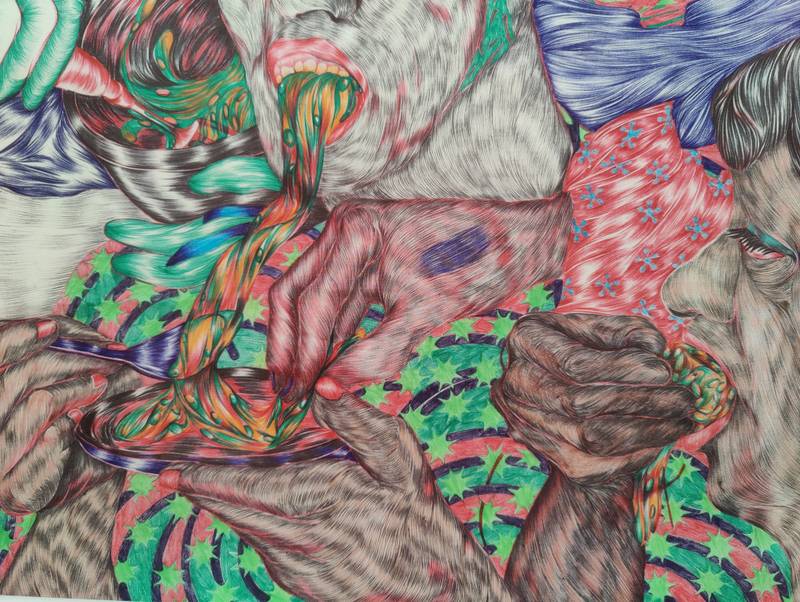
Drawing by Vidha Saumya
Vidha Saumya (b. 1984, Patna) is a Helsinki-based artist-poet. She is the co-founder and co-editor of NO NIIN – an online monthly magazine in Finland, and a founding member of the Museum of Impossible Forms – an award-winning cultural para-institution in Kontula, Finland.
Difficult life events can freeze us into hypervigilance. This microscopic focus detaches us from the world’s lightness and scale, narrowing our vision to immediate surroundings and breeding isolation. Caught in this fraught loneliness, I found myself seeking company, camaraderie, chaos, and friendship and wanting to jump into the “middle of processes.” Having followed Womanifesto’s work since 2022, they were the first to come to my mind in my yearning for connection. When I checked in on their work, I learned they were gathering at Baan Womanifesto (near Udonthani, Thailand) for a project titled SAAN SENSE. Speaking with them was an antidote to my dissatisfaction with the myth of the lone artist – the isolated figure in a studio obsessed only with formal questions. Talking to Nitaya Ueareeworakul, Jamilah Preenun Nana, Varsha Nair, and Ananya Patel introduced me to a practice rooted in the commonalities and everyday practicalities that gather to “doing it anyway”. Creating, collaborating, and coming together despite circumstances carries its inherent inertia, free from pre-approved notions of importance, moving continuously in defiance of traditional hierarchies, and in reliance on each other’s friendship.
Equipped with this perspective, I looked up Memasak Harapan, a publication I had bookmarked, and contacted one of its contributors, Asri Pratiwi Wulandari, with whom we explored how feminist practices could be analysed through the framework of the “kitchen” – both in Gerwani’s editorial and organising methods and within the actual kitchens of ex-political prisoners held after Indonesia’s 1965 massacre. This exploration became the opening essay of NO NIIN’s Issue 36, revealing the pragmatic ways care and intersectionality were deployed under extreme constraints, decades before institutions co-opted these terms. What we document now preserves a historical snapshot for future generations, as Api Kartini did for the writers and editors of Memasak Harapan, proving that past methodologies of revolution remain entirely pertinent and political. Drawn to this form of intergenerational learning from our elders, which allows ideas to be updated, conversations refreshed, and collective practices strengthened, it reiterated the role and responsibility of publishing practices in revisiting established practices and in resisting draconian laws and censorship.
Censorship is not a region-specific issue but a global reality, and it is not limited to media. As right-wing shifts accelerate worldwide, artists operate under a thickening cloud of surveillance that dictates how and what they can create. Yet, artistic production cannot be stopped. The urgent question becomes: how do you express yourself without resorting to self-censorship? How do you subvert the narrative? This inquiry led me to Hung Duong, an independent writer whose collaborative mappings of Southeast Asian artmakers expanded my perspective. I invited him to write an essay anchored in this framework. Our dialogue produced a compelling proposal focused on subverting state censorship. This approach, in kinship with NO NIIN’s ethos, rejects the reductionist gaze that often views art solely through the lens of sociopolitical trauma. The objective is not to canonise or dismiss, but to foster genuine, open-ended critique, which his essay traces through the strategic process by which artists bypass expected confrontations as a precise, tactical choice to keep the focus on what matters, carving out elastic new modes of language.
This tension is exactly what drew me to Marisa Srijunpleang’s work. On the surface, a distinct elasticity defines the Thai-born multidisciplinary artist’s practice. In contemporary art, design, and culture, engaging with nature or ecology is familiar, offering an accessible, soft entry point for the viewer. I have often ruminated on the force and intelligence of these gentle approaches to confront themes that are painful, insidious, and rooted in historical events. While nature is inherently tied to geography and politics, I wanted to understand how its imagery and material can convey geopolitical violence. It forces us to ask: How does remembering shape the construction of a memory the artist herself never lived? How does the material of landscape carry geopolitical violence without announcing it? Seeking answers, I reached out to propose an interview, and Marisa brought into the conversation Fahmui Pimpakaporn Pornpeng, a curator who already knew her practice intimately. NO NIIN has facilitated similar pairings in the past, connecting individuals familiar with each other’s work, which allowed the discussion to skip the usual introductory formalities and dive straight into the heart of the practice.
In an exploration of regional visual history, Zhuang Wubin revisits the first decade of Asia Magazine, the Hong Kong-based pictorial weekly that ran from 1961 to 1998. The publication pioneered the concept of a free Sunday magazine focused heavily on photography and vibrant colour images – media formats that were entirely novel to print culture in the early 1960s. Distributed across the region’s English-language newspapers, it aimed to show Asia to Asians. Zhuang’s essay traces the magazine’s founding, highlights its strong Filipino photographic influences, and examines the distinct visual culture it shaped. Ultimately, recovering this 1960s experiment allows us to ask a critical question: what specific image of “the East” was being constructed and presented in the process?
Moving beyond the search for a single universalism, A. X. anchors their exploration of worldmaking within the kaleidoscopic imagination of Minahasan artist Natasha Tontey. I became aware of Natasha’s practice when news of The Phantom Combatants and the Metabolism of Disobedient Organs, set to premiere at Ateneo Veneto for the Biennale di Venezia – 61st International Art Exhibition, circulated in my news feed. The larger-than-life, fantastical images made me curious, and, pushing back against a simplistic reading of the work as an over-the-top visual spectacle, I wanted to understand why their practice refuses an easy review. The images and videos are far from subtle – they are mischievous, almost violent in their direct refusal of patriarchal and state narratives of power – taking rigid structures by the horns and twisting them. Rather than merely describing the spectacle, the research paper dives into the specific details of Tontey’s practice, linking it to broader cultural contexts and examining how the artist defies masochistic understandings of statehood. By leaning into their metabolic worlds, the paper traces the deep cultural and feminist stakes of this disruptive force and articulates what it means to move toward a dissident cosmopoetics. Finally, Kang-Chun Cheng reviews Tsou Shih-Ching’s film, Left-Handed Girl, a narrative that follows three generations who have migrated to Taipei. The review traces how the family navigates interpersonal relationships and intergenerational adjustment through a single, stubborn detail: a girl who is reprimanded for her left-handedness. In a society that views it as a stigma, she continues to use her left hand almost like an imaginary friend – attributing her actions to the “devil’s hand” after her grandfather brands it as such. The review unpacks how these deep-seated cultural beliefs, which often serve as protective charms to preserve identity amid unpredictable change, can also inflict lasting wounds, and what they reveal about perception, local communities, and the layers of meaning lived in the friction of those subjected to them.
While this issue’s regional focus is trained on Southeast Asia, the goal was never to produce a regional survey or look only within a certain geographic proximity. Instead, to offer distinct entry points that reveal how a vibrant artistic scene functions and what we can learn from it. Two core insights emerged from bringing this issue together. First, collective, repeated grassroots collaboration offers far greater potential than a hierarchical structure in which a select group dictates how a scene unfolds. Second, these articles show incredible agility in bypassing superficial talking points and anchoring themselves in the everyday. Here, artists navigate systemic constraints, including rigid censorship policies, state-vetted presentation requirements, and terminologies branded as threats to national security, while not allowing these pressures to define their practice – the work exists alongside and despite them. What emerges here is not a regional portrait, but a concrete demonstration of method, aligning with NO NIIN’s commitment to building internationalist solidarities – not in abstract declarations of connection, but in the specific, resilient methods by which people continue making, archiving, and speaking.
-
 READ
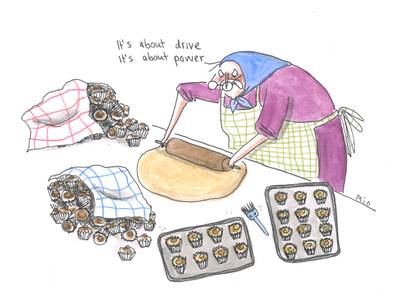
READThe Western sense of superiority over all other beings in the universe isn’t something that needs further “unfolding” or “unearthing”. I don’t want to get into the deep-seated anger I felt when I saw all the Finnish art and culture institutions that we have been urging for months to extend solidarity to the Palestinian struggle for decolonisation publicly and to participate in the boycott, divestment, and sanctions (BDS) movement, have not wasted one moment in issuing solidarity statements for Ukraine and halting collaborations with Russia. Mohammed El-Kurd was on point when he wrote, “Hypocrisy” doesn’t describe this adequately. The appropriate word is psychosis."
Editorial / March 2022
-
 READ
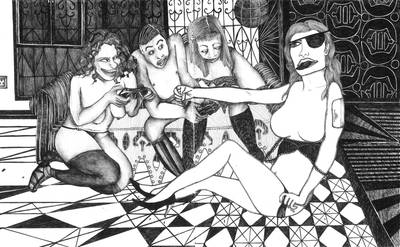
READDirectness is a desirable quality and very hard to possess, and not just for an artist, no need to nod yet, I have just started talking about directness and why it’s natural to feel like an imposter.
Editorial / April 2022
-
 READ
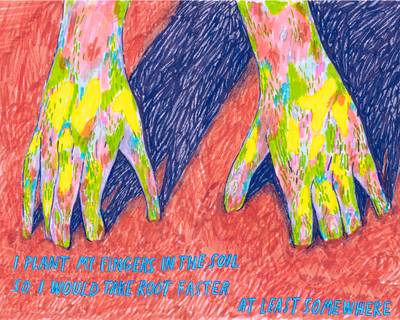
READAfter a long period of silence in live artistic acts since last year, we have realized how powerful live art can be to build a sense of kindness among strangers that are standing at the same place, same time, enjoying the same live act. A kindness that could be an initial point for a radical care action. Art can make visible that care is not only a human relationship, and that is the central point of the Baltic Circle Festival and this current Issue.
Guest Editorial / November 2021
-
 READ
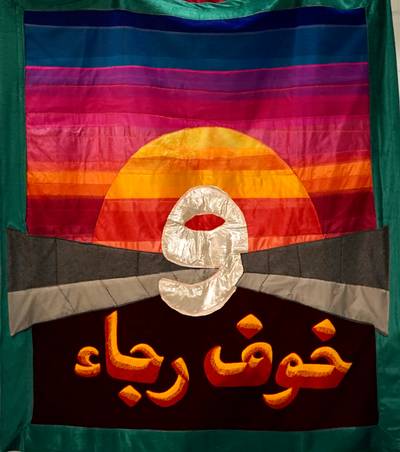
READOne of the worst betrayals of oppressive systems is destroying our sense of imagination and confining it to their limited worldview, where the word ‘woman’ is only synonymous with motherhood and with bodies that need to be controlled; where Jin Jiyan Azadi isn’t a valid manifesto because it sounds too romantic for the very patriarchal minds it wishes to change; where your idea of equality means that there should be the word ‘man’ next to ‘woman’; or it may seem the revolution is excluding men. So yes, we have the most progressive manifesto, but how to live up to it?
Editorial / Autumn 2022