

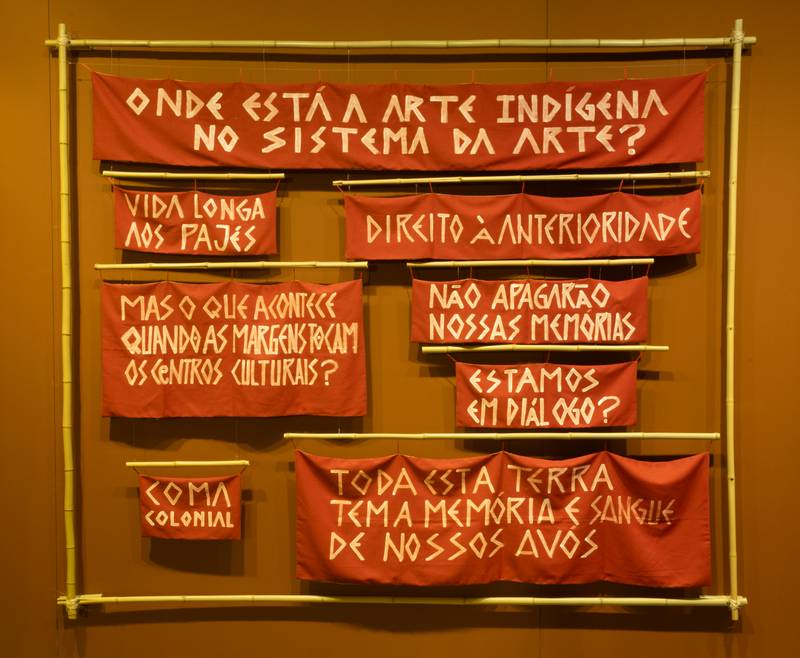

Questões em suspenso (Suspended Questions, 2019–2025), by Gustavo Caboco
Naine Terena lives and works in Cuiabá, Mato Grosso, Brazil. She holds an MA in Arts and a PhD in Education, and a BA in Social Communication (UFMT). A woman of the Terena people, she is a researcher, university professor, curator, and artist-educator. In 2012, she founded Oráculo Comunicação, Educação e Cultura, a cultural enterprise that fosters initiatives within the socio-cultural sector, aiming to offer goods and services that positively impact its surroundings.
In the act of walking, thoughts fall into alignment. The teacher and artist Tadeu Kaingang is strikingly direct when he states that “through the connection between foot and earth, sky and heart come into alignment in a harmonious rite—a sacred act that restores balance and brings about transformation.” From this vantage, the artist and member of the Kókir collective summons the presence of Indigenous worlds across different sectors of Brazilian society, including the field of contemporary art.
Over the past decade, we have witnessed an intensification of this presence. There is a growing proliferation of counter-narrative movements proposing historical revisions, forged through articulations with diverse groups across the globe—communities often positioned as minorities and historically marginalized. In Brazil, such interventions into official narratives have taken place most notably in the field of education. A number of publishers have begun revising textbook content, bringing Afro-Brazilian and Indigenous presences to the center of debate. Owing to Law 11.645/08 (enacted as an extension of Law 10.639/93), in 2008, the teaching of Afro-Brazilian, African, and Indigenous histories and cultures has become mandatory in both public and private primary and secondary education.
This mandate has yet to be fully realized across Brazilian schools, but it has already set the education sector in motion through the incorporation of new curricular materials and the inclusion of Indigenous and Black figures within official historical narratives. This outcome—directly shaped by the struggles of social movements—is what I understand as a “pedagogy of chegança 1.”
“Chegança” is a playful inflection of formal, cultivated, colonizing language—a challenge to the grammatical norms of the languages imposed across Latin America. Above all, chegança is a political gesture: an inclination toward the popular, toward the people, toward the masses. It marks the act of arrival of those long deemed uncultured, uncivilized, immoral, improper, monstrous—emerging from multiple strata once obscured, impoverished by the workings of power and socio-racial-cultural hierarchization. For many artists, chegança offers a means of articulating both individual and collective demands for rights and for space. It also constitutes a point of departure for thinking through the questions that shape artistic and cultural programming in Brazil.
What is required is an active, attuned listening—one grounded in processes that value and respect particularities and histories, more often than not marked by violence. If we are to put it this way, these relations must approach the holistic, so as to enable dialogue in concrete and meaningful terms. Above all, it is necessary to reckon with the operations of whiteness that sustain its positions of power.
The 4th edition of Frestas – Trienal das Artes, titled Do caminho um rezo [From the Path, a Prayer] on view at Sesc Sorocaba through August 2026, emerges from a research process grounded in the chegança of many bodies in motion. These are bodies that are, more often than not, non-normative—wayfarers across multiple paths, lived experiences, and crossroads: artists of diverse lineages, artists with disabilities—def artists—those engaged in class struggles, and non-artists alike.
As for Indigenous cheganças, I would underscore that “Indigenous presence is pedagogical.” This statement has been echoed across institutions by programmers and cultural producers throughout Brazil. It speaks to the ways these presences both impact and expose the rigidity of bureaucratic and educational processes, particularly with regard to Indigenous self-representation. Whereas Indigenous peoples were once positioned as sources of inspiration for artistic and literary projects, today Indigenous individuals and collectives assert their place—not as a matter of quotas or inclusion, but as agents and makers in their own right.
Yet this shift in paradigm is slow and demands sustained, everyday effort. The pedagogical force of Indigenous presence must move beyond the mere invitation of Indigenous artists to participate in exhibitions within artistic and cultural institutions. What is required is an active, attuned listening—one grounded in processes that value and respect particularities and histories, more often than not marked by violence. If we are to put it this way, these relations must approach the holistic, so as to enable dialogue in concrete and meaningful terms. Above all, it is necessary to reckon with the operations of whiteness that sustain its positions of power.
Fertile ground
Sorocaba, a municipality in the interior of the state of São Paulo, constitutes a fertile ground, insofar as it holds within its territory a multiplicity of histories and memories buried by colonial processes. Workers’ struggles, the erasure of Indigenous peoples, carceral-psychiatric regimes, the exploitation of women’s labor in the textile industry, and an organized Black movement committed to dismantling structural racism—among other tensions—compose the historical fabric of the city. These forces underpin the research of local artists, who call for other narratives to take up space within the framework of this event.
Even though Frestas (literally, “cracks”, “slits” or “openings”) is a major art event held outside a central hub such as the city of São Paulo, its previous editions did not bring together a significant number of artists from the region itself. Frestas 2026, therefore, opens up the possibility for a critical revision of local historiography, with a view to foregrounding the relations of power established there—expanding notions of territory, environment, and public policy, while also reconfiguring understandings of who occupies the space of art.
The curatorial group of Do caminho um rezo, composed of myself, Luciara Ribeiro, and Khadyg Fares, proposes a turning inward. It seeks to trace multiple trajectories and pathways, unfolding through political and spiritual gestures toward the affirmation, construction, and projection of artists, collectives, and communities across Latin America.
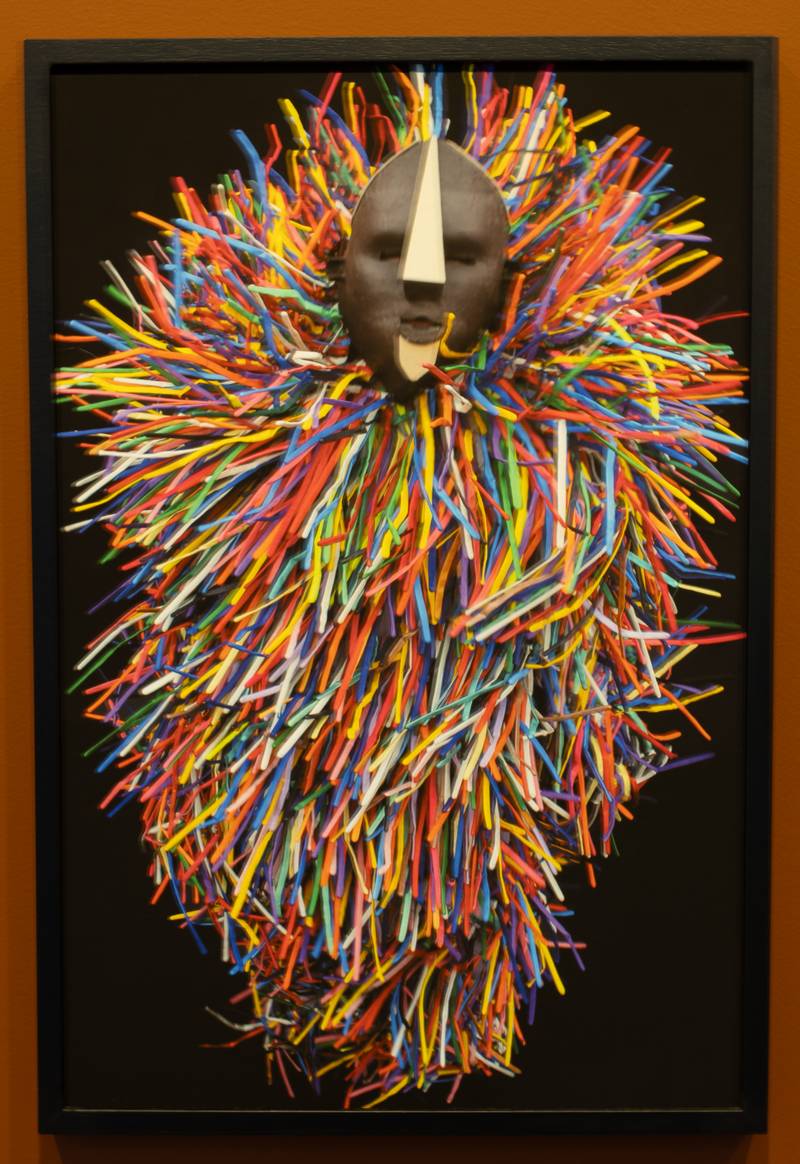

Manjua (2025), by Denis Moreira
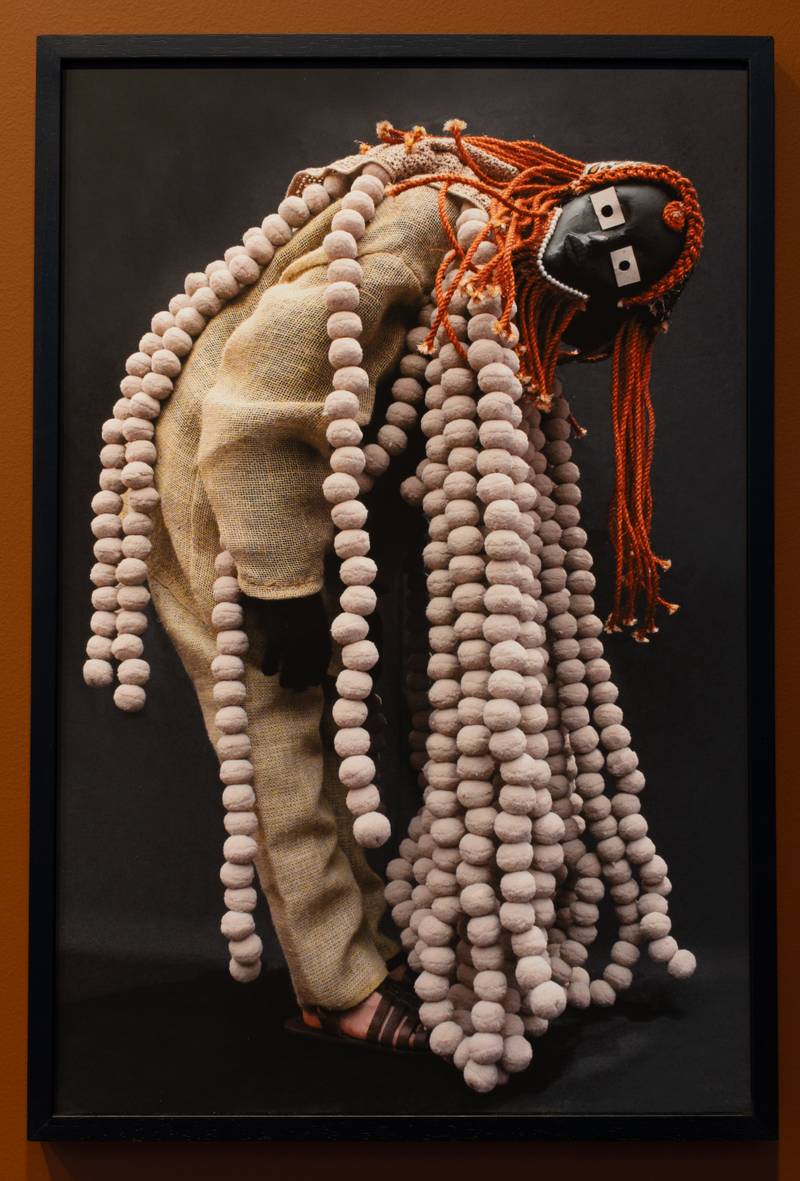

Muari Ngana (2025), by Denis Moreira
The teacher Tadeu Kaingang, the feminist historian and sociologist Silvia Rivera Cusicanqui, and the quilombola thinker Antônio Bispo dos Santos (Nêgo Bispo) are key sources of inspiration in shaping this environment, where the act of walking gives rise to routes and crossings—or what Nêgo Bispo calls the encruzilhada (sacred crossroads). To invoke Bispo’s understanding of the encruzilhada is to take up his provocation: “Those who have never passed through a encruzilhada do not know how to choose their paths.”
Numerous encounters were proposed among groups, collectives, solo artists, and communities, so that they might inter-cross—forming encruzilhadas (crossroads)—and, from there, choose the artistic paths to be pursued within the Trienal das Artes. This also required a shedding of many of the canons of contemporary art, in order to embrace artistic practices grounded in the understandings of the many invited communities and groups. It is, in this sense, a way of apprehending other epistemologies and lifeworld relations—once stifled by the colonial condition in Latin America.
In the words of Gislana Vale—accessibility consultant for the exhibition, a doctoral researcher, and a blind woman—these presences, particularly those of def artists, “claim a place for their creativities, rather than for inclusion.” During the public program Sendarias (Pathways) held in February 2026, Gislana argued that “inclusion” is no longer an adequate term: words are captured and redeployed as instruments of oppression and reduction. She advocates for presence, autonomy, and belonging: “There are many ways of seeing. Not only through the eyes, but through the body, through movement, through listening, through feeling.” It is, therefore, a matter of seeing beyond what has thus far been made visible. This is what the Argentine artist Luciana Lamothe proposes in the installation Fricciones (2022), which investigates how materials and bodies are transformed through contact and friction.
The encruzilhada as curatorial method
It is worth recounting some of the encruzilhadas shaped in this edition. The acts of gathering and sustaining living seeds bring together the Caianas Agroeco-Indigenous Collective of the Terena People from Mato Grosso do Sul, a state in the Central-West region of Brazil, with the Seed Network Cooperative from the Vale do Ribeira (São Paulo), and the visual artist André Felipe Cardoso, from the Quilombo Kalunga in Goiás, also a state in the Central-West region.
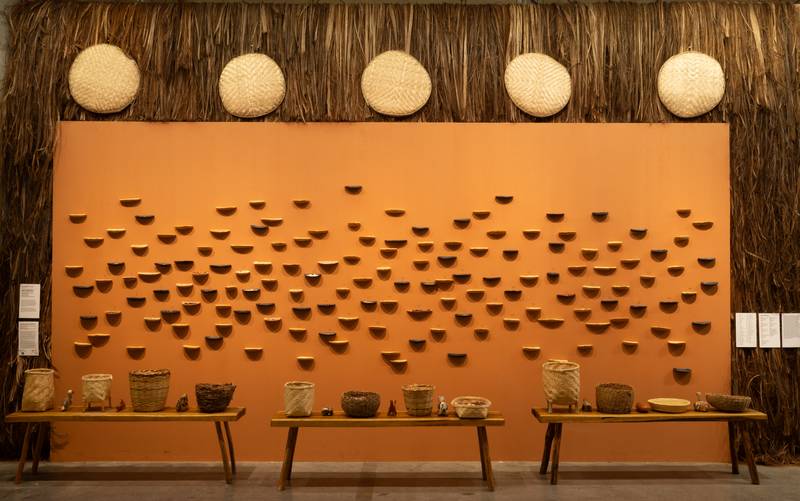


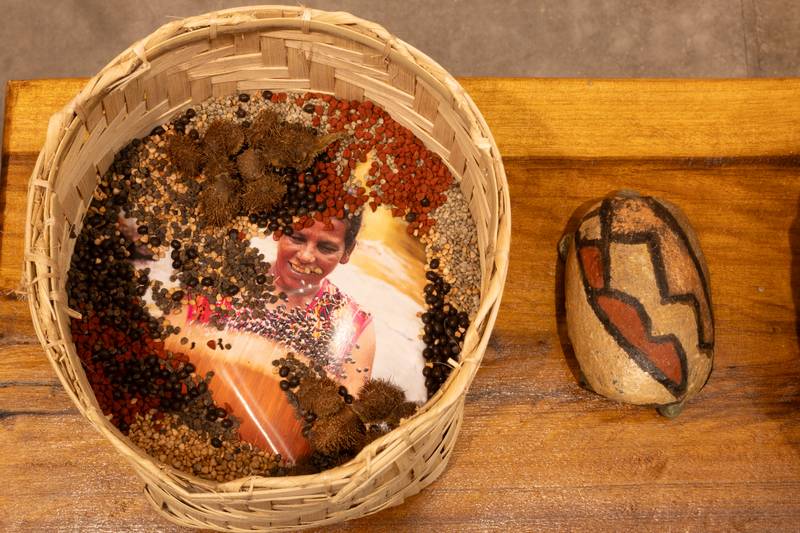

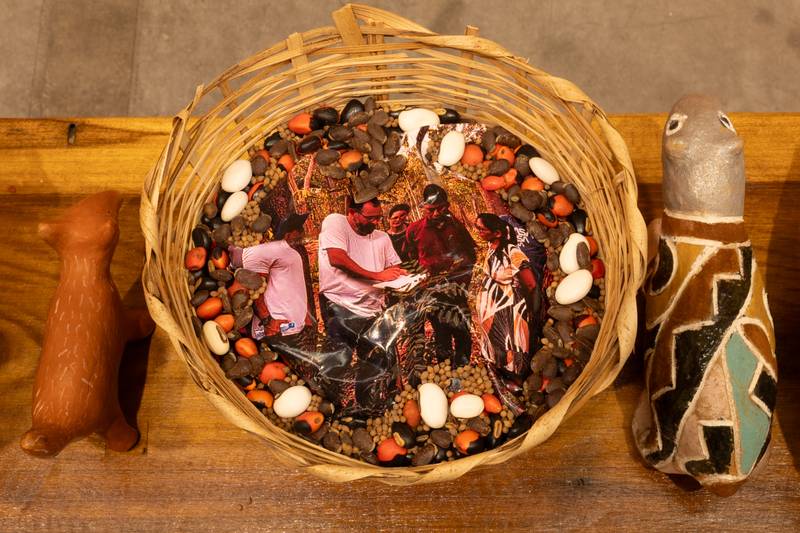

Um encontro de terras [A meeting of lands] (2025), by André Felipe Cardoso and the Caianas Agroeco-Indigenous Collective
For their part, inhabitants of the Cerrado, the Pantanal, and the Atlantic Forest, they share a desire to fertilize soils and cultivate possible futures. This encounter foregrounds the value of the memories held by seeds and by people as decisive for the times ahead, while engaging processes of germination and fertilization along the margins of the Sorocaba River—a struggle for more forests, fewer expanses of asphalt.
Cada rio carrega uma memória (Each river carries a memory, 2026) inter-crosses the paths of Uruguayan artist Fernando Velázquez and Indigenous artist Tiriri Rayo, who lives in a community in the southern forest region of the state of Pernambuco, northeastern Brazil. The installation proposes a fabulation around the Indigenous body as an enchanted being, intimately connected to nature. Here, technologies support the dissolution of boundaries between body, water, territory, and enchantment. Through digital means, the project developed by Rayo and Velázquez evokes the river’s fluidity as both medium and metaphor for a continuous bond between Indigenous beings and nature, within a cosmology in which no separation exists between the human and the more-than-human. For many Indigenous groups, the animal, vegetal, and human worlds are in constant relation, with the beings inhabiting these domains moving across different spheres. Some animals are kin to humans; rivers and plants possess a “spirit” or are themselves “enchanted.”
Frestas moves along this encruzilhada among the many ways of inhabiting the world through different cosmologies that set ways of life in motion and, in turn, reshape notions of art, culture, and bem viver (living well). In this sense, sites such as the Sorocaba River and the Chapel of João de Camargo are invited to “act,” drawing on the memories sedimented in their riverbeds and walls. Douglas Emílio learns from the Sorocaba River, while Moisés Patrício enters into dialogue with all that the Chapel of João de Camargo holds and preserves.
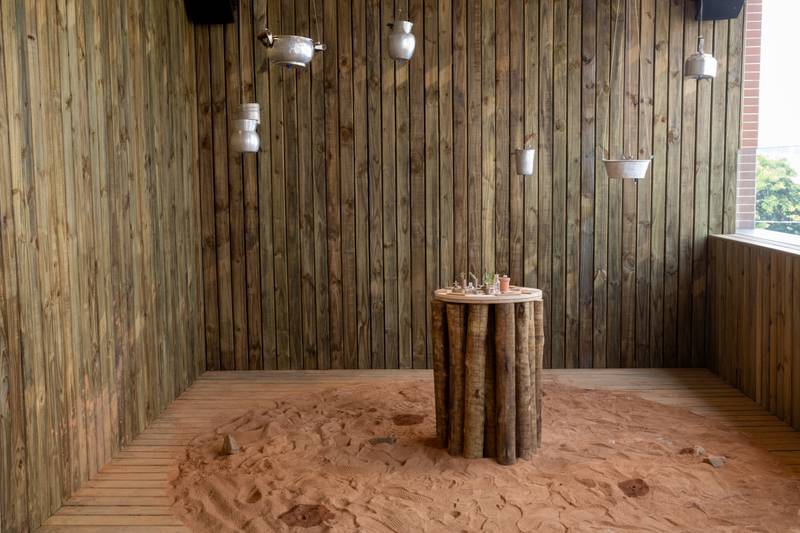

Dança um rio onde eu nasci (A River Dances Where I Was Born, 2026), by Douglas Emílio
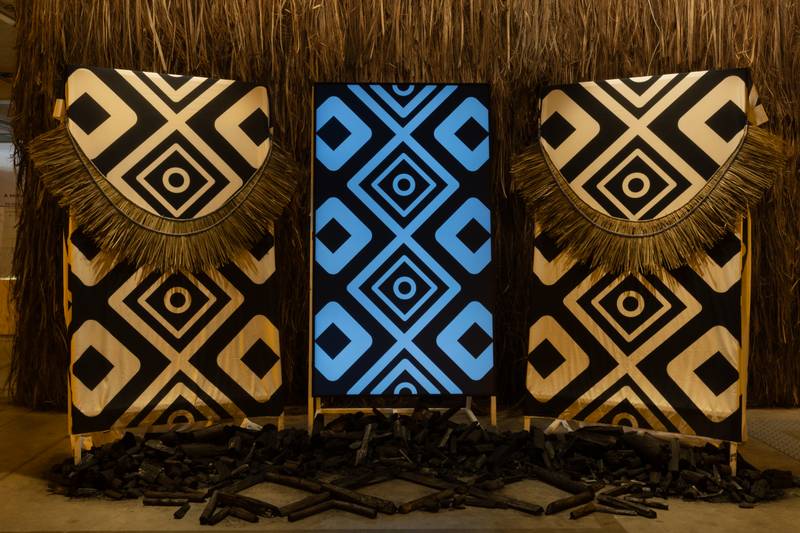

Cada rio carrega uma memória (Each river carries a memory, 2026) by Fernando Velázquez and Tiriri Rayo
Douglas Emílio lives in Votorantim, a city near Sorocaba. His work is guided by the history of the river, which permeates both his artistic practice and his everyday life. The waters of a major flood in 1982 left marks on the walls of his home and, in doing so, told him he needed to learn how to listen to the river. To this day, the ongoing processes of devastation, silting, and damming of this living “entity” in Sorocaba—the river and its banks—continue at a disordered pace. Douglas has committed himself to listening to the river, understanding that this is urgent not only for his artistic practice but for society at large. To listen to the river is to listen to a not-so-distant future.
The installation Dança um rio onde eu nasci (A River Dances Where I Was Born, 2026), proposed by Douglas Emílio, calls for participation: a choreographic game in which the public is invited to touch and rearrange miniature figures that emerge from the stories the artist learns from the river. Yes, he converses with the river.
Moisés Patrício, a babalorixá (spiritual leader in Afro-Brazilian tradition) visual artist, and art educator working across photography, sculpture, and performance, has a practice shaped by ancestry and collectivity. In dialogue with the Chapel of Senhor do Bonfim João de Camargo, he is prompted to propose a reencounter with Black ancestry. The chapel was built in 1906 by João de Camargo—known as Nhô João—who had been conducting healing practices there since 1897, and it is currently maintained by his devotees.
Unlearning to restore knowledge
Tadeu Kaingang invites us to adopt the proposition of “unlearning in order to restore knowledge.” It is necessary to dismantle entrenched prejudices in order to learn to value the multiplicity of voices and Indigenous identities. Silvia Rivera Cusicanqui, in turn, reminds us of what is at stake in this presence, urging us to think of museums as sites of modern centralization—operating as forces that deterritorialize the meanings of Indigenous practices. She calls for a reckoning with the geographies of colonization and their impact on peoples who once inhabited unimaginable territories and are now confined within museological spaces—places where paintings are hung in emptiness.
Cusicanqui also warns against expropriation, citing the Andean Baroque as both spectacle and a commodity of high symbolic and monetary value within capitalist art circuits. She further draws attention to the state appropriation of communal goods, nourished through the fissures of republican states, their privatization, and the heirs to the principles and mechanics of colonialism. Her provocations resonate throughout many of the works specially produced for the exhibition.
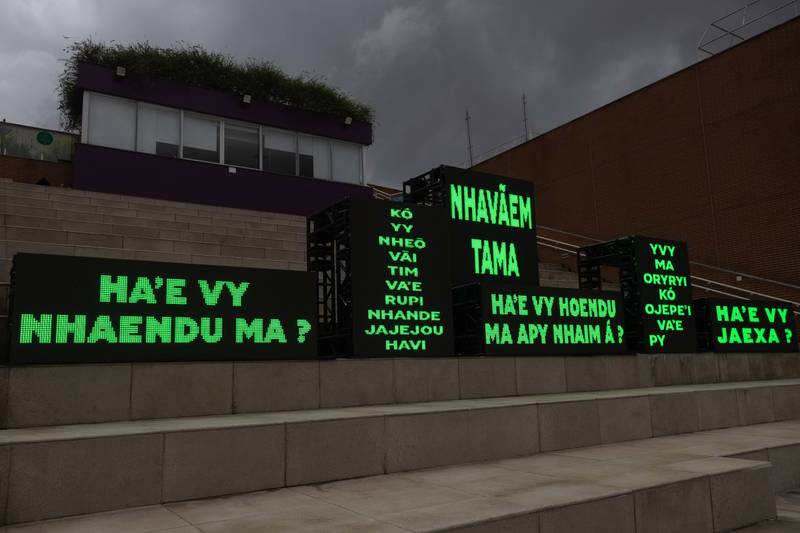

EKALITIO AGAIN (2024), by Keywa Henri
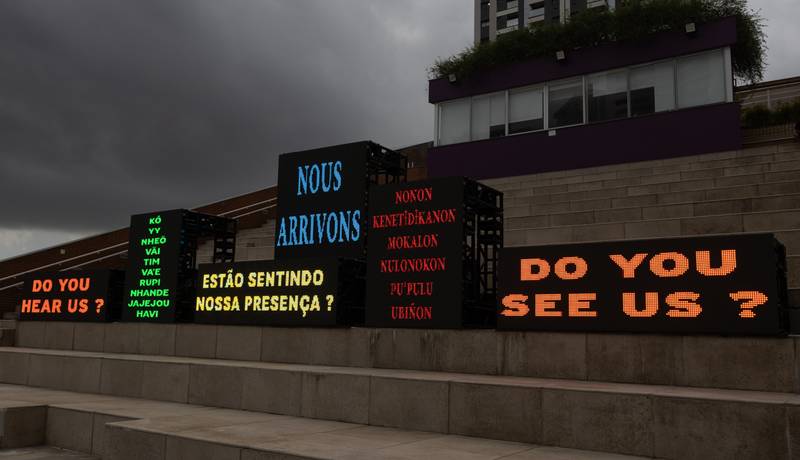

EKALITIO AGAIN (2024), by Keywa Henri
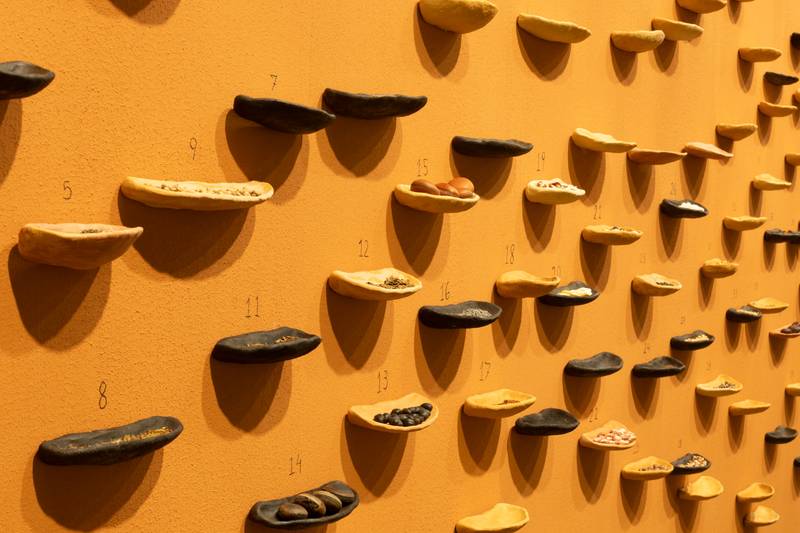
“Do you see us?” asks the multidisciplinary artist and researcher Keiwa Henri, of the Kalin’a Tilewuyu people (one of the seven Indigenous nations of French Guiana), in the work EKALITIO AGAIN (2024). “Where is Indigenous art within the art system?” asks Gustavo Caboco, an artist of the Wapichana people, in Questões em suspenso (Suspended Questions*,* 2019–2025). The installation brings together fragments of works that employ written language to address historical reparation, the climate crisis, and the recovery of interrupted memories. These works evoke a reflection on the exclusion, inclusion, and naturalization of Indigenous presence within contemporary art projects in Brazil and beyond.
In the installation EKALITIO AGAIN, Keiwa proposes an encounter between writing, orality, and the linguistic colonization experienced by her people and by other Indigenous peoples across Latin America. She does so through phrases displayed in Kalinã, French, English, Portuguese, and Guarani on LED signage, inviting the viewer to reflect on the invisibility of autochthonous voices and, beyond that, on the loss of many Indigenous languages brought about by the processes of colonization.
Miguela Moura, a Guarani visual artist, illustrator, and activist from the Brazil–Paraguay border region, presents Tapa po’i (Narrow Path), developed through her encounter with the Guyra Pepo village, located in the district of Tapiti, São Paulo. The work takes the form of a painting workshop centered on visualities drawn from the cosmology of Guarani chants, documented on video by the audiovisual team of the Koa Kuera collective. The material is spoken entirely in the language of this people, contributing to the strengthening of Indigenous linguistic resistance in Brazil.
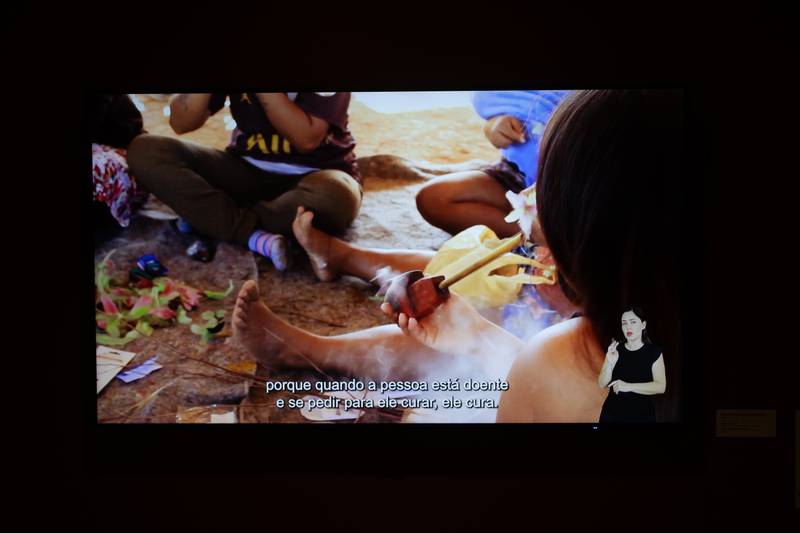

Tapa po’i (Narrow Path), by Miguela Moura
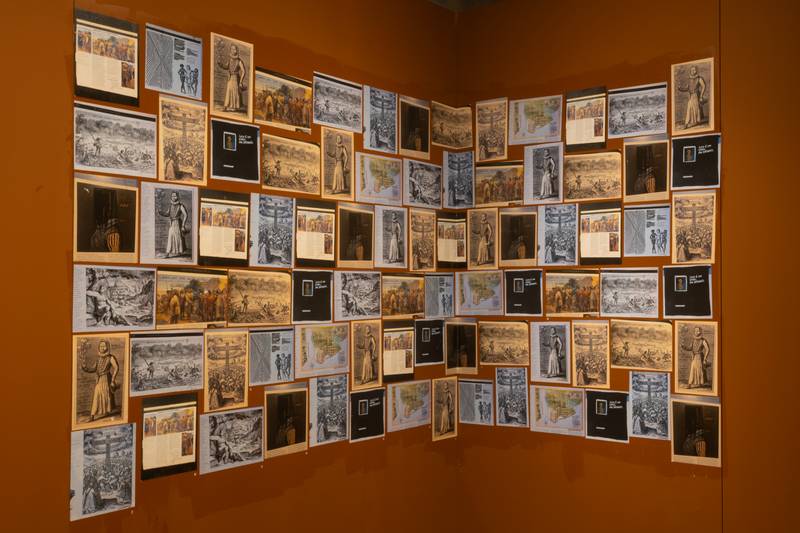

Lambes (street posters, 2019-2020), by Denilson Baniwa
Denilson Baniwa and Daiara Tukano are among other invited artists who reinforce Indigenous presence. Baniwa presents a series of lambes (street posters) produced between 2019 and 2020, in which he challenges and re-signifies visual productions from an Indigenous perspective. Daiara, in turn, presents Mahá (Macaw), part of the ensemble Dabucuri no Céu, composed of four paintings and four featherworks representing birds of significance to the Tukano people. The work speaks of the sacred, but also of mourning—the loss of many elders who were guardians of these stories.
Lucilene Wapixana and Roseane Cadete, also of the Wapichana people, together with Flávia Aguilera, an artist and researcher from Sorocaba, come together to “heal the thread,” creating a large-scale textile map that reveals the pathways of cultural resistance struggles, interwoven through threads. The work foregrounds the presence of women in Sorocaba’s textile industry and the many forms of violence they have endured, alongside those experienced by Indigenous women who have been deterritorialized, massacred, and exploited.
Finally, the exhibition offers the opportunity to encounter the Códice Boturini, or Tira de la Peregrinación, through a facsimile. This pictorial manuscript recounts the migration of the Mexica (Aztecs of Chichimeca descent) in search of the promised land. Produced after the Spanish invasion, around 1530–1541, by and for Indigenous populations, it combines images that convey abstract ideas with signs that indicate sounds or words of the spoken language.
If every journey leads somewhere, this edition of Frestas may be understood as traversing multiple encruzilhadas. As an experience, it leaves us with the sense that cheganças are effective—and, more than that, necessary—for the projection of new global routes toward bem viver (living well).
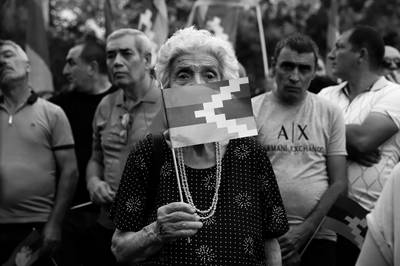

While azerbaijan was bombing Armenians with israeli and turkish UAVs and paying bonuses to turkish-backed Syrian mercenaries for beheading Armenians, the “international community,” whatever that’s supposed to mean at this point, expressed lousy words of “concern,” and displayed a nauseous stance of both-sideism, devoid of any tangible action. The existence of this unrecognised republic and its indigenous population wasn’t legitimate enough for world powers to lift a finger.
READViolent Septembers: An Armenian Perspective Amid the Ongoing Occupation
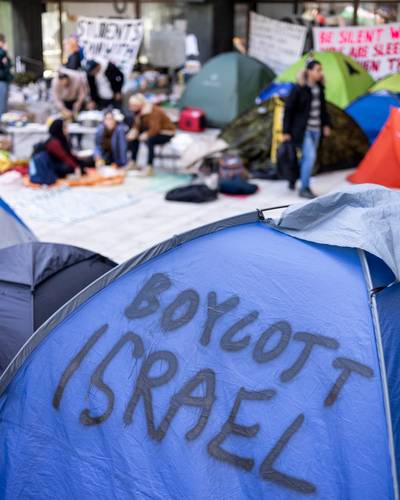

The opposition is not only between institutions and student activists—it also exists within our movement, manifesting in differing strategies. Should we focus on direct, visible actions or institutional processes? Should we shame the university publicly or appeal to its conscience? These approaches are not mutually exclusive—they reinforce each other.
READDisrupting Complicity: Students Organising for Palestine in Finland
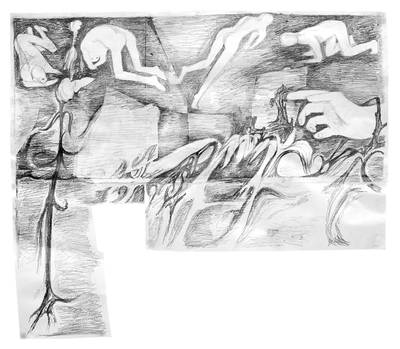

Is it problematic to mix friendships and professional connections, emphasising the benefits of helping friends since they will eventually feel obliged to help in return? How did such a neoliberal manipulative trick that openly instrumentalizes intimacy become acceptable? Is “friendly, warm hearted” corruption and favouritism legitimised? Am I abusing my position of power by preferring to work with friends? How does the professional environment change if a friendship ends abruptly and unpleasantly?
READAgainst Friendship: On the Dark Side of Professional Intimacies
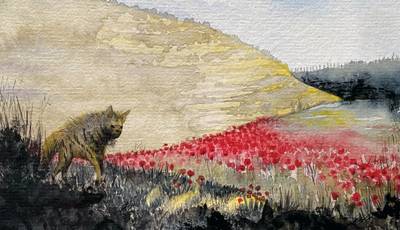

Where the striped hyenas are is not only a place in the imagination or in the past. Where the striped hyenas are is also a possibility for what the future could bring. It’s where they lie, waiting for their turn to return from their exile. Where the hyenas are is also where the ghouls and the djinn are, behind seven mountains, dreaming and chasing their world into being again.
READWhere the Striped Hyenas Are, or, A Tale Is a Map and a Compass: Some Fragments on the Fantastical, Land and Remembrance