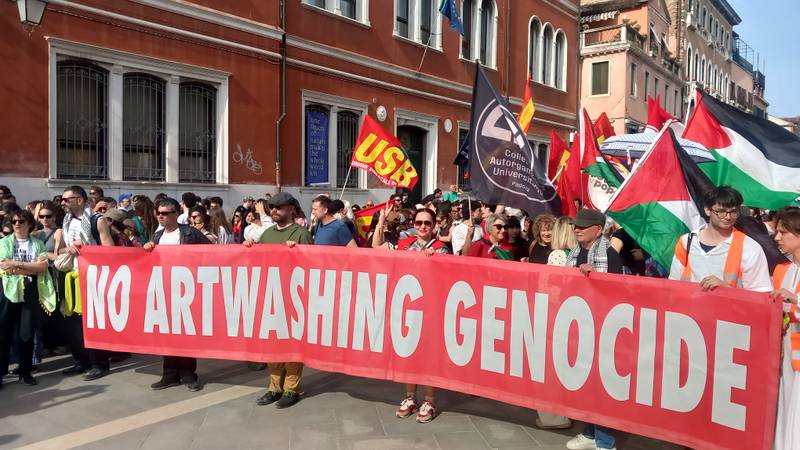
ANGA & art workers on strike. Biennalocene, Vogliamo Tutt’altro, Sale Docks, Mi Riconosci, and Italian trade unions including ADL Cobas, USB, and CUB standing the line. Photo: Terike Haapoja
Eero Yli-Vakkuri is a recovering survivalist. In the past he made annoying street interventions which made people uncomfortable. Presently he is advancing sustainable design through campaigns and artistic presentations. He serves as the self appointed Speaking Clock of Finland.
In the nineteenth century, European art historians realized that the marble sculptures and temples of ancient Greece were not originally white, as they appeared when re-discovered. In their prime, the temples were decorated with colorful ornamentation, and figures painted in different skin tones. The pigments had just faded over time. Knowledge of a colorful past is not reflected in the illustrations of art history books: statues and architecture continue to be presented as white. Human skin colors do not fit a rigorously maintained image of classical and ideal antiquity.
Grasping the political nature of contemporary art can be an adventure just like discovering the lost colors of the ancient world. The materials of installations, speed of the bushstrokes, tremors of dance and noise in media, can be inadvertent results of the artist’s involvement in political efforts. For me, this lesson stems from Adrian Piper’s Funk Lessons (1983) at Pori Art Museum last year. The documentation and the manifestos offer a peek to a worksite where Black working-class culture is transmitted onwards. Piper teaches funk dance styles, aiming to free students from stiffness, and calling bodies to fight against the rigours of white supremacy. The work does not appear political: the glitches and sloppiness follow the politics of the action.
The Venice biennial as the olympics of the art world
The association with the olympics is maintained by a competition in which a distinguished jury selects the finest artworks and awards Golden Lion prizes (Piper is a 2015 recipient). This year the jury chose to omit contributions from countries “whose leaders are currently charged with crimes against humanity by the International Criminal Court” (ICC). In vivid colors they excluded contributions from Israel and Russia. After the announcement, jury members were threatened with legal repercussions and forced to resign in fear that they would be prosecuted for “racial discrimination”.
The Israeli pavilion in Venice was built four years after the Nakba, when over 551 palestinian villages and towns were depopulated and destroyed initially by zionist forces and later by the Israeli army. Because their pavilion is currently closed for renovation, the biennial organization relocated the contribution to the central international exhibition at the Arsenale-venue. This forced artists whose lives have been affected by Israel’s ongoing regional settler-colonial expansion, to exhibit alongside representatives of the very state responsible for that violence.
The five-member jury protested in support of the ICC, but after they were threatened with retaliatory lawsuits, the biennial organization abandoned them. Sadly, there is nothing exceptional about people being threatened with legal actions for expressing solidarity for Palestine. What makes this case rare is that it is well documented and public. Documentations include details of an awkward telephone call by the Israel pavilion artist to the culture ministry of Italy, demanding guarantees that their artwork would be promoted.
Similar coercion, silencing and slander campaigns are familiar to people who follow anti-palestinian, anti-palestine solidarity and anti-human rights developments in Europe. For example the Index of Repression, details similar cases in the UK and Germany. Information is being diligently collected by the European Legal Support Center (ELSC) and other human rights groups. People are working to localize the ELSC intake reporting tool to Finnish, and are setting up local monitoring.
The biennial organisation responded to the jury’s resignation by setting up a system, where visitors vote who gets the awards. In solidarity with the jury, 67 individual artists in the central exhibition and representatives of 39 national pavilions, announced that they would not accept the price and demanded their names to be removed from the voting ballots.
The Venice biennial as the United Nations of art
The biennial is referred to as the United Nations of art because countries are invited to organize exhibitions in pavilions, and have autonomy to decide what they present or if they attend (for example Iran, at the time under an illegal attack by US & Israel did not participate). Thirty nations have permanent pavilion structures, and others pay rent for temporary sites. The biennial is laid out as a marketplace of ideas, where artistic freedom excels under the protection of diplomatic norms and rule based order. Exhibiting in the biennial’s diplomatic architecture, artists are made into media to perform national sovereignty and to amplify the state’s legitimacy on an international stage.
All of this happens under the arm of the Italian cultural ministry which after the biennial organization was nationalized by Italian fascists late 1930s, has had control over which countries get invited. Decisions reflect Italy’s and its allies’ geopolitical interests. Details in Vittoria Martini’ excellent history of the event. On the excuse that Palestine is not yet recognized by Italy, it is not eligible for a pavilion. Palestinian artists have exhibited in collateral events, and the central exhibitions. The selection of artists for these venues reflects the appointed chief curator’s conceptual vision and their plans are reviewed by the biennial organization.
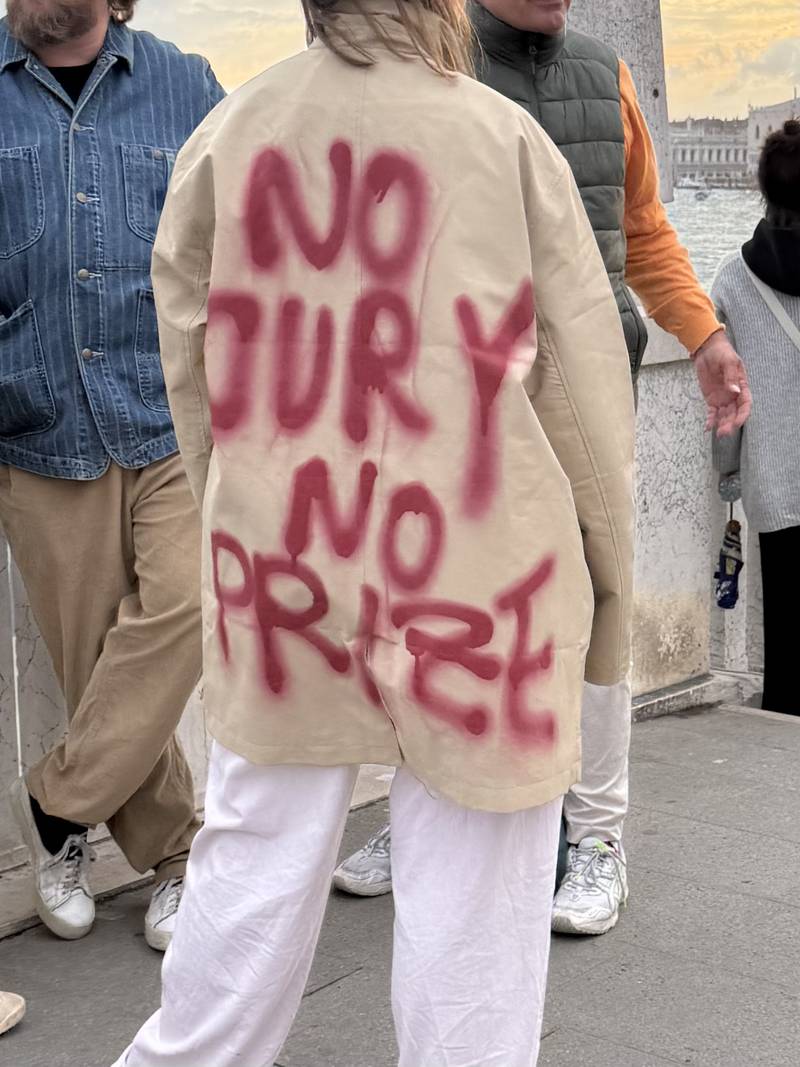
Art workers improvising strike gear. Photo by Jenna Sutela
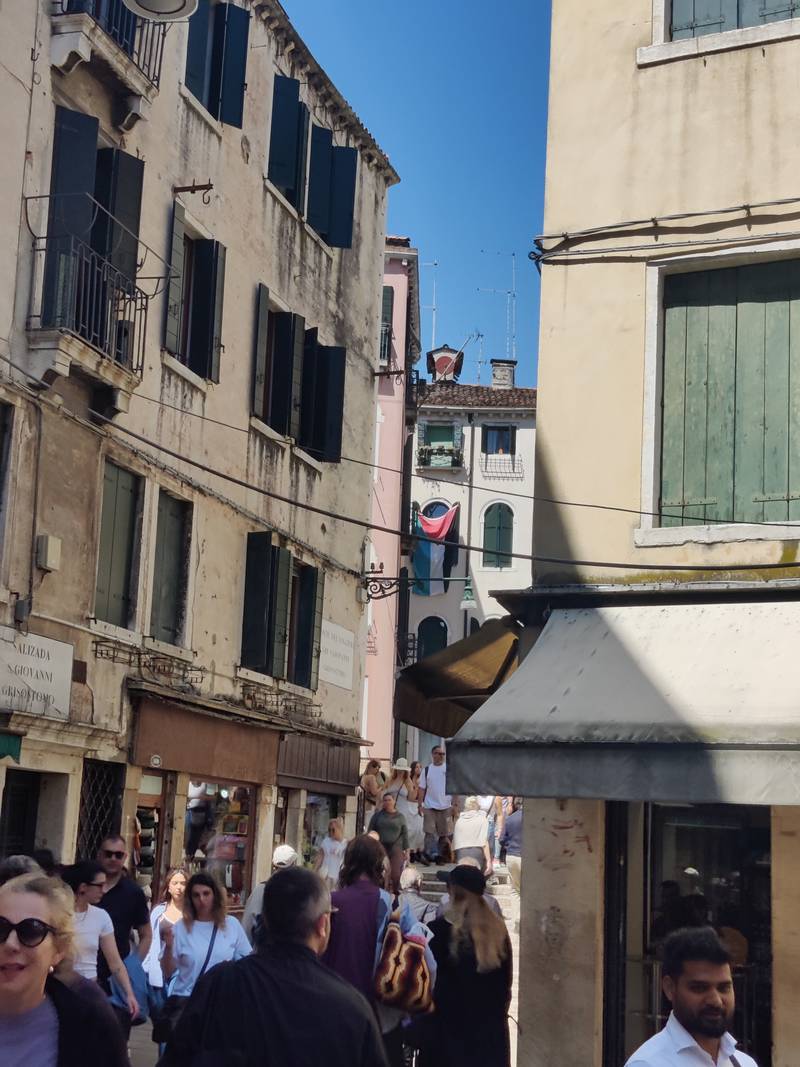
A city filled with a Palestinian national symbols, graffiti calling for a free Palestine and condemning USA/Israel
Contemporary art in post–World War II Europe is celebrated for its claim to challenge and dismantle unequal structures and oppressive societal models. Public art institutions have sought to achieve this by sustaining conflicting perspectives and bringing together participants who represent irreconcilable positions. Unfortunately, in a liberal framework this produces what Chantal Mouffe calls “harmonious ensembles” which seek to manage conflicts and pacify artists. Similarly, Esra Özyürek identifies a postwar institutional tendency to convert political responsibility to act into managed emotional scripts.
Art workers are organizing strikes and protest from the premise that institutions that represent them are democratic. It appears idealistic to assign contemporary art of post–WWII Europe a responsibility to prevent the return of fascism, dismantle the patriarchal structures that underpin it, or remedy the harms of colonialism and imperialism. But when public institutions claim neutrality in the face of injustice and silence dissent, they hollow out their own mandate and announce their availability for artwashing.
The jury’s protest was empowering. Brave art workers from national pavilions and the central exhibition rejected the biennial leadership’s attempt to place aggressors and those subjected to their aggression on the same platform. Russia’s offensive return as an exhibitor this year, enabled some to express their actions in solidarity for Ukraine. The Finnish pavilion joined the art worker strike and declined participation in the visitors vote. The invasion of Ukraine has issued demands for ethical rigor but there is clear divergence in how different actors align along anti-war and anti-imperialist lines. Anyway it stands, the rejections of the biennial leaderships conduct, map the current frontier of culture work grounded on the universality of human rights.
Russia’s return prompted Finland’s Minister of Culture to issue a culture boycott. The same government purchased weapons from Israel during the genocide and was involved in talks on the “freedom of navigation” in the Strait of Hormuz during the attack. The only value of their statement is that it expresses state level admission of the effectiveness of boycotts. The crises of the political west institutions are extended to culture production. The issues run deeper than policies as explored by Joonas Pulkkinen in their review of the São Paulo Bienal.
NO ARTWASHING GENOCIDE
European decision-makers enabled a genocide by failing to uphold international law. The groups involved in protest campaigns and petitions, and people who have found each other at demonstrations, are not under an illusion that joining a strike or protest would somehow save the United Nations. Organizing is driven by solidarity, and the felt effects of militarization, fear of facism and authoritarian politics. People are recognizing more clearly that the rules-based international order was not built to overcome inequality, but rather to provide a legal and institutional cover that sustains it. People want justice.
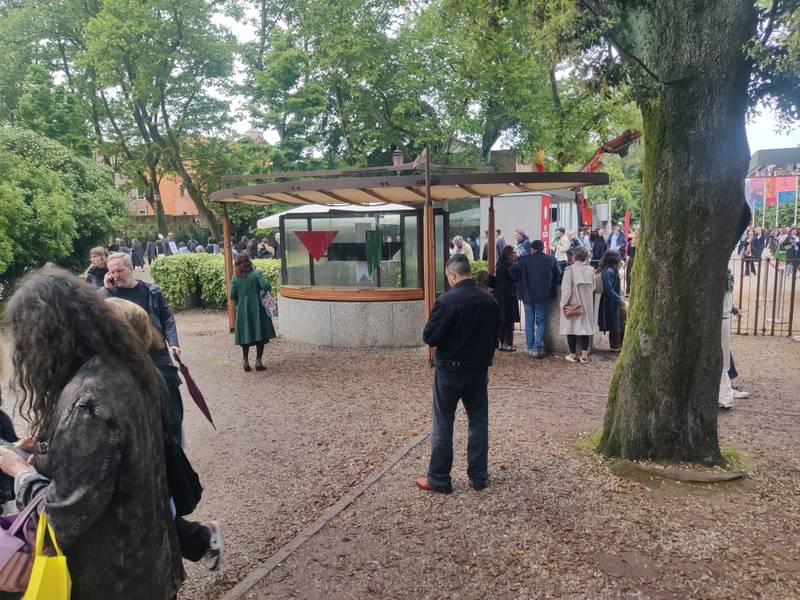
Giardini della Biennal entry featuring a deconstructed national symbol.
In Venice peoples resistance is led by the Art Not Genocide Alliance (ANGA). The alliance brought together 240 art workers for a petition to exclude the “genocide pavilion”. On the 8th of May ANGA organized an unprecedented art worker strike, assembling 3000 protesters to the streets and inviting national pavilions to close for the day. In preparation groups in the alliance produced anti-facist off-events, presented for example at S.a.L.E. DOCKS. The alliance came together in 2024 in support and alignment with the Palestinian led PACBI and the BDS campaign, which issues non-violent pressure on Israel until it complies with international law and respects human rights. The force of this demand has laid bare the political west’s crisis of legitimacy.
The alliance works to end the normalization of abnormal conditions of oppression and injustice in Palestine. Consistent with post–World War II Habermasian ideals of the public sphere, the BDS anti-normalization guidelines encourage cultural and academic dialogue. In the anti-normalisation framework, parties initiating cultural exchange are expected to remind involved groups of underlying structural inequalities and to make the goal of the interaction to transform the oppressive conditions. (The guidelines have been recently translated to Finnish)
As detailed by Omar Barghouti, a prominent voice of the movement, campaigns are designed to empower participants. Boycotts are strategically targeted to achieve noticeable impacts, so that people recognize their collective power. This premise resonates with the key lessons documented by ANGA organisers. The alliance has also provided a platform for people who have been silenced. Across the globe, there are countless anti-Arab, anti-Palestinian and anti-human rights censorship cases related to this year’s biennial. Intimidation, repression by institutional cancellations, censorship, and threats are the current operative logic of mainstream art institutions.
Examples include the cancellation and reinstatement of Khaled Sabsabi as Australia’s representative, as detailed by Alissar Seyla. The artist was smeared as a “terrorist supporter” in reference to an artwork which addressed the brutality of the thirty-four–day Israeli attack on Lebanon in 2006. After being reinstated their installation was hosted at Arsenale, close to a gigantic print of If I Must Die poem by author Refaat Alareer.
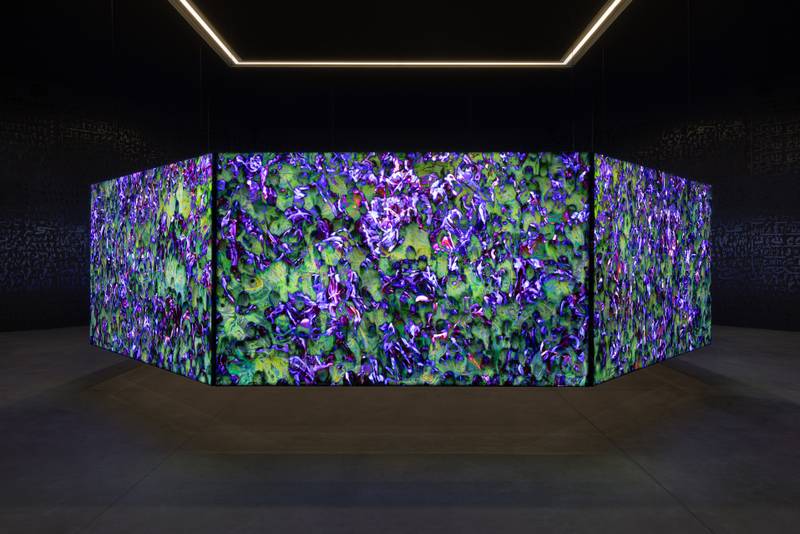
Khaled Sabsabi, conference of one’s self, 2026, Australia Pavilion at La Biennale di Venezia. Photo: Andrea Rossetti. Courtesy the artist and Milani Gallery
In a parallel process Gabrielle Goliath’ Elegy, intended for South Africa’s pavilion, was cancelled because it referenced Gaza. Fortunately the artist succeeded in securing a new site. The piece is described as “ritual mourning” for women killed in acts of sexualised or racialised violence, and commemorates among others poet Hiba Abu Nada. The press release is explicit that the artwork establishes a space where “Palestinian lives will be grieved”. Goliath gave a heartfelt speech condemning their state’s conduct at the front line of the ANGA march.
The aim to make a site of grief is made even more tragic when we consider author Abdaljawad Omar’s reflections on mourning. Omar accounts that under the conditions of an ongoing genocide, and in the absence of justice, Palestinians cannot mourn nor begin the slow work of recovery. This understanding offers relevant critique of the biennial’s overarching themes, which call for space to slow down, rest, and restore. It’s wise to pick up speed and get involved now because it is safer in the front.
The biennial included striking artistic resistance for example the “ _____________” * * Gaza - No Words - See the Exhibit, an archival project detailing explicit events of the genocide and peoples resilience using tatreez embroidery. The exhibition was sponsored by the Palestine Museum US, which works to challenge zionist narratives. Another powerful example was Mohammed Joha’ No Shelter, an effort to reconstruct life from fibers and shreds. The artist also gave a speech at the march. More details on related artworks on ANGA’ Guide to Complicity brochure.
The highlight of my visit was a presentation by Lawrence Abu Hamdan’s and plastic and reconstructive surgeon Dr. Ghassan Abu-Sittah at the Palestine is everywhere book-launch. The event was not a part of the biennial, but Hamdan was in Venice to present 450XL: The Story of a Fugitive Sound (2026), examining a sonic attack on a silent vigil in Serbia in 2025. Their talk, hosted by the book editor Skye Arundhati Thomas, detailed the investigation of the brutal murders of Layan Hamadeh and Hind Rajab.
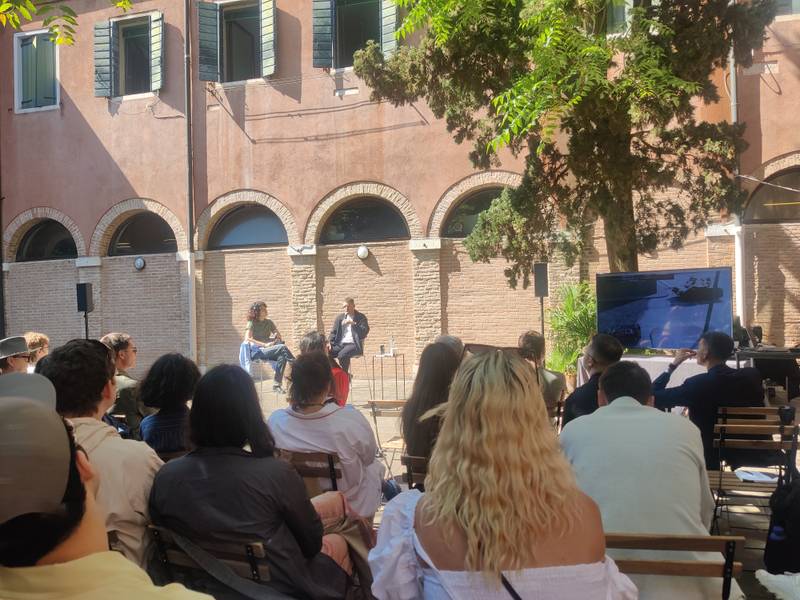
Skye Arundhati Thomas & Lawrence Abu Hamdan at “Palestine is Everywhere” launch
The doctor and artist recalled participating in an online meeting with top representatives of the largest humanitarian groups early 2024, and witnessing the “exact moment when international humanitarian frameworks collapsed”. This happened when Human Rights Watch and other leading international human rights organisations discredited the testimonies of rescue workers and doctors in Gaza directly to their faces. The pair expressed that everything that has since followed, is a logical consequence of this erasure of humanitarian principles.
Abu-Sittah has traced an extractivist logic linking EU-wide austerity politics which fuel military-industrial production to the work of doctors in Gaza, who remove shrapnel from children’s bodies left by high-tech weapons developed through Horizon Europe-funded research. In their view, complicity expresses intent: European leaders have enabled the genocide to support the rise of facism. The brutal horrors inflicted on Palestinians, and the speed of the destruction in Gaza serve to relieve leaders of the political west of the constraints of law. The talk affirmed that we had human rights as validated in the Nuremberg trials, and are now left with human rights post-Gaza genocide.
Organizing Post-Genocide
The ANGA march on the preview week, pushed against repression and fear. People stood together without titles or merits. We shared tasks and marched at the same pace to grow trust in the assembly. An audio system was pushed forward on a trolley, open to speeches from members of the assembly. The banners leading the march were used as a backdrop and as armory. When protestors sought to enter the Arsenale-venue and were halted by the police, the banners turned into moshpit guardrails, ensuring there would be a cover behind which to escape police brutality. Movements were decided with subtle nods, relaxed smiles and inviting eye contact. Years of systematic action against the erosion of political agency worldwide has established a collective rhythm.
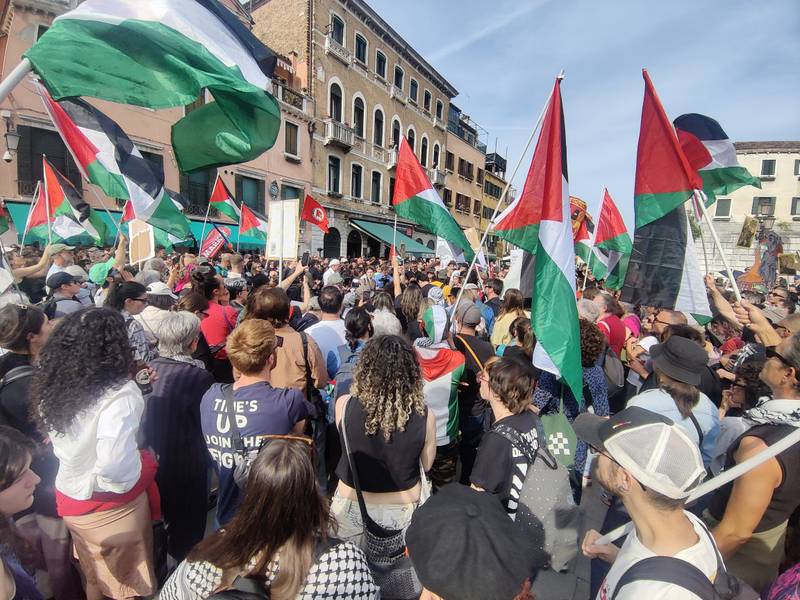
The names of nations on strike announced and repeated by the crowd at the Giuseppe Garibaldi meeting point on May 8th.
In Venice, we observed a convergence of sloppy and vibrant counterhegemonic movement and alignment with stale EU-sanctions which express state interests. There are unreconcilable differences to work through. The educational and cultural aspects of assemblies and their decolonial potential are explored in Bram J. De Smet’s forthcoming article “Decolonial Escalation”. De Smet examines how movements build hope as a collective infrastructure. Assemblies cannot persuade decision-makers, but they can sustain collective refusal. They provide an environment where we learn depacification and to channel solidarity into forms and postures which resist absorption.
The jury’s actions and art workers’ solidarity exposed risks which contemporary art communities should confront. The biennial leadership’s failure to respond to the intimidation of the jury, reveals that legacy institutions cannot be relied on to protect freedom of expression. If the weaponization of the international monetary system is not resisted, art workers whose livelihoods depend on international mobility and EU funding risk being silenced. Travel bans inside Europe are being normalized and the Palestine Action groups convictions pave way for worse.
To end complicity and support freedom of speech, art management and decision makers should consider the BDS movement’s investment policies and ethical norms in establishing collaborations as pre-emptive guardrails. In light of the ICC’s arrest warrants for Israeli leaders, public institutions must ensure that they do not platform parties, who have committed or incited others to crimes against humanity. You can join the Palestinian-led boycott movement and propose to your affiliated organization, student association, union chapter or band, to step up as an Apartheid Free Zone.
People told each other marble was always white. It wasn’t. Now we know which colors are missing and will spill them outside the lines too.
-
 READ
READAmidst this uprising, several feminist film collectives emerged, adding to this momentum by making films and videos that disrupted the representations of women on screen, challenged their seclusion from the public sphere, and both fuelled and documented feminist campaigns and events. Despite the magnitude and significance of feminist cinema, its influence remains largely unspoken.
Women’s Uprising and the Latin American Film Collectives of the 1970s and 1980s
-
 READ
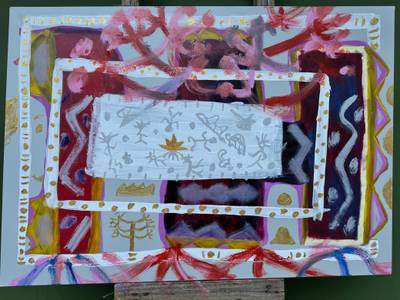
READA conversation with Isabel and Carl Gakran about the Zág (Araucaria), an indigenous tree threatened with extinction. We talked about their project (Instituto Zág), Indigenous climate justice and the intersection between the Palestinian and the (Brazilian) Indigenous struggles.
Zág Trees, Forest Spirits, and the Settlers: A Conversation with Xokleng Kin
-
 READ
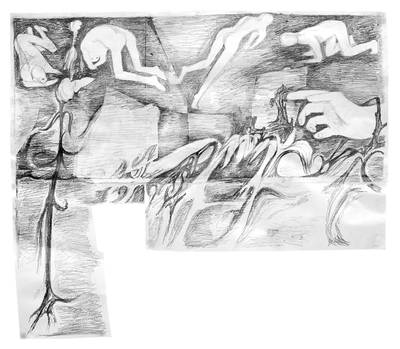
READIs it problematic to mix friendships and professional connections, emphasising the benefits of helping friends since they will eventually feel obliged to help in return? How did such a neoliberal manipulative trick that openly instrumentalizes intimacy become acceptable? Is “friendly, warm hearted” corruption and favouritism legitimised? Am I abusing my position of power by preferring to work with friends? How does the professional environment change if a friendship ends abruptly and unpleasantly?
Against Friendship: On the Dark Side of Professional Intimacies
-
 READ
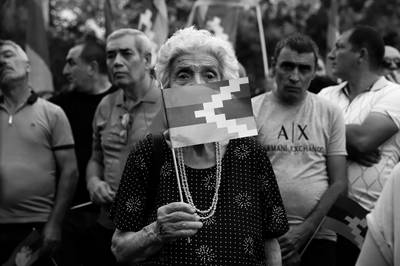
READWhile azerbaijan was bombing Armenians with israeli and turkish UAVs and paying bonuses to turkish-backed Syrian mercenaries for beheading Armenians, the “international community,” whatever that’s supposed to mean at this point, expressed lousy words of “concern,” and displayed a nauseous stance of both-sideism, devoid of any tangible action. The existence of this unrecognised republic and its indigenous population wasn’t legitimate enough for world powers to lift a finger.
Violent Septembers: An Armenian Perspective Amid the Ongoing Occupation