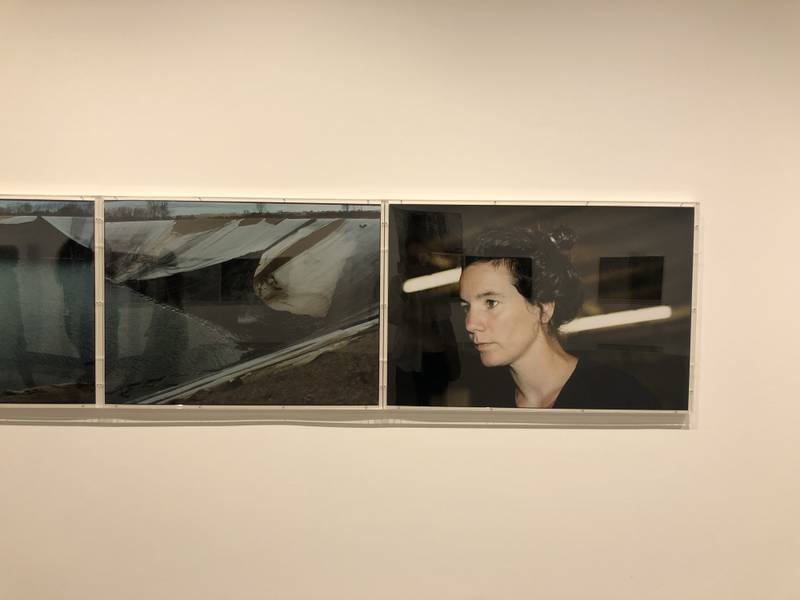
Exhibition installation of Rebekka Deubner’s exhibition ‘la terre amoureuse’ (said of soil that sticks to the boots) at Rencontres d’Arles. Photo: Jussi K. Suomalainen
Jussi K. Suomalainen is an art writer based in Helsinki. He writes about contemporary photography, its possible futures and its unrealized potential.
There’s a disturbing trend in contemporary photography exhibitions, where everything feels correct but nothing feels thought-provoking. The projects are socially pertinent but their narrative, predictable. They are humanitarian. Let me explain.
Rebekka Deubner’s exhibition la terre amoureuse (said of soil that sticks to the boots) at Rencontres d’Arles consists of photographs framed in clear acrylic boxes. At first glance, the exhibition appears to be a loose collection of portraits and disrupted landscapes where man-made structures intrude on nature. One photograph shows a close-up portrait of a woman indoors; in another, the viewers are transported outdoors to a wide shot of what seemed to be an artificial pond. The exhibition remains a fragmented visual puzzle until the exhibition text reveals that they were part of a project documenting an environmental protest against mega basins in Sainte-Soline. The text concludes: “The image is no longer the centre, but one of the effect.”
The image is no longer the center. Deubner avoids scenes of protest and settles on a coherent narrative that might situate the relationship between the landscape and the people she photographed. She is “avoiding picturesque clichés.” There is no drama or action in her photographs, the text insists: the work focuses on what resists demonstration—long temporalities. The photobook displayed by the exit provides some clues. Yet without anything for the camera to seize in the instant of exposure, these episodic documentary photographs offer little beyond what the accompanying text already tells us. In fact, they need the text as an intellectual scaffolding. After reading the exhibition text, I returned to the photographs. If the image is no longer the centre, why print them so large? And why is there so little to see from an image so big? I look at the other photos encased in clear acrylic boxes, perhaps a visual metaphor for the partitioned natural landscape, and wonder whether the aesthetic dramatization is compensating for the banal photographs.
Humanitarian Photography
The merit of Deubner’s work, at least in my limited time spent with it, hinges on the subject of her photography: environmentalism. The project documents a familiar conflict between environmental activists and the government, between local communities and industrial agriculture. It is certainly a noble mission to stand with the oppressed and show their side of the story. However, the framed photographs and curatorial decisions do not go beyond literal representation, nor do they engage photography as a temporal medium for image-making in a way that meaningfully reveals what is at stake through “long temporality.” What ultimately emerges is the artist’s presence within the struggle rather than an artistic argument. Deubner’s photographs carry undeniable moral weight, though this weight feels more apt for a United Nations conference room than a photo festival.
These NGOs commissioned professional photographers, often from WEIRD countries, sent them into zones of conflict to document atrocities before returning with images for audiences in the developed world. Because humanitarian photography puts art in the service of charity, its aesthetics often lean heavily on sensationalism and stereotype, presenting the subjects in their photographs as helpless victims in need of rescue.
When moral urgency eclipses aesthetics and critical inquiry, you get humanitarian photography. The term dates back to the 1990s to describe the “mobilization of photography in the service of humanitarian initiatives across state boundaries,”1 as exemplified by intergovernmental bodies like the United Nations and NGOs such as Amnesty. These NGOs commissioned professional photographers, often from WEIRD2 countries, sent them into zones of conflict to document atrocities before returning with images for audiences in the developed world. Because humanitarian photography puts art in the service of charity, its aesthetics often lean heavily on sensationalism and stereotype, presenting the subjects in their photographs as helpless victims in need of rescue. Images of malnourished bodies and distressed children imprint themselves on the mind of their wealthier counterparts. The depiction of their suffering generates an emotional itch that, hopefully, from the NGO’s perspective, can only be relieved through the act of generous donations, allowing contributors to experience both the absolution of guilt and the satisfaction of symbolic heroism. In this sense, the instrumentalization of aesthetics in humanitarian photography works wonderfully.
NGO Curating
I won’t rehearse the familiar critique of humanitarianism and the nonprofit industrial complex. Much has been said about the colonial mindset, the parachute journalism, and the structural causes of suffering—imperialism and capitalism—that humanitarian aid leaves largely untouched. Structural inequality cannot be solved through charity alone. If anything, Renzo Martens’s provocative documentary Enjoy Poverty (2008), in which he established a participatory photography initiative for green Congolese photographers to document their communities, has said it all: even under the banner of critical self-awareness, the power imbalance between the savior and the victim stays undisturbed.
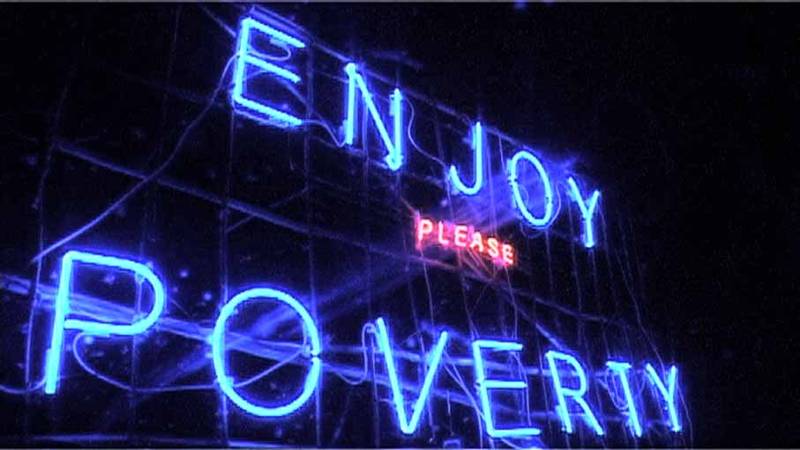
Film still from Enjoy Poverty, Renzo Martens. Copyright © Renzo Martens, 2008.

Film still from Enjoy Poverty, Renzo Martens. Copyright © Renzo Martens, 2008.
My concern lies elsewhere: what happens when humanitarianism becomes institutionalized into contemporary art. In photo festivals and museum exhibitions, climate crisis, racism, gender equality, and marginalized communities are increasingly presented through insipid, one-dimensional narratives, or worse, done in a self-aggrandizing manner. When artists do humanitarian photography, we get the worst of both worlds. The documentary narrative is interrupted by the posturing of an artist to stay away from sensationalism but the high-brow aesthetic language, when lazily applied, obscures and distracts the viewers from understanding the issue at hand. The artist performs critical distance while offering little critical insight. At the same time, uncritical projects simply reproduce the familiar logic of humanitarian photography, reinforcing the savior-victim narrative or descending into trauma dumping. The result is humanitarian slop.
Care and Political Correctness
Humanitarian slop is the symptom of the larger condition of what I call NGO curating, a curatorial model in which advocacy and moral positioning outweigh artistic merit and criticality. The rise of humanitarian photography in the arts is the convergent effect of two lines of thought: The first is the contemporary curatorial emphasis on care and public education in museums. The museum situates curatorial practice as institutional care with a well-intentioned reparative mission to right the past wrongs. One significant way this translates into actual practice is the inclusion of artists from marginalized communities who are historically excluded from the art world, as evident in the waves of exhibitions, artist residencies and awards themed around BIPOC, female and queer identities. The second is the dogma of political correctness. Once institutionalized, it defines what positions are considered socially acceptable based mainly on liberal politics, often articulated through the language of trauma and identity and subsequently calcified into undebatable dogmas and learned arguments such as ‘only white people can be racist.’3 As museums assume the role of advocacy, they can no longer ignore political correctness lest they seem hypocritical. Consequently and perhaps ironically, this approach puts limits on museums as safe spaces for introspective examination and critiques of all ideas, including the liberal values the cultural field aligns itself with. Challenging the presumably correct morals, including humanitarianism, becomes scandalous and socially costly. The space for criticality gave way to the space for moral certainty. Museums increasingly resemble NGOs.
Problem 1 - virtue signalling and bureaucracy
Under NGO curating, curators become managers of morality, propagating a politically correct syllabus to the public. As the professional cost of taking provocative positions rises, exhibitions increasingly favor safe humanitarian narratives over works that genuinely challenge prevailing assumptions. Here, the word “safe” is the operative term, a piece of inherently bureaucratic vocabulary that signals the avoidance of controversy and the protection of institutional legitimacy. The result is a curatorial formula: identify a socially approved issue, represent it sympathetically, accompany it with the appropriate theoretical vocabulary, and present it as political urgency—as if checking boxes from unspoken key performance indicators of approved talking points. The exhibition may succeed in raising awareness, but rarely advances the conversation. This rewards photographic works that conform to the existing moral consensus but do not necessarily provide new insights, nuances and complexity beyond the already known. What do the viewers gain from yet another portrait of immigrants in their homes, of dating app matches, or another series of conventionally attractive sexualized queer bodies hanging in a museum?
We are not short of images of humanitarian crises in the age of doomscrolling. What separates art from the endless deluge of online images is not representation but argument. Art is the arguments artists construct by transforming the human condition into aesthetics. Felipe Romero Beltrán’s video work Recital – Four / To Fifty Pages of Spanish Immigration Law (2020), for example, portrays immigrants reciting the first page of Spain’s immigration law, in Spanish, their non-native tongue. As the young migrants struggled through reading aloud the text that controls their fate, each stuttering foreshadowed the difficulty they will face assimilating into a new country, but their persistence is a testament to their determination. Through the performative language of the camera, the work enlarges the simple act of reading into a meditation on migration, language, and power. Thoughtful artistic arguments on humanitarian crises exist.
Mere media representation in art spaces, strung together with theoretical keywords, is not enough. Once artists and curators stop interrogating the world, they surrender their role as cultural provocateurs and become moral administrators. NGO curating turns institutional care into a form of virtue signalling. Just as humanitarian photography instrumentalizes photography, NGO curating instrumentalizes art, turning museums from a space to provoke to a space to advocate. NGO curating is didactic. It’s reductive. It’s anti-intellectual. It’s self-congratulatory. It’s managerial. It’s moral gatekeeping. It lacks ambition, curiosity, imagination and artistic thinking. Above all, it produces exhibitions that do not ask questions but provide model answers.
Problem 2 - easy labelling, role-playing, and tokenism
The didactic moral framework that permits a one-dimensional narrative of complex humanitarian crises is built upon a fixed oppressor-victim dynamic. Can marginalized groups become oppressors in other contexts? Are non-white societies incapable of reproducing systems of domination? Such questions become difficult to ask, not because they lack empirical examples, but because they disrupt the moral grammar through which NGO curating understands the world. When exhibitions approach colonial violence, we rarely see modern slavery in Hong Kong, Singapore and Dubai and homophobia in Nigeria. Critique of political oppression of ethnic minorities in China is irrelevant within a humanitarian discourse in museums that continues to locate oppression primarily in the legacy of Western colonialism and the NGO portrayal of the historically oppressed as virtuous victims. When violence cannot be traced directly to western colonial history, it is often softened through cultural relativism rather than confronted on its own terms.4 Themes such as misogyny in South Korea and Japan rarely get the space they deserve because they do not fit the NGO framing of the West as the oppressor par excellence that legitimizes the museum’s role as an apologetic carer. Moreover, critiquing the ‘victims’ risks a bad look for the museum.
This kind of simplified narrative fostered by NGO curating feeds the heroic feel-good ego. It may explain why anglophone cultural institutions, the epicenter of NGO curating, have struggled to respond consistently to Israel’s genocidal assault on Gaza. Once political actors are assigned fixed moral roles of victim and oppressor, critical judgement gives way to inherited narratives: Jewish people are historically oppressed. And once the victim narrative sets in, criticality ceases to exist, morality comes in, the ‘heroes’ take the side of the ‘victims,’ and anti-Zionism becomes antisemitism. Pro-Palestine activist groups are designated as terrorist organizations. This is indicative of how institutions, public or cultural, predominantly but NOT exclusively in the west, retain a monopoly of judging others. And politicians, artists, and curators use their power to promote this learned judgement as if their key purpose is to uphold it with unwavering stubbornness lest they become a social outcast for betraying the dogma, rather than acting from the faculty of reason.
The heroic narrative perpetuated by NGO curating permeates into the politics of inclusion. Institutions were right to open exhibitions and curatorial positions to people historically excluded from the art world. However, this is often done with the intention of reparation rather than genuinely celebrating diversity. Diversity in perspectives and intellectual positions, and not just in terms of ethnicity, gender, or the lesser talked-about socio-economic class. A quick example: Queerness offers an interesting window to contemplate life not centered around reproductive needs and explores kinship beyond blood bonds.5 Queer people are a critical embodiment of an alternative lifestyle, which has the potential to liberate both queer and straight folks from the hegemony of biological time and gender roles. Queerness is also not all sunshine and flowers. Negotiating the anarchy of kinship comes with its own toxicity and messiness. There are many perspectives queerness can offer, but the humanitarian lens reduced it to the slogan of “representation matters,” of “love is love,” of “gay is not a choice,” as if it is still radical to see queer nudes per se in an exhibition in cities where you can see Grindr ads on the subway. It’s preaching to the converted. It’s moral posturing. There is a hubris within the cultural industry to sell already accepted positions as avant-garde, ignoring how both mainstream media and subcultures, from drag shows and homoerotic fan-fiction to online kink communities, have been deeply experimental with kinship and queer time. (And no, I don’t need to see a documentary photography project on drag queens/kings or furries for representation’s sake. They have Instagram and OnlyFans accounts.)
One of the moral faux-pas in contemporary photography, inherited from the critique of humanitarianism and war photography, is when artists portray communities outside of theirs. Under the NGO lens, artists in privileged positions (white, rich, cisgender, and/or male) are subjected to particular scrutiny, while museums increasingly favor self-representation. Yet the underlying narrative changes very little. Contemporary photo exhibitions themed around queerness offer different versions of sexualized bodies, personal struggles, and trauma, packaged in similar ways for the voyeuristic gaze, only now with BIPOC/queer artists cast as the director. The difference this time is that the self-representation comes with a touch of authenticity, self-pity, self-exoticization, and institutional white-guilt that cement the same old savior-victim dynamics. At best, the result is patronizing; at worst, it is instrumentalizing the humanitarian crisis for moral posturing. It’s the ventriloquist’s hand penetrating the marginalized body to speak the same script.
More troubling still, NGO curating reshapes artistic production. The moralistic fixation fosters a culture of pigeonholing non-normative artists into a narrow range of humanitarian subjects. Over time, some artists internalize the charitable curatorial logic, creating works that affirm the assigned victimhood. They anticipate the humanitarian gaze, becoming conditioned to present their subjectivities in the language of trauma and identity. They over-identify with humanitarian crises because those are the terms contemporary institutions have learned to recognize. I know a non-European artist who was initially interested in scientific photography, after receiving an art education in Europe, shifted towards making tapestry art about immigration. Yes, artists take inspiration from their circumstances and their interests evolve. It’s unhelpful to examine from a personal moral level whether this move is authentic or opportunistic. However, I can’t help but wonder how much humanitarianism in museums and grant foundations have nudged artists into a caricature of themselves. If so, help, as Anne Lamott puts it, is truly the sunny side of control.
Control operates externally in institutions through the selection of narratives and internally through the humanitarian language artists adopt to describe themselves. Here, the example Catherine Liu gave on the PTSD diagnosis during the 2004 Indonesian tsunami provides a cautionary tale. In the aftermath of the disaster, US aid organizations distributed trauma packs containing first-aid supplies alongside antidepressants, while psychiatrists ran PTSD diagnoses on survivors. Interestingly, those who received treatment increasingly understood their experience through the language of trauma, whereas many who did not receive—or rejected—the intervention did not show symptoms of PTSD at all. The point is not that suffering was absent, but that the vocabulary humanitarian institutions introduced created a pathological framing of their experience and unknowingly manifested an epidemic of mental disorder. For some, their suffering is made legible through the term PTSD. For others not buying into the psychiatric language, they dodged the bullet by remaining illegible to the western psychopharmaceutical industry that tries to sell them packaged solutions.6
More devastating than marketing one’s experience as trauma is identifying oneself as the victim in the savior-victim framework. Rene Matić’s Deutsche Börse Photography Foundation Prize-winning exhibition at The Photographers’ Gallery commits a similar mistake to Deubner’s. Matić’s diaristic snapshots, framed in clear perspex sheets, depict scenes from everyday life—from domestic still lifes to same-sex couples kissing—lit with on-camera flash that evokes nostalgia and a realist aesthetic. Matić’s aesthetic choices resemble an early-2010s Tumblr blog, offering self-representation in its most literal form, with a hint of adolescent vanity that asserts autobiography alone carries artistic weight and that they are speaking truth through their slice-of-life photographs. Yet, their looking does not go beyond what is expected. I find it difficult to imagine the work receiving the same institutional recognition had it not been framed, by Matić themself, as the perspective of a queer, working-class artist of color, against the fierce competition from the other shortlisted photographers Jane Evelyn Atwood, Weronika Gęsicka, and Amak Mahmoodian. Agree to disagree but there’s a nugget of truth in Charlotte Jansen’s observation that “how you market yourself is possibly more important than the work you make” in today’s contemporary photography scene.
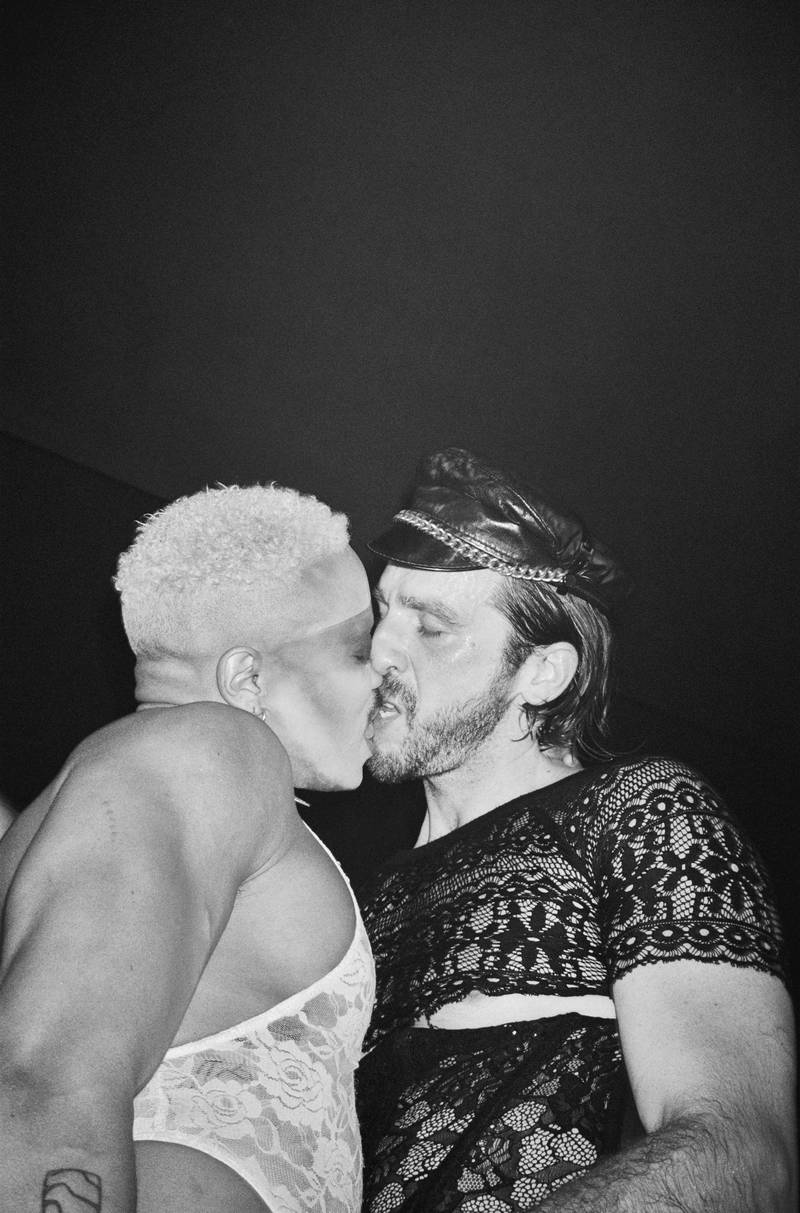
Rene Matic, Kiss, Glastonbury Festival, 2024. Courtesy of the artist and Arcadia Missa, London
Problem 3 - art as philosophical inquiry beyond morality
The final and perhaps most damaging impact of NGO curating on contemporary photography is simple: it produces boring art. Ecology is not boring, and queerness offers provocation. However, once ecology and queerness are rendered through the humanitarian lens, with its fixed moral grammar of good victim, bad oppressor and virtuous hero, they become environmentalism and identity politics. This has given rise to predictable aesthetic choices and positions diminishing the space for curious exploration into plain, performative public service announcements.
Humanitarian photography tends to lack criticality, because understandably they rely on emotionality: its major purpose is to raise awareness and tug on the viewer’s emotional strings. It’s meant to be easy to read, instantly identifiable with a clear moral to teach. Contemporary photography can certainly draw from political struggle, but it should not advocate using the same affective language of humanitarian photography. Humanitarian logic often produces bad art not because they are “woke.” They produce weak art because they substitute moral certainty for artistic argument. They are no more interesting than right-wing propaganda, which likewise instrumentalizes art in the service of fixed ideological messaging, perhaps in worse taste; see Trump’s gaudy Christian-symbol-filled AI slop on X. When art stops challenging the status quo, it becomes propaganda. At that moment, they become boring.
If social progress means dismantling inherited categories and historical presumptions in pursuit of a deeper understanding of our world, then the merging of NGO and contemporary art risks producing a new orthodoxy rather than new thought. Humanitarian narratives resort to moral guilt-tripping rather than treating these ideas as avant-garde positions that can stand on their own. Art is about deliberate negation. Art occupies a unique space to present critical philosophical inquiry from beyond economic, social, and moral systems. And it does that through aesthetic arguments that trigger a rethinking of these systems. Art embraces ambiguity and complexity. To replace artistic arguments with moral positions is to waste the potential of contemporary art.
Artists can and should approach defining questions of their time. Many have successfully done so. In On Rape, Laia Abril’s monumental still lifes of the clothing worn by rape survivors at the moment of cruel assault are a silent and powerful rebuttal to the misogynistic logic of victim blaming—the clothes they wore do not matter. The direct, matter-of-fact yet solemn display of clothing ranging from a toddler’s dress to a nun’s habit pierces through patriarchal hypocrisy. Yet, Abril does not stop there; the testimonies accompanying the clothing tell her subjects’ stories, revealing rape can happen in any institution, and the perpetrator can be any gender. Ultimately, it reveals institutional failure while not excusing individual responsibility or minimizing personal trauma. Pixy Liao’s Experimental Relationship likewise exceeds the political category through which it is often read. Her playful and straightforward series of self-portraits with her boyfriend, often in poses that subvert gender stereotypes, of her squeezing his nipple, lifting him up or embracing him in the style of the Madonna and her child. In some of her early photographs, they are naked and other times he is naked while she is fully clothed. These images undoubtedly invite feminist readings, yet they are equally about intimacy, humour, and tenderness. We see the trust the couple has for each other and their love comes before the political statement. As Liao explained in an interview, while gender equality matters, “that doesn’t mean everything has to be for that purpose, [such as], something like art.”7
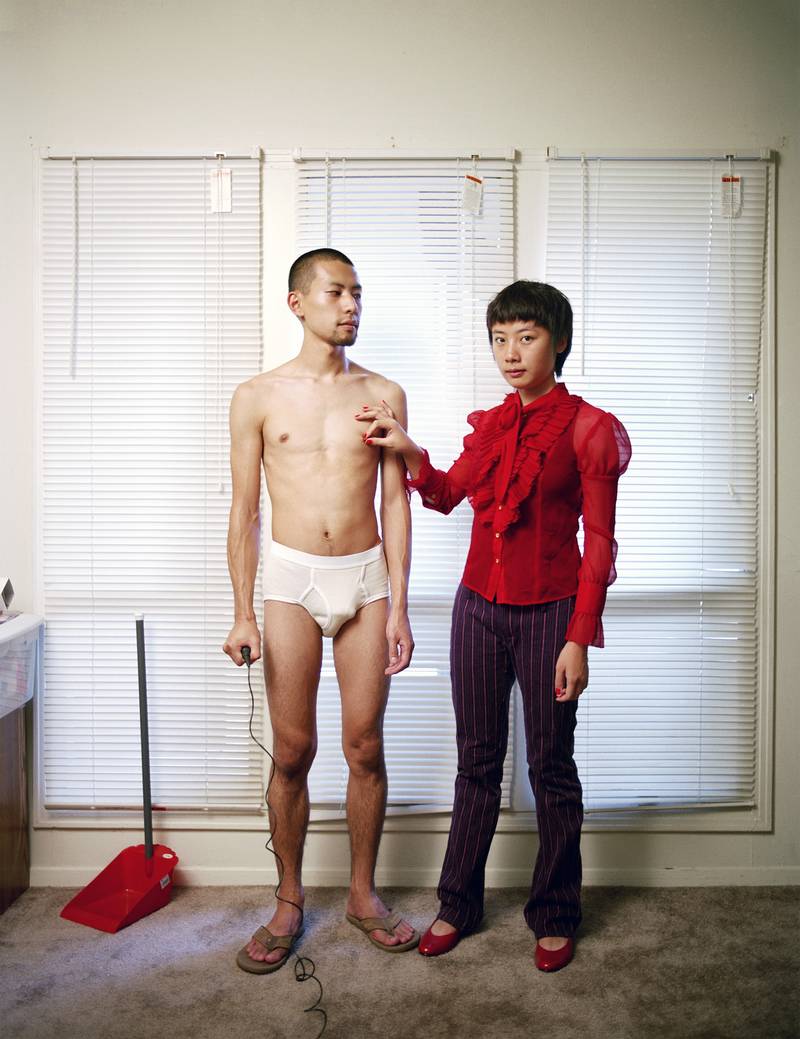
Pixy Liao, Relationships work best when each partner knows their proper place, 2008. Courtesy of artist and Blindspot Gallery.

Pixy Liao, Holding, 2014. Courtesy of artist and Blindspot Gallery.
Conclusion - the image is the center. Good art needs good aesthetics and good argument
The image IS the center. Art is the center of curating. Moral conviction and artistic excellence are not mutually exclusive, but contemporary photography must reflect on its role and resist becoming mere humanitarian. Humanitarian logic leads to lazy curating. Art’s task is not simply to affirm the moral consensus of its moment but to ask questions that politics, journalism, and advocacy cannot. The worst kind of art is the boring kind. Boring means instrumentalizing art for advocacy. Boring means mistaking morality for criticality.
Anti-racism is as much about confronting violence historically enacted on colonized bodies as confronting modern slavery in post-colonial states. Diversity is a project to uplift groups who have been historically disenfranchised as much as to acknowledge bad actors in all communities. The goal of equality is to judge everyone based on their actions, rather than an unjust view on race and gender, nor from a rose-tinted fetishization or fascination. Equality requires judging artists by the strength of their work rather than the identity they represent. Humanitarianism creates victims, oppressors, and heroes. Art should resist easy categories. Otherwise, contemporary art is reduced to a competition of social relevance, institutional virtue, and the marketing of trauma. After all, bad art is bad art.
-
 READ
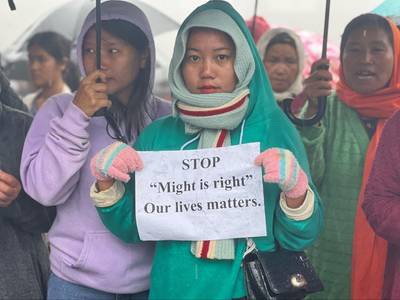
I’ve been reporting from Manipur since June 2023. From the very beginning, I could understand that though women were contributing as much as men in facing the brunt of the war, their roles never received enough acknowledgment nor were their views taken into account while making important decisions. As an outsider, I could see that women leaders had a much more pragmatic method and manner of dealing with most situations, yet they found no place on the leadership table. This, I was made to understand, stems from a society that is founded on a patriarchal structure, yet a visible reluctance of present-day male-dominated organizations to relinquish space to women during a crucial time as this continues.
What it means to survive a war, with dignity
-
 READ
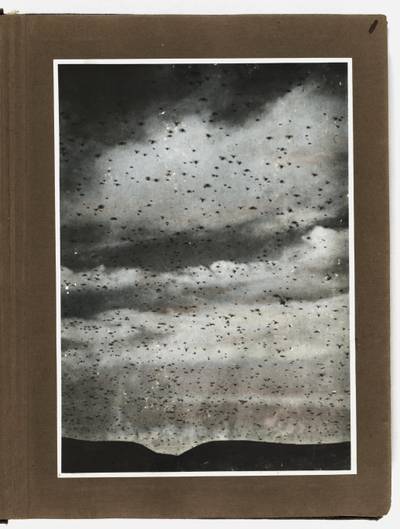
To revisit these images today—historical, archival, and contemporary—is to confront multiple temporalities: the gaze of missionary projection, the habitual and the foreseeable. These layers coexist, sometimes always in tension, revealing the land’s persistence beyond imposed narratives. Unbiblifying is not about erasure; it is about recognizing the sacred not as revelation but as habit, not as myth but as presence.
Theology of the Image: Unbiblifying the Sacred
-
 READ
Educational institutions, just like all other institutions, can be considered microcosms of society, where prevailing attitudes and values manifest. Consequently, as racism permeates Finnish society, it also seeps into Finnish daycares.
Microaggressions & Everyday Racism in Finland’s Daycare System
-
 READ
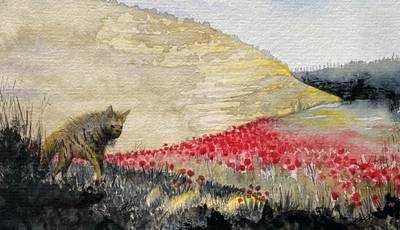
Where the striped hyenas are is not only a place in the imagination or in the past. Where the striped hyenas are is also a possibility for what the future could bring. It’s where they lie, waiting for their turn to return from their exile. Where the hyenas are is also where the ghouls and the djinn are, behind seven mountains, dreaming and chasing their world into being again.
Where the Striped Hyenas Are, or, A Tale Is a Map and a Compass: Some Fragments on the Fantastical, Land and Remembrance