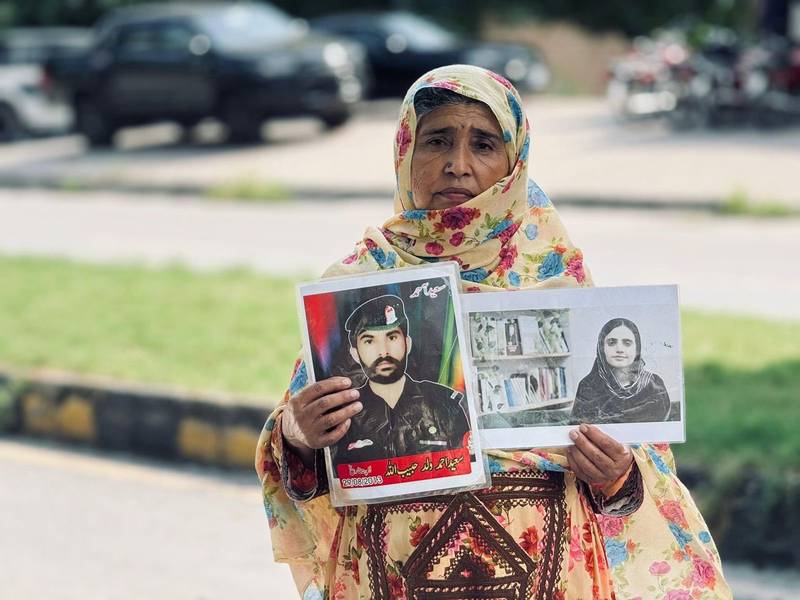
Amma Zargul during a protest sit-in at Country’s capital in 2025. Holding her son Saeed’s picture along with Dr Mahrang’s.
Hazaran Rahim Dad is a Balochistan-based writer and journalist with a background in English Literature. Her work focuses on the lived experiences of the Baloch people and their socio-political struggles in Pakistan.
Last year, in the middle of November, I traveled from Karachi to Mastung. My friends, who were supposed to accompany me to Amma Zargul’s house, told me they would wait at a famous roadside hotel. I arrived earlier than them, and since I was alone, I didn’t feel it was appropriate to wait outside on the road. Instead, I decided to enter the hotel. After all, how could I miss a chai in Mastung, a town famous for its tea? There was a separate area for women at the back.
Soon, a baar wala approached me, behaving oddly. I asked for a chai without sugar. He asked if anyone else was with me. It wasn’t his business, but I replied no. He questioned me further, but I ignored him. A few minutes later, he returned—still without the chai—and again asked if anyone was coming to receive me or if I was waiting alone. I asked him if the chai was ready. He finally left to bring it, eyeing me curiously as I photographed the tea without paying attention to him.
I sipped my chai, thinking it was over, when he returned. Irritated, I asked if I was sitting in the wrong place. He smiled and reassured me it was indeed the ladies’ area. I pressed, and he explained: he was concerned for my safety. Mastung can be unpredictable: roads are regularly blocked by separatist groups, and the arrival of security forces can turn the situation chaotic at any moment. Since I had come alone, he just wanted to make sure I left safely.
I wanted another cup of chai, but the ordeal had drained my patience. He insisted he would bring it anyway, but by then, my friends arrived to receive me.
I feel guilty, and writing becomes both an honor and a curse: at least I document their lives, yet it cannot change their reality. You cannot sit across from someone and ask how they have lost a loved one, how they are living with the void, without feeling the weight of their pain.
When I arrived at Amma Zargul’s house in the Killi Koongad area of Mastung, she was already waiting for me outside. She greeted me with the warmth of someone I had known for years, repeatedly expressing her gratitude that I had traveled all the way to write about her son. I told her it was my job and wished, silently, that her son would return soon. She asked if I had any news about Dr. Mahrang’s release. I told her I didn’t.
There is a heavy, strange feeling I carry with me all the time. The air in a home suffused with the absence of a loved one suffocates my breath. I feel guilty, and writing becomes both an honor and a curse: at least I document their lives, yet it cannot change their reality. You cannot sit across from someone and ask how they have lost a loved one, how they are living with the void, without feeling the weight of their pain.
As I wrestled with these thoughts, Amma Zargul’s other son, Abdul Waheed, placed three files before me. They were thick with documents—court papers, photographs, applications—so many that I felt exhausted just looking at them. I immediately put them aside, overwhelmed. And I kept thinking: how can lives be reduced to pages in a file, albeit held so dearly, each one a testament to love, loss, and hope.
The story of Zargul whom we dearly call ‘Amma’ or ‘lumma’ out of respect and love for elders, unfolds in Balochistan, a province that has long been shaped by layers of political unrest, underdevelopment, and insurgency. Since its incorporation into Pakistan in 1948, the region has seen recurring separatist movements driven by demands for greater political autonomy and control over local resources, alongside long-standing grievances over political exclusion and economic marginalization.
Within this broader and often volatile backdrop, enforced disappearances have become one of the most persistent and painful issues and Amma’s grief also traces back to this long-standing issue of disappearances in the region. Human rights organizations have documented cases in which individuals suspected of links to separatist groups—or even those expressing dissenting political views—were detained without formal charges, with many never returning home. Over time, families of the missing have turned to protests, marches, and sit-ins in search of answers.
It is against this lived reality that movements such as the Baloch Yakjehti Committee (BYC) have emerged, positioning themselves as voices against what they describe as a growing culture of impunity. The movement has drawn wider attention in recent years, particularly under its chief, Dr. Mahrang Baloch, about whom Amma Zargul also inquired to me, has been arrested and has remained in detention since March, 2025, after speaking out against such violations.
Amma Zargul, 2009
Amma Zargul recalls that her life was once normal, even easy. That changed in 2009, when her 21-year-old son, Mir Mohammad Shawani, received a phone call, stepped out, and never returned. He remained missing for a month and a half, until his body was found in a dry well. His hands and feet were bound, wrapped in a quilt, and his neck bore clear signs of strangulation.
The family had filed a missing person report at the Mastung Police Station. Mir Mohammad was only 21 years old. They alleged that a powerful neighbor, Ghulam Haider, and his sons were responsible. The police arrested them, and they remained in custody for six months before being released. The family had no knowledge about their release; they only learned about it four years later, while the suspects had moved to Quetta.
Amma Zargul, 2011
In 2011, Amma Zargul faced another unimaginable loss. Her 17-year-old son, Riaz Ahmad, left home one morning during the snow season after having breakfast, stepping out to watch snowy scenes outside. As he sipped his tea and left, Zargul recalls, she had an uneasy feeling, "a mother’s heart can sense when something is wrong.” She ran to call him back, but he was gone. She hurried to a nearby friend’s house, hoping he might be there with friends, but still, he could not be found.
According to the family, Riaz was allegedly abducted by two men on a motorcycle. They had no idea who the men were, or why they had taken him. Two and a half months later, people from the area gathered at a picnic spot in Mastung and discovered a mutilated, unrecognizable body. Police later confirmed it was Riaz Ahmad. Even the family could not identify him immediately. His body bore knife wounds all over.
The family never learned who had taken him, or who had killed him. During his disappearance, they filed an FIR to no avail.
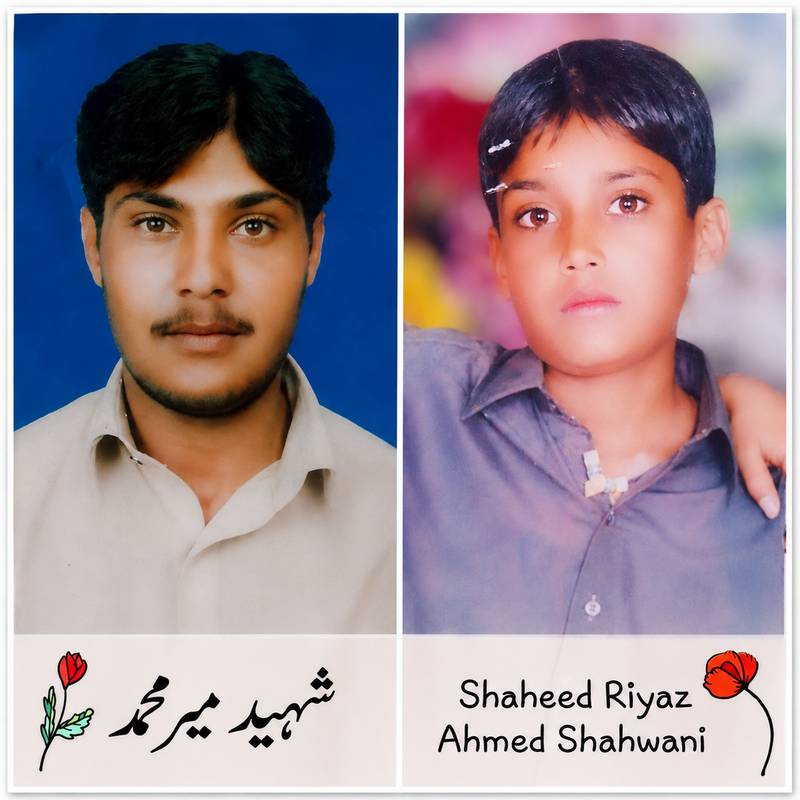
Left: Mir Mohammad. Right: Riaz Ahmed.
Amma Zargul, 2013
Her eldest son, Saeed Ahmed, had joined the police in 2012, stationed at the Deputy Commissioner’s office in Mastung. One day, while returning from duty with his police cousin, Hafiz Abdullah, they were allegedly forcibly disappeared by the Frontier Corps (FC). The family rushed to lodge an FIR, but the police initially refused. It took seven months before a formal report was filed against “unknown persons.”
A local resident, Saifullah after his release, later told the family that he had seen Saeed Ahmed in FC custody. Tragically, Saifullah died in an accident just a month after sharing this information. Hafiz Abdullah was eventually released in 2017, five years after his disappearance. He told the family that he had spent two years in custody alongside Saeed Ahmed, after which their cells were separated. When asked why they had been taken, he was told it was for “Hawara-gardi.”
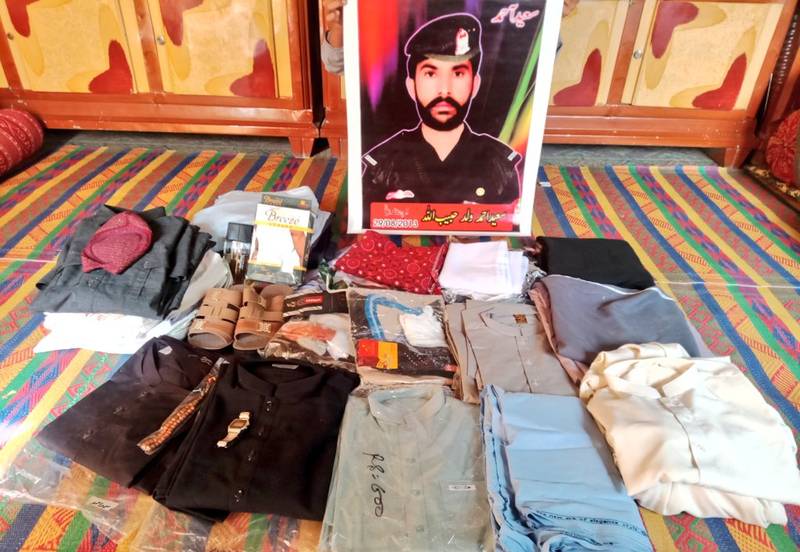
Saeed’s belongings Amma has still kept with her in all these years.
Amma Zargul, 2016
For the first time since her son’s disappearance, Amma Zargul stepped outside her home, accompanying her daughter, Bibi Fareeda, to the Sarawan Press Club in Mastung, demanding Saeed Ahmed’s release.
The same year, another tragedy struck the family. During a raid on their home, her son Abdul Waheed was forcibly taken by the FC, and his motorcycle was confiscated. The family resisted, but they were threatened and harassed. The shock was unbearable for the household. Her youngest daughter, Bibi Shabana, could not withstand the trauma, she vomited twice that night and later passed away from what the family believes was a heart attack, triggered by witnessing the loss of her fourth brother. Abdul Waheed was eventually released after three months.
Amma Zargul, 2017 and Beyond
In 2017, the family recalls, a colonel called Saeed Ahmed’s father, Habib Ullah, to the local centre to “sign some papers” to secure his son’s release. Habib Ullah, who is not formally educated, signed and stamped four documents without being able to read them. The family alleges that this happened two more times that year under similar circumstances.
That same year, during a raid in Killi Koongad, twenty people were taken by security forces, including Abdul Waheed. This time, he was released after twenty days. Meanwhile, the family registered Saeed Ahmed’s case at the Quetta Secretariat. The case was closed in 2020, only to be reopened in 2022 after they filed a new application.
In 2018, FC personnel came to the area on motorcycles and asked Habib Ullah to sign a small paper. This time, he called someone to read it aloud. He was told the document stated that his son would be released. He signed again, hopeful for his son’s return.
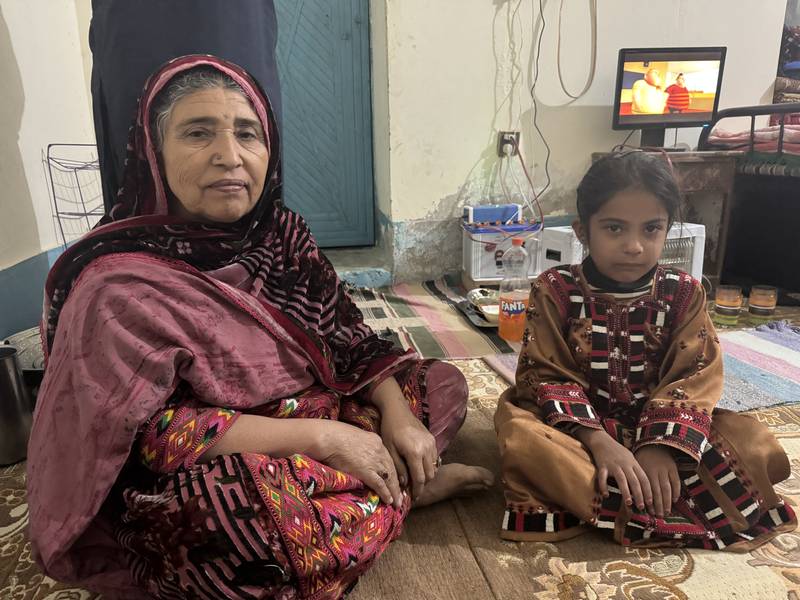
‘Amma’ Zargul, with her granddaughter Shabana.
Amma Zargul, Today: A Mother’s Unbroken Resolve
Amma Zargul has a granddaughter from her daughter Farida, whom they have named Shabana, keeping the memory of her lost daughter alive. “The government should have realized that I have already lost two sons. They should have shown mercy and not disappeared Saeed,” she says.
She speaks of raising her sons with care and love, sending them to school, hoping they would grow into responsible, upright men who could support her in the future. “But I never imagined life could descend to this depth of sorrow,” she adds.
Saeed had loved pigeons, and even after years of disappearance, she still keeps pigeons in her home. She has lost two sons and a daughter, yet the waiting—for Saeed—remains the cruelest part. Every day and night, she is tormented by uncertainty.
“My bones are tired,” she says, “but at the sit-ins and protests, I am never alone. Hundreds of mothers and daughters sit with me, carrying the same pain. So how can I rest, when this pain is shared?”
Saeed’s brother, Abdul Waheed, recalls that Saeed always encouraged him to study well and aim higher: “He told me to become an officer, not just a police constable like him. But now…everything has ended for me.” Waheed quit his studies and runs a small shop. Their father, a retired Levies sepoy, left the service in 2010, carrying his own grief.
Amma Zargul recalls how, from 2016 until today, she has moved between sit-ins that stretch for days and sometimes months—held in Islamabad’s coldest winter hours and Quetta’s harshest summers. Each time she returns home, she is met by the same walls and the same silence. And each time, she tells her husband the same thing: that she was unable to secure their son Saeed’s release.
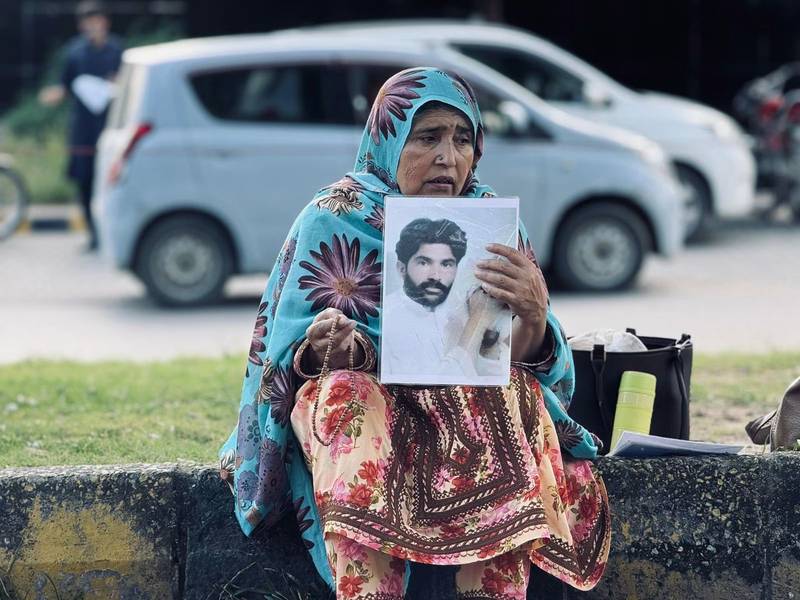
Amma Zargul holds her son Saeed’s picture during a protest.
People around her urge her to stop. “You are old now,” they tell her. “You should rest. Leave it to Allah.” But she responds with quiet conviction: even faith, she says, is meant for those who continue to struggle.
At times, she admits, their words do reach her. She stays home for a while. But then her eyes fall again on Saeed’s boots and clothes, carefully preserved in the same place, untouched. Every Eid, she stitches new clothes for him. “At least if he returns,” she says, “he should not think I stopped believing he would come back. I want him to see that I waited.”
Her voice carries exhaustion, but also resilience. “My bones are tired,” she says, “but at the sit-ins and protests, I am never alone. Hundreds of mothers and daughters sit with me, carrying the same pain. So how can I rest, when this pain is shared?”
Despite the personal tragedies, Amma Zargul has become a symbol of resistance. She has joined numerous protests, rallies, and sit-ins for her son and other missing persons from Quetta to Islamabad to Mastung, sometimes jailed, sometimes dragged during demonstrations. “But my heart and will are not defeated. I am now part of the resistance,” she declares.
Amma Zargul is a Brahui speaker, I speak Balochi. Another friend translated our words to each other. She told me I seemed cheerful, and that next time we speak either I should learn Brahui, or she, Balochi. We laughed. I told her that next time I come, it should be to celebrate her son’s release. She replied that by then, we would not need language; we would only laugh and keep laughing.
She burst into tears, and I remained silent, holding onto that moment until we said goodbye.
-
 READ
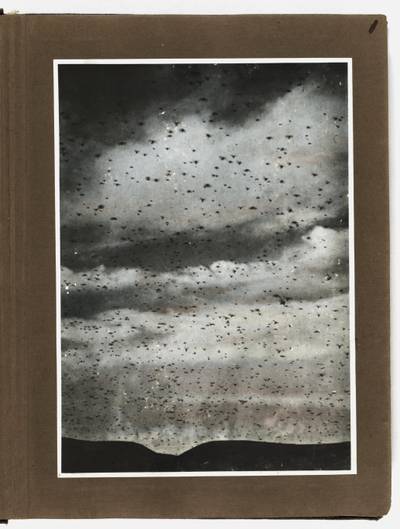
READTo revisit these images today—historical, archival, and contemporary—is to confront multiple temporalities: the gaze of missionary projection, the habitual and the foreseeable. These layers coexist, sometimes always in tension, revealing the land’s persistence beyond imposed narratives. Unbiblifying is not about erasure; it is about recognizing the sacred not as revelation but as habit, not as myth but as presence.
Theology of the Image: Unbiblifying the Sacred
-
 READ
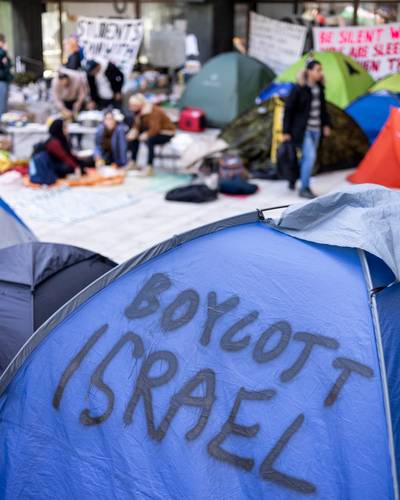
READThe opposition is not only between institutions and student activists—it also exists within our movement, manifesting in differing strategies. Should we focus on direct, visible actions or institutional processes? Should we shame the university publicly or appeal to its conscience? These approaches are not mutually exclusive—they reinforce each other.
Disrupting Complicity: Students Organising for Palestine in Finland
-
 READ
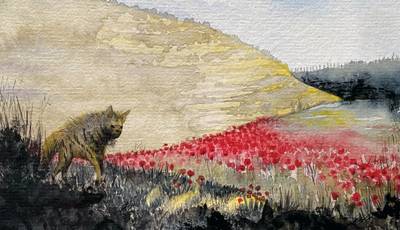
READWhere the striped hyenas are is not only a place in the imagination or in the past. Where the striped hyenas are is also a possibility for what the future could bring. It’s where they lie, waiting for their turn to return from their exile. Where the hyenas are is also where the ghouls and the djinn are, behind seven mountains, dreaming and chasing their world into being again.
Where the Striped Hyenas Are, or, A Tale Is a Map and a Compass: Some Fragments on the Fantastical, Land and Remembrance
-
 READ
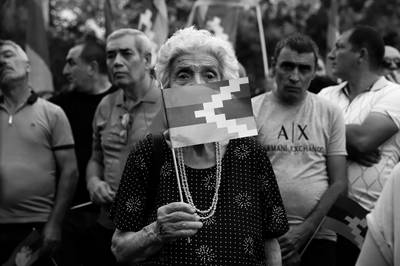
READWhile azerbaijan was bombing Armenians with israeli and turkish UAVs and paying bonuses to turkish-backed Syrian mercenaries for beheading Armenians, the “international community,” whatever that’s supposed to mean at this point, expressed lousy words of “concern,” and displayed a nauseous stance of both-sideism, devoid of any tangible action. The existence of this unrecognised republic and its indigenous population wasn’t legitimate enough for world powers to lift a finger.
Violent Septembers: An Armenian Perspective Amid the Ongoing Occupation