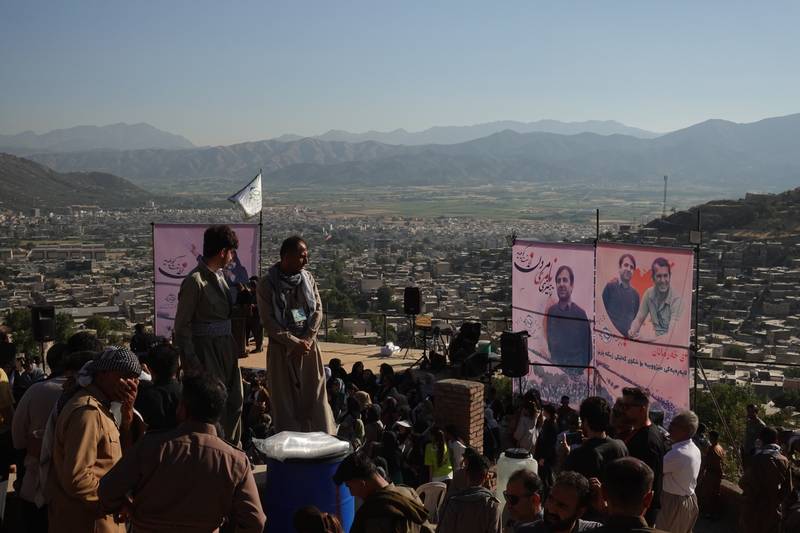
The seventh annual remembrance of Chya’s two latest martyrs, Kak-Sharif. The ceremony was on top of a mountain overlooking Mariwan and the mountains.
Zagros Hamidi is a researcher-writer based in Iran, mostly speculating and working on an independent publishing project.
Diba TajAbadi is a researcher and a wanderer-gatherer based in Iran, working across speculative ecologies, independent publishing, and architectures of community-making.
As two visitors, we ventured into the Kurdistan province in Iran. The Kurdish people are significantly spread across West Asia, with one of these geographies being Western Iran. We spent a few months living in both Mariwan and Sanandaj, the former a small city bordering Iraq, the latter the capital of the province. The day we arrived in Sanandaj, in transit to Mariwan, we immediately heard of three young boys who had lost their lives in a recent wildfire. As we entered Mariwan, what became apparent was that wildfires and their martyrs had become iconography in this region. We started asking questions.
We’ve only included the names and faces of people who have consented to being part of this article. The rest are either anonymized or are simply referred to without any markers of identity. Speaking out on this issue poses a risk, which is why we have decided to remain anonymous as well.
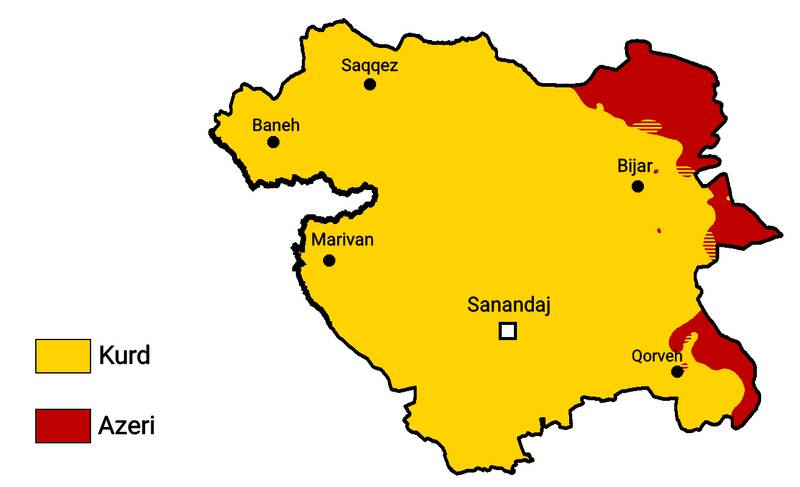
Covering most of Kurdistan’s western border, the Zagros mountain range, with its five to six million hectares of forest, accounts for roughly 40–42 percent of all of Iran’s forests and stretches across eleven provinces. It’s the cradle of millions of plant and animal species, sustaining over half of Iran’s livestock—more than 35 million sheep and cattle—and provides nearly 50 percent of the water for the Iranian plateau. As the ecological spine of Iran, the Zagros forests also sustain the livelihoods of more than 36 million people living in Western Iran, where Kurdistan province is.
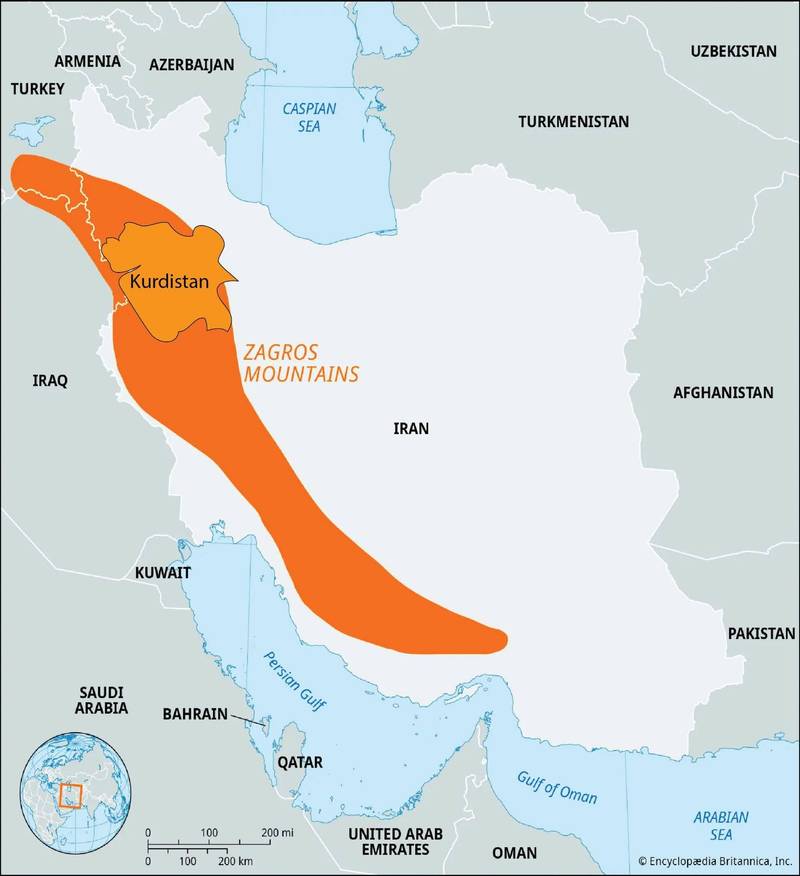
Map of Iran and Kurdistan province.
Mariwan
We were told to show up at the دکه — dakkeh — kiosk, then find someone named Mr. K, and he would tell us where to go. There’d been a raging forest fire for the past week, and Mr. K finally agreed to let us join his team; it had been too dangerous the previous days. For almost a week, we had been in contact with the leader of Mariwan’s main environmental organization, Anjoman-e Chya (انجمن سبز چیا, “Chya Green Association”)— virtually the only first responders in case of fire.
The organization was established in 2002. Its stated focus is environmental protection, forests and rangelands, public culture-building, and civic participation. It’s structured with volunteer committees — an arts committee (photography, film, and theater), a cultural committee (publications, education, public participation), and an executive committee handling events, seminars, and environmental cleanups — and at one point had over 150 volunteer members.1
The dakkeh itself used to belong to Kak-Sharif—Kak is a respectful prefix— an incredibly popular Mariwanian martyr who died in a wildfire around 6 years ago. On the sign is an image of him smiling thoughtfully; since arriving, we had already seen his picture as phone backgrounds or Instagram profile pictures. Surrounding him are the colors of the Kurdish flag, whose significance Mr. K and others point out to us: white, green, yellow, and red. Red symbolizes the blood of martyrs and the struggle for freedom. Yellow, the sun. Green, the environment. ژینگه–– Jinge.
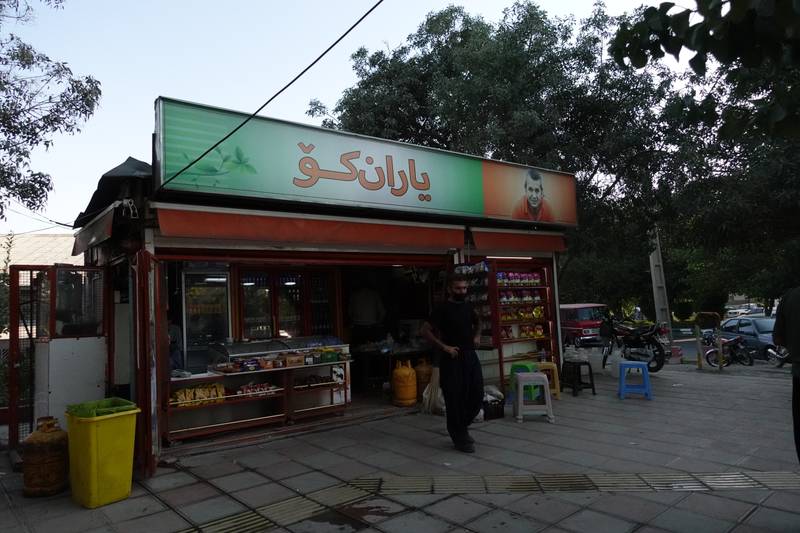
The دکه — dakkeh — that used to belong to Kak-Sharif.
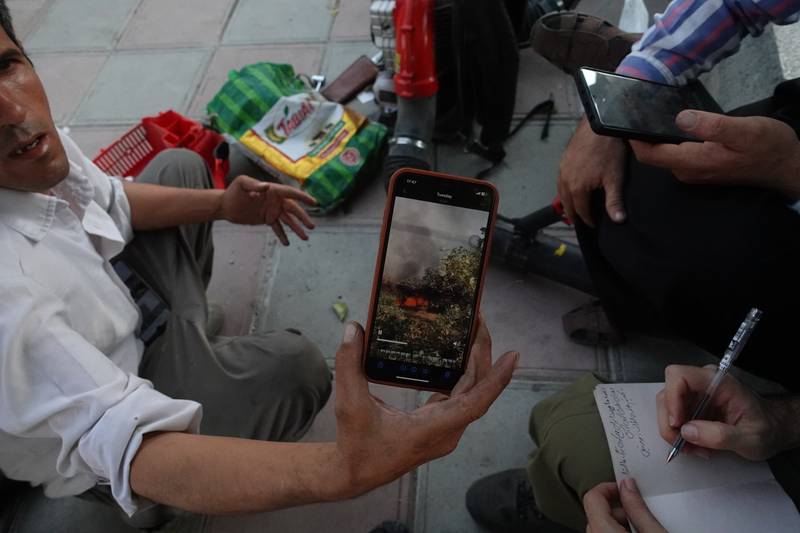
As we approach the dakkeh, there’s a young boy engineering and repairing the fire extinguishers—or repurposed lawnmowers, we can’t tell—and a group of resting firefighters that we join, showing us personal images saved on their phones from the previous nights. Is this where we are headed?
Our patrol has arrived. Five men, already looking tired and worn, how are they to last another round? The city is buzzing, the sun is setting, people are out drinking chai, and as our pickup truck passes by a busy spot, older men stand up, wave their hands briskly from their foreheads or hearts and upward, saluting our companions. They accidentally lock eyes with us as well, allowing us to momentarily partake in their mythology. One second, they’re on the back of a truck; the next, their faces sedimented on phone backgrounds, MARTYR written across, grimly. We ask one of the patrollers why they’re doing all this work. He answers: ‘Because we are Zagros.’
The sun has set when we reach the first destination. Everyone seems disappointed by the darkness, but it brings the point home—the light source is the fires. On the way, dense smoke rose from the mountains, and up close, it’s a black mass with clusters of livid orange. Our truck’s headlights illuminate a large crowd, a mirage of young and old men chatting and exchanging gear, the oldest members holding walking sticks. The duration of it all. Engines rev in the darkness, and we fumble while quickly hopping back on.
It smells. Not like fire, but something else we can’t quite figure out. With torches and headlights, we walk into the burning forest. Zagros echoes like an immense tomb, yet the fires still burn. Why are the sky’s tears not putting them out?
A week prior. Walking into Anjoman-e Chya’s office, the leading environmental organization in the region, we look to our left and are met with rows of shelves displaying local and international trophies, as well as the clothes of their two recent martyrs, worn during the fatal mission: Kak-Sharif and Kak-Omid. We sit down on opposite sides of the table with Mr. Hosseini, one of the organization’s founding members, a friend of a friend.
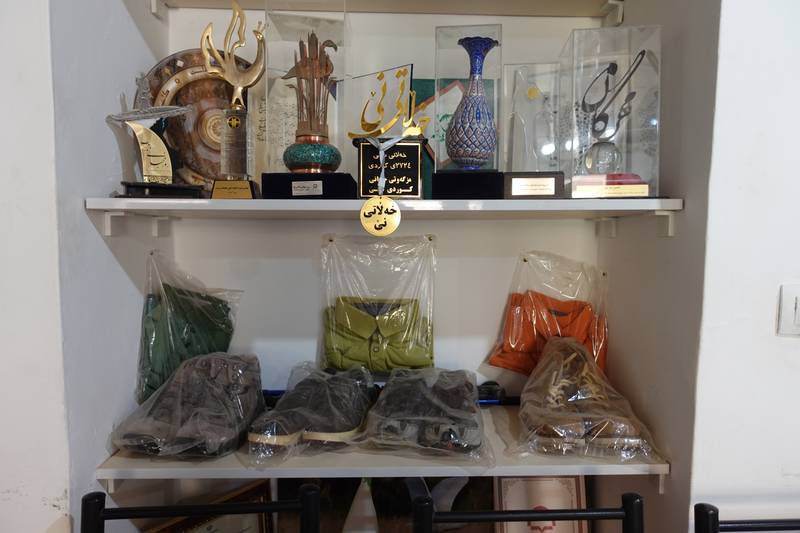
The shoes, t-shirts, and pants of two of Chya’s recent martyrs: Kak-Sharif and Kak-Omid, packed neatly in plastic bags.
The tea has brewed. Mr. Hosseini is patiently impatient. We start recording.
‘Wildfires are not natural to Zagros, but it’s practically impossible to find a day when there’s not a single fire occurring somewhere in the region.’
Chya was founded in 1999, quite organically so, as locals self-organized to deal with an unprecedented but relatively small (by today’s standards) wave of wildfires across the region, specifically along the western border to Iraq. There were around four fires that year. To give you a sense of the sudden and completely unprecedented catastrophe that followed: the year 2010 saw approximately 980 wildfires and was dubbed ‘the year of hell’. That’s almost 3 fires a day; however, since the fire season is in summer, they were dealing with something like 30 fires a day.2
They have educated and negotiated with locals where they naturally gather: gyms, elementary schools, and after Friday prayers at the mosque. When mobilizing women, they would send all-female committees to discuss conservation and wildlife in a neighbourhood’s shaded gathering spots, mobilizing while cleaning herbs in the coolness of a tree. Chya has dealt with two major issues in Mariwan specifically: cleaning up and preserving Zaribar — one of the world’s largest freshwater lakes — and illegal hunting.
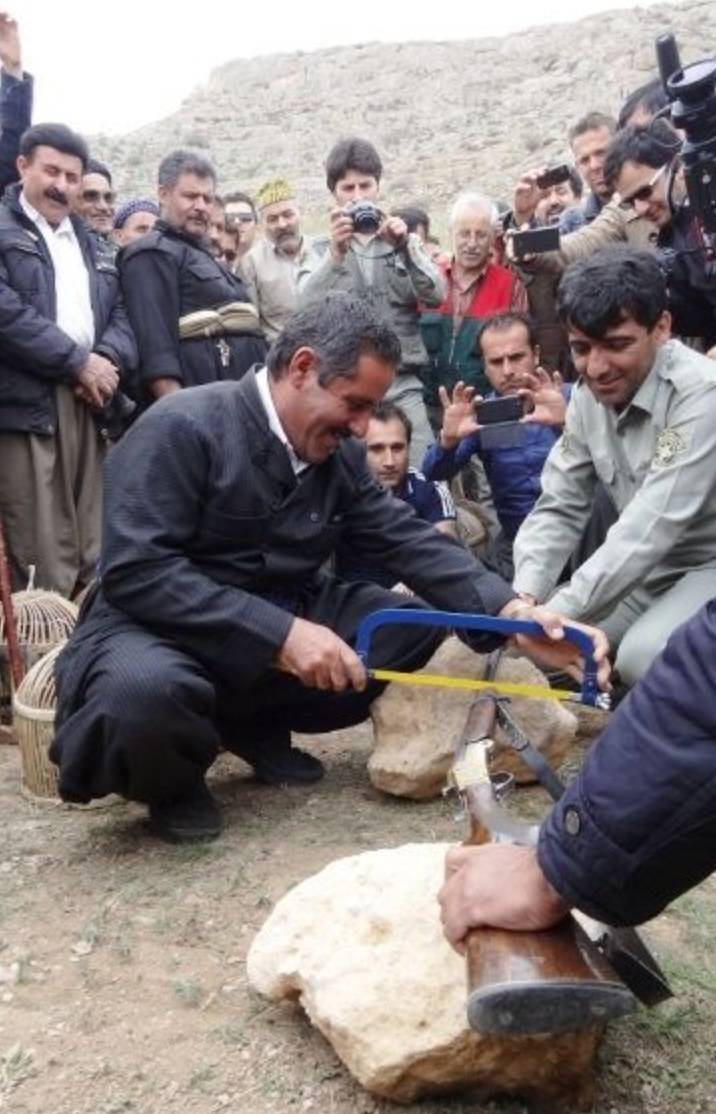
تفنگکُشان. Rifle-killers
Years ago, Mr. Hosseini recounts, wildlife hunters would proudly parade their catch through town, sleek guns slung across their backs. Now, those who hunt do so in hiding. Chya’s impact set off a ‘tsunami’ of تفنگکُشان — tofang-koshan — rifle-killers. It started with a former hunter, Mr. Azizi, who, after having learned about the harms of illegal hunting, held a ceremony in his village. Azizi invited numerous people to watch him set his hunting trophies on fire and break his rifle against a large rock. According to Mr. Hosseini, pictures from that day went viral and started a movement. More and more people shared videos, burning their hunting permits and breaking their rifles and cages. Allegedly, 80-90% of the hunters have retired for good, with most of them even joining the National Bird Conservation Association, just to give you an idea.
Mr. Hosseini says that practically all of their current energy is spent on managing the wildfires. It’s been like this for a while. He lists some personal statistics to help us visualize the issue:
‘99 percent of the fires are caused by human intervention.’
Mr. Hosseini stresses that the majority of these fires occur in the border areas between Iran and Iraq or so far off that no regular people go there for tourism or hiking. Additionally, these are areas riddled with remaining landmines from the Iran-Iraq war, so approaching is a well-known deadly risk for any regular person.
There’s a theory that circulates in Mariwan, never spoken much above a murmur: that some of these fires aren’t accidents or land grabs at all but a way of keeping the border legible—clearing brush so a guard’s line of sight has nothing left to hide behind. Mr. Hosseini’s perception is that:
Some 2 percent of these fires are marginal, human accidents. The rest are set off on purpose.
He leans back and looks at us as we’re taking notes. Continues:
The rest of the intentional fires—about 83 percent— are set off by people.
Regular people? Locals, you mean?
Yes, but that’s only one part of it. Some landlords want to expand their agricultural land for housing or crops—grapes in particular; their grapes are lucratively sold to juice companies. We can tell because one year, a piece of communal land, sometimes at the edge of someone’s property, was set on fire. A couple of years later, that same piece of land has turned into a house or a field prepared for planting. Neighbors obviously see this happening, but due to the closed environment, few people speak up. However, this is mostly happening at the outskirts of Mariwan and doesn’t account for fires occurring in the dense, out-of-reach, and thick forest growth, apart from the borders. That’s a whole other story.
How many hectares have burned so far?
‘Thousands,’ claims Mr. Hosseini.
Wait, you said that landlords are only one part of the equation. Who else is doing this?
‘The mafia.’
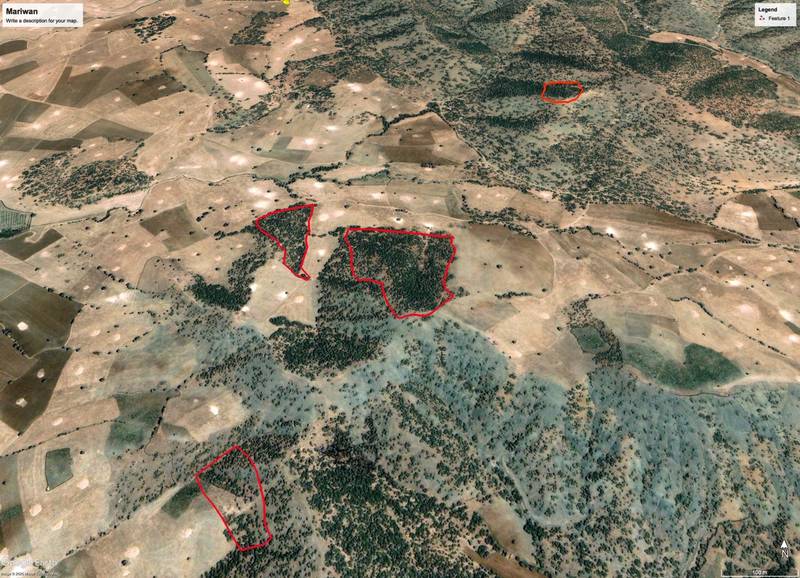
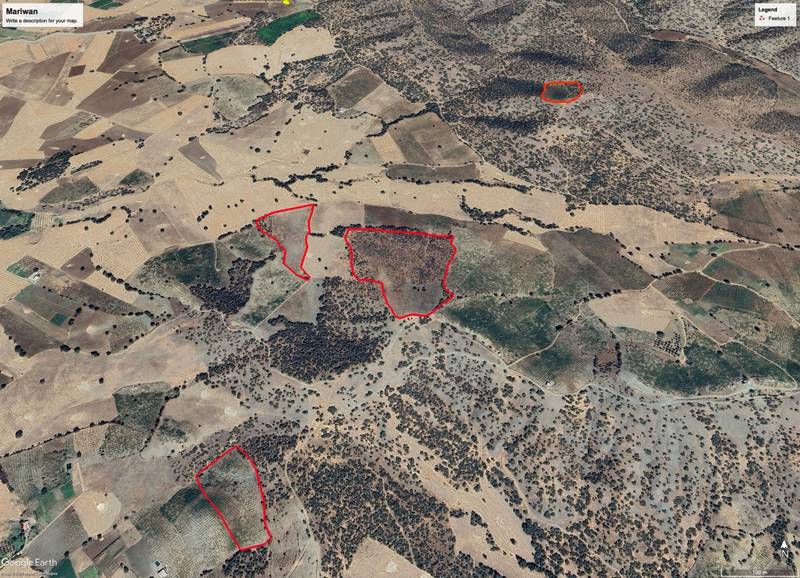
Google Earth images from Mariwan between 2006-2024 showing communal forest land burned and turned into plantations.
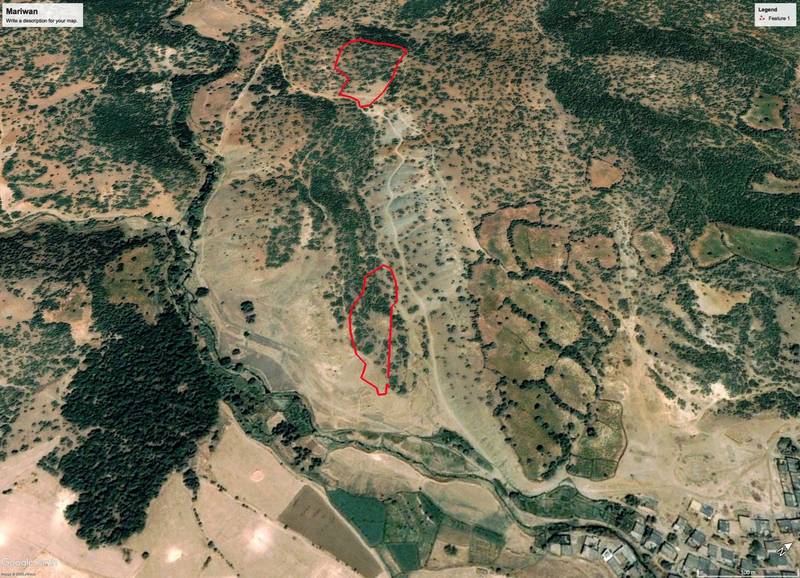
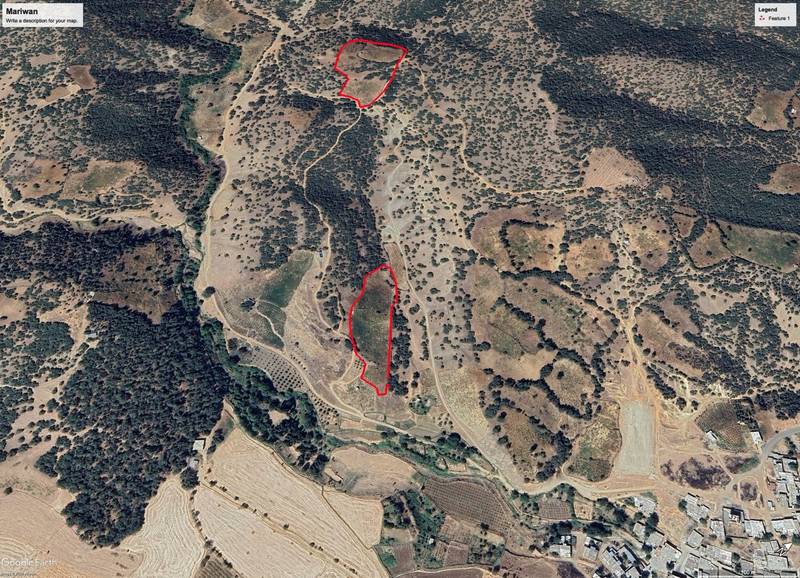
Google Earth images from Mariwan between 2006-2024 showing communal forest land burned and turned into plantations.
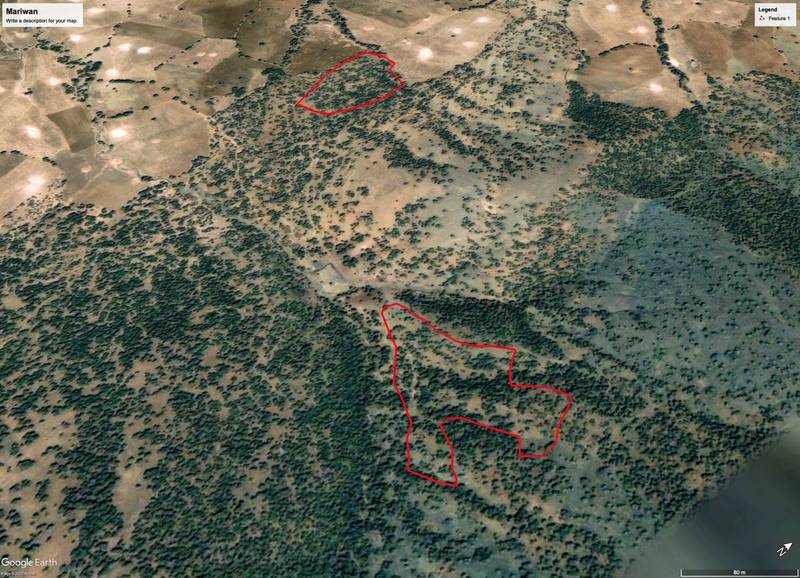
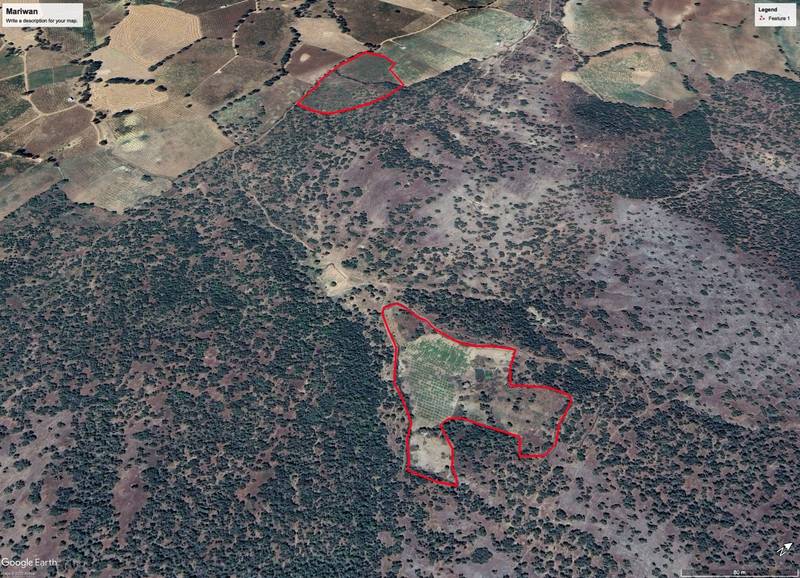
We collected Google Earth images from Mariwan between 2006-2024 that show communal forest (left) burned and turned into plantations (right). Based on the descriptions and experiences of Mariwanians and Mr. Hosseini, most if not all of these burned areas are turned into grape plantations, their grapes sold to juice companies.
Back in the forest. We realize why the fires here spread so fast and vast—we’d heard stories of fires ‘magically’ traveling from one mountain to another in the blink of an eye. Oak trees, which dominate most of the Zagros range, are considerably fire-resistant due to their thick bark and fast-paced ability to send up new shoots from the stump or roots. However, the oaks we see are brittle trees on depleted soil from repeated wildfires, paired with chronic drought and invasive diseases. They are unable to keep up; instead, ‘the trees have turned into firewood.’
We keep walking and sit down, exhausted from navigating rugged terrain with few headlamps. We turn them off and instead look over at the stars. Outlines of Iraqi trees on top of the mountains. They start speaking Kurdish. We’re asked to turn off our camera.
Soleiman – one of our companions – stops suddenly, poking away at what looks like another trench. Heat radiates.
He starts explaining: ‘The coal mafia put the wood in these pits, dig them down well, set them on fire, cover them, and let them burn slowly under the surface for a few days before they come and gather the coal to sell. Most of the time, they use dry wood, but ideally, they’d chop down standing trees to get better quality coal.’
Soleiman kicks the nearly charcoaled firewood that we dug out. They’re pitch black, and as they bounce against each other, they make unrecognizable, hollow sounds. ‘They didn’t have the time to turn them into coal,’ he says. Is the coal mafia hiding behind one of these shrubs, ready to come and fetch?
A miscommunication between different perpetrators and separate timelines. The overground, the shrubs and canopy, were set on fire, fast, but unintentionally interrupted a separate timeline of violence: the second fire, underneath the forest floor, was slowly turning the logs into coal.
The wood mafia, meanwhile, has left its marks as well:
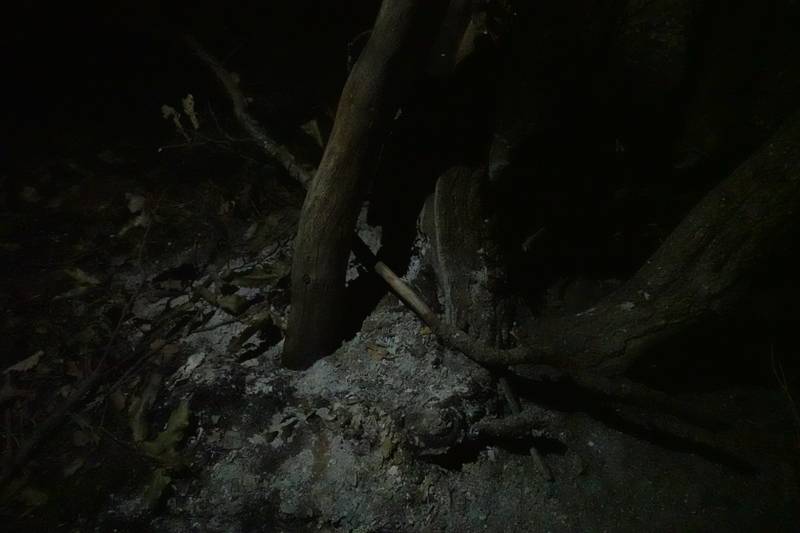
In the darkness, ashes surrounding burnt trees.
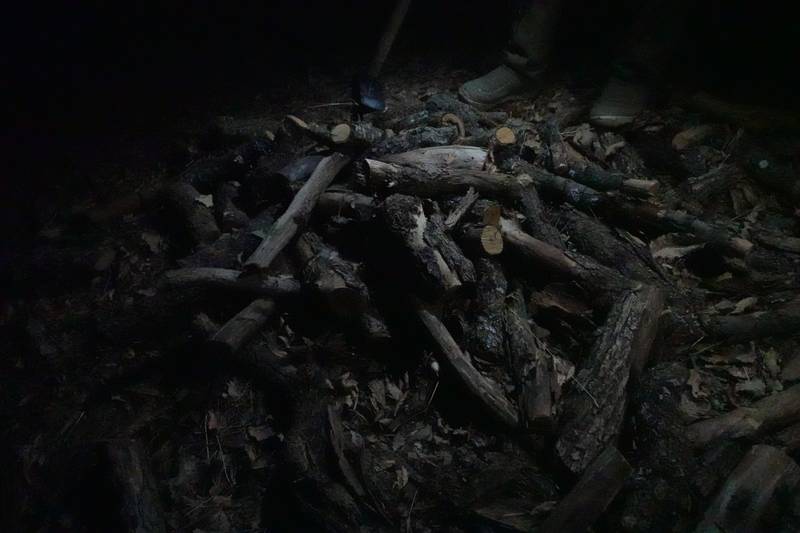
Leftover wood of a tree that the wood mafia has chopped up.
We pass a tree that looks particularly tall and straight, strangely surviving, almost calling out. Soleiman notices, says: This is the kind of tree the wood mafia comes for. Straight logs. Similar to how its roots go straight down to the ground, extracting every last ounce of water, the trunk and branches follow suit. You can make, say, eleven planks out of this one. The four of us stand small, surrounding, staring up at said tree. We’re counting, making imaginary cuts in our minds. One…Two. Eleven.3
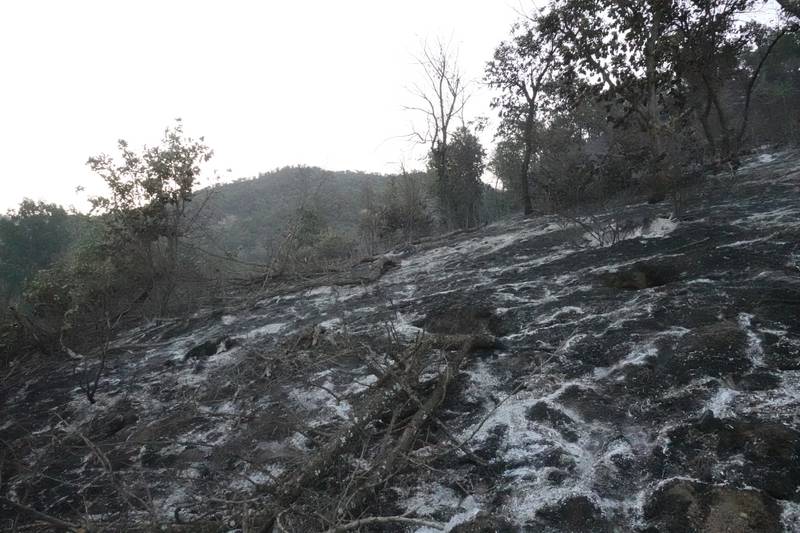
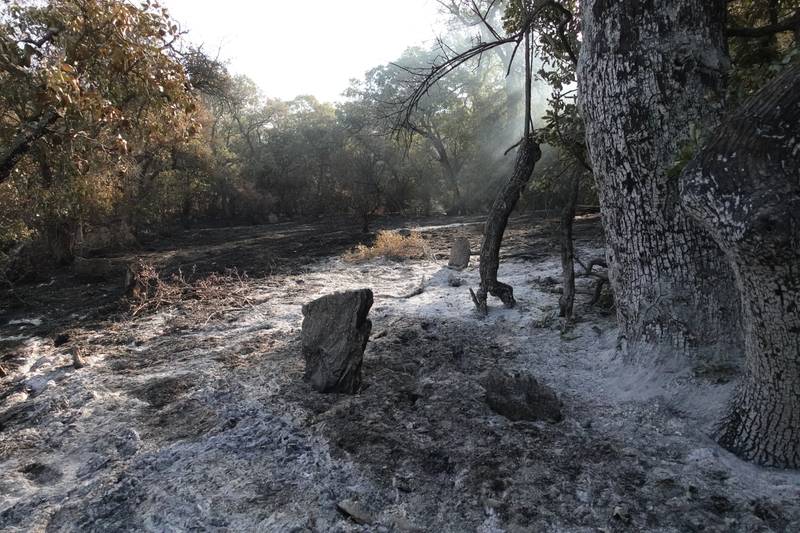
Pictures from an ancient Zoroastrian graveyard in the forest, with thousand-year-old trees burned to ashes.
After a long while, we head back to our camp. We had no clue that we were bound for night patrol, so we were wearing t-shirts and little else. Our comrades insistently gave us their own warm clothes. We slept on the ground, surrounded by three separate fires heating us from each angle. Of course, one to two people were awake at all times, doing what we came here for: guarding the forest. Our phones were on airplane mode so as not to accidentally connect to Iraqi networks— that’s how border it was.
We wake up in the early morning and see the destruction of it all. Charred landscapes, but that’s an understatement. The ground is hard to walk on, a combination of black and white powdery ash turning grey as we walk across. The terrain is easy to navigate through—no trees or shrubs.
Back in Mariwan. A few weeks have passed. Ceremony. ‘شهید نامری — shahid namiri — martyrs don’t die,’ a woman screams from on top of the steep hill, where people are sitting on the ground, row upon row of cheffiyeh and Kurdish attire. A friend tells me that there’s undercover police here, ironically hidden in the backs, behind shrubs and canopies.
We’re at the 7th annual remembrance of Chya’s two latest martyrs, Kak-Sharif, whose kiosk we mentioned initially, and Kak-Omid. Kak-Sharif and Kak-Omid were both buried on top of the mountain, as per their own wishes. The walkway up to the mountain top was lined with large-scale portraits of Chya’s other wildfire martyrs. Chya representatives with official badges stood on each side of the walkway, welcoming, shaking our hands. Young girls carrying flyers with handwritten or printed slogans. One reads: The smallest disturbance to the environment is a betrayal to the jinge-martyrs. For numerous hours, speakers give heartfelt speeches, screaming out terms like ‘ecocide’ and the vernacular version, jinge-cide — ژینگه, jinge, meaning nature in Sorani, the Kurdish spoken in Mariwan. The colloquial use of international concepts like ‘ecocide’ displays an awareness of the simultaneous hyperlocality but also placeless pervasiveness of their struggle.
People all around are wearing buttons pinned to their clothes: martyrs’ faces and Chya’s logo. There were a few rows of chairs surrounding the two graves, of which the majority were occupied by grieving women in black. The ceremony begins, speeches and songs are blasted, and we quickly realize that this gathering is a placeholder for remembrance, connectivity between locals, and a venue for awareness-spreading. There is an afterlife of ‘sacrifice’, in this case, for the forests. The afterlife is particularly visible in this gathering, in that dead bodies are transformed into politically potent martyr figures.
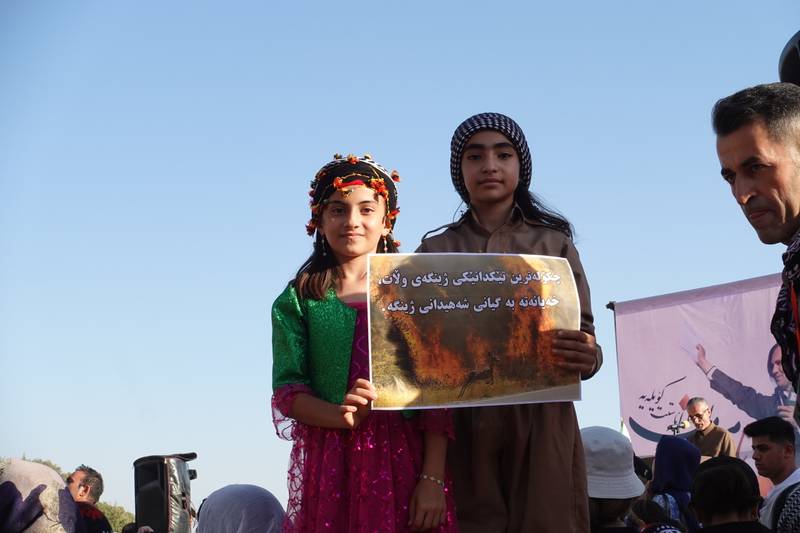
The smallest disturbance to the environment is a betrayal to the jinge-martyrs.
There is a potent reason why people at the ceremony are screaming, ‘martyrs don’t die.’
Etymologically, the word ‘martyr’ derives from the Greek word ‘mártys’ (μάρτυς), meaning ‘witness’ and ‘one who bears testimony.’ It is also related in origin to the Sanskrit ‘smarta,’ meaning ‘he who remembers.’ Screaming ‘martyrs don’t die’ is thus a watering of buried seeds, of buried potential, watered communally at each annual remembrance. The fertilizing tears of women dressed in black. The seeds sprout and live on in the minds of those who faithfully choose to remember. Thus, their saying: ‘شهید نامری (the martyr doesn’t die).’ The martyr has simply changed form…and claimed new bodies.
Mere weeks after the ceremony, during the writing of this article, we found out that Robin Gorani, a 22-year-old firefighter, who had been putting off that same wildfire in Mariwan, was declared dead. Following a night in the field, he suffered from severe respiratory problems without receiving proper medical assistance, was in a coma for several days, at the end of which he lost his life.
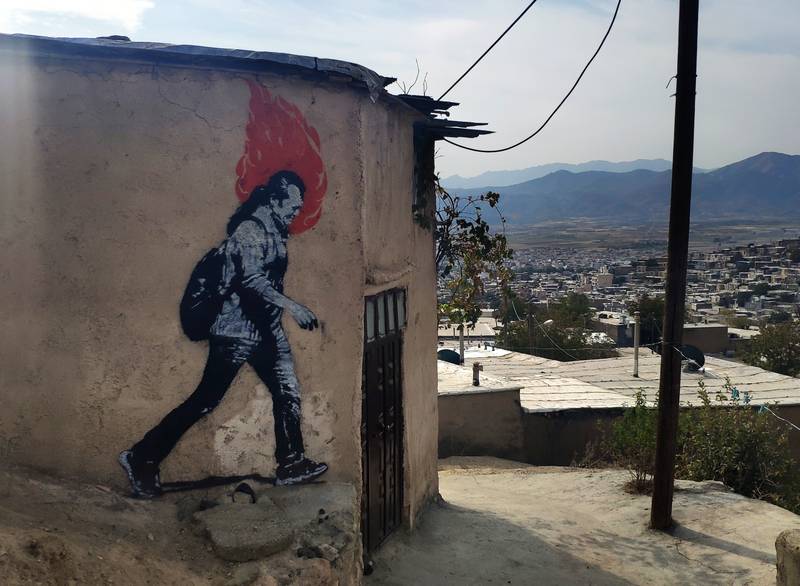
At the end of the ceremony, we slowly climbed down the mountain peak, where the graves were situated. The sun was setting, Mariwan unfolded in front of us, and all around, participants were reminiscing. We joined in and told them about our friend, Hamid Nikkhah, a local graffiti artist who paints on the city walls and the region’s mountains (see the one on the kolbars above). ‘Of course, we know him,’ they answer. They tell us to look for Kak-Sharif in the landscape. We hadn’t seen Hamid’s work on Kak-Sharif yet, which he had painted shortly after his death. It’s a scene depicting a fable-like story: Kak-Sharif sets off on a multiple-day walk across the region’s mountains, refusing to eat or drink and carrying only a small backpack and nothing else. He is walking towards a village north of Mariwan, where some people were molesting and ridiculing stray kittens and posting videos of them on social media. He arrives at the scene, saves the cats, and walks back home again. This tale is one of many that make Kak-Sharif a local legend.
‘There he is.’
We spot him in between alleys and curves. Like a dissenting ghost in the landscape. He is surrounded by fire, resolutely marching down the stairs of a neighborhood. Still walking.
-
 READ
READWhere the striped hyenas are is not only a place in the imagination or in the past. Where the striped hyenas are is also a possibility for what the future could bring. It’s where they lie, waiting for their turn to return from their exile. Where the hyenas are is also where the ghouls and the djinn are, behind seven mountains, dreaming and chasing their world into being again.
Where the Striped Hyenas Are, or, A Tale Is a Map and a Compass: Some Fragments on the Fantastical, Land and Remembrance
-
 READ
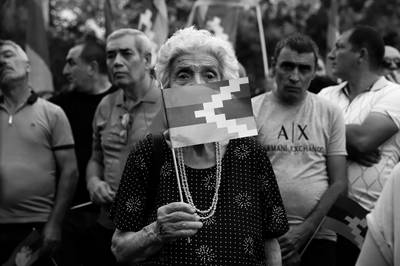
READWhile azerbaijan was bombing Armenians with israeli and turkish UAVs and paying bonuses to turkish-backed Syrian mercenaries for beheading Armenians, the “international community,” whatever that’s supposed to mean at this point, expressed lousy words of “concern,” and displayed a nauseous stance of both-sideism, devoid of any tangible action. The existence of this unrecognised republic and its indigenous population wasn’t legitimate enough for world powers to lift a finger.
Violent Septembers: An Armenian Perspective Amid the Ongoing Occupation
-
 READ
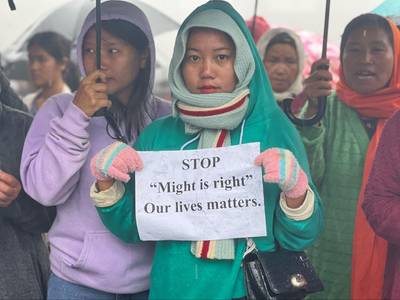
READI’ve been reporting from Manipur since June 2023. From the very beginning, I could understand that though women were contributing as much as men in facing the brunt of the war, their roles never received enough acknowledgment nor were their views taken into account while making important decisions. As an outsider, I could see that women leaders had a much more pragmatic method and manner of dealing with most situations, yet they found no place on the leadership table. This, I was made to understand, stems from a society that is founded on a patriarchal structure, yet a visible reluctance of present-day male-dominated organizations to relinquish space to women during a crucial time as this continues.
What it means to survive a war, with dignity
-
 READ
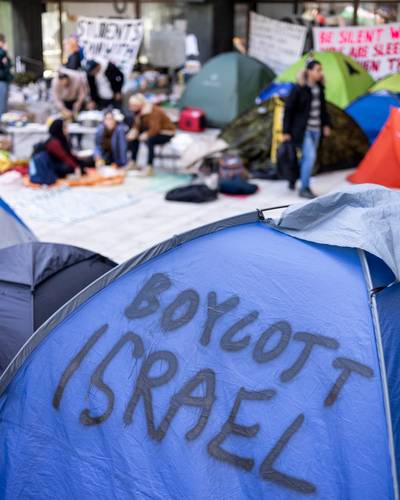
READThe opposition is not only between institutions and student activists—it also exists within our movement, manifesting in differing strategies. Should we focus on direct, visible actions or institutional processes? Should we shame the university publicly or appeal to its conscience? These approaches are not mutually exclusive—they reinforce each other.
Disrupting Complicity: Students Organising for Palestine in Finland