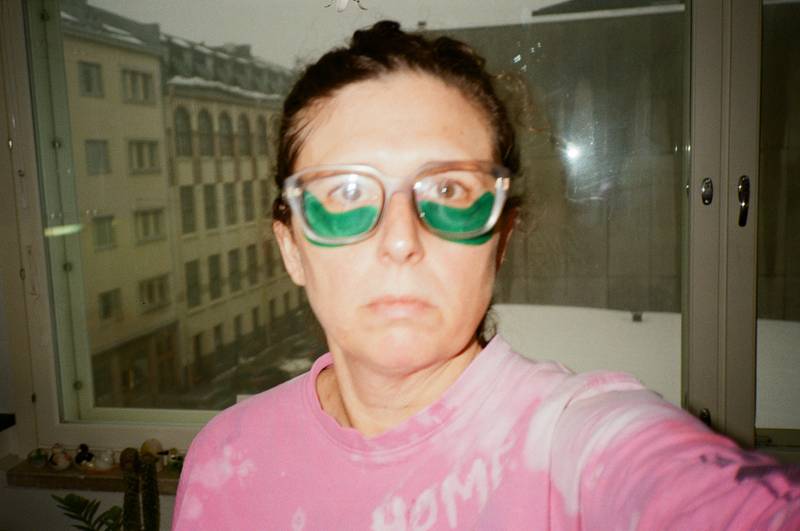
Analog 35mm self-portrait, part of an ongoing series titled Good Feelings Every Day (2025)
Lois Armas is a Helsinki-based author and oral historian. Her debut novel, Flora, was published in 2023 by WSOY Publishing House. She is currently working on her second novel. Her writing interests focus on parent-child relationships, family dynamics, and loneliness. She works for a film festival and runs a community-building writing project, JA, which offers printed visibility and a safe space for writing to beginner writers. She loves journaling, reading, and answering her 4-year-old’s questions.
If you were to step into a room full of the works that compose Rainbow Catharsis, an ongoing series of large-scale collages by Juliana Irene Smith, it would be like stepping into the restless mind of someone. A labyrinth of sentences and pictures that seem to form a whole, but might or might not give you a clue about the underlying meaning of it.
Juliana Irene Smith (b. 1977, San Francisco) makes work that blends softness and anger, without explaining or resolving the complications between them. Her work opens up the space between these two states of being, exploring memory, becoming and unbecoming, against a backdrop of what she describes as “a childhood, adolescence, and early adulthood marked by violence, sexual abuse, and a rape–punctuated by brief moments of joy”.
Hand-dyed and painted fabric, family photographs and self-portraits come together in compositions that are neither polite nor diluted. In one collage, it reads: Child of rape wants ice cream.
The sentence feels defying, placing pain alongside daily desire.
Another collage brings together a couple of self-portraits, old family photographs and a picture of the blue sky, taken from an inner courtyard. The snapshots are scattered around a tie-dyed background, alongside two words, twink and wish, and a sentence in the lower right corner: Imagine good parents.
The work does not only confront. It also asks something, and not a small thing: imagine good parents.
In Smith’s work, images of her present life, including her daughter and husband, coexist with images of her past: her younger self, her mother, her half-brother, aunts and uncles. They circle each other, not forming a straight timeline.
It would be tempting to remain focused on the trauma that has led to her artistic practice. I am interested in that history. I admire her directness, and I am not a neutral observer: I carry my own experience of intergenerational trauma, and some of her work resonates with me. But I also want to look at the invitations she extends to the viewer, and at what happens when we accept them.
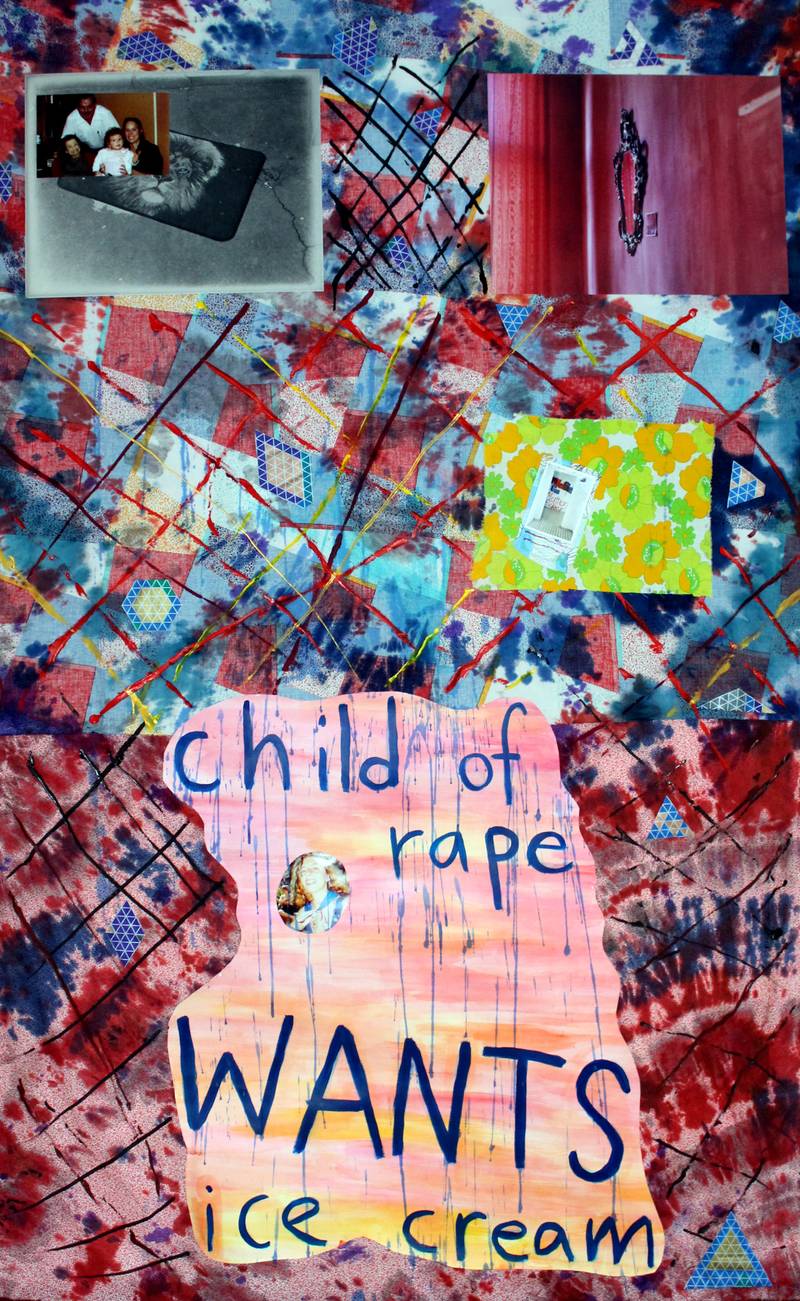
Wants, 146 x 238cm, 2024 part of the series Rainbow Catharsis. Exhibited at Summer Rain, Kunsthall Helsinki 2025
I first ask Smith about her refusal to make her work visually polite. Would making trauma ‘visually pleasing’ be a betrayal of the experience?
‘Women are always cleaning up. And I don’t want to clean up,’ she says. ‘My mom is a textile designer. And she’s the perfect sewer, so precise. I use fabric too, even though I don’t want to be called a textile artist, because it is too close to her. So I refuse to sew anything. It’s glued. It’s cut.’
She continues. ‘I’m not gonna make it nice and palatable. Fuck that.’
‘I don’t feel clean inside,’ Smith explains. ‘I feel like I want to rip things. I want to rage. I am angry.’
Photographs are also present in the collages, alongside the fabric, and the words.
I ask Smith what bringing these materials together makes possible that a photograph alone cannot.
She remembers her high-school art teacher telling her, ‘You’re too messy in art class. Take photography’. And so she did. But later, she realised she wanted to embrace the mess. ‘I love a single photograph,’ she tells me. But she also loves collage: putting things together, creating spaces, thinking about placement. A photograph, she argues, can be messy in the subject it portrays, but it will always look cleaner.
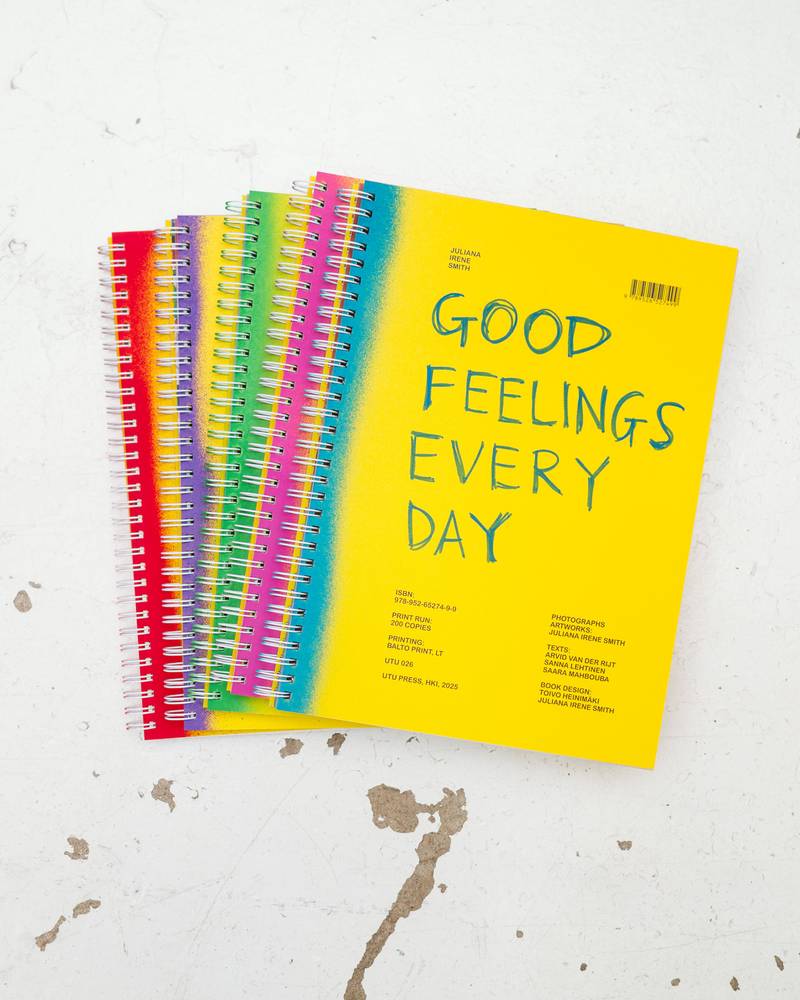
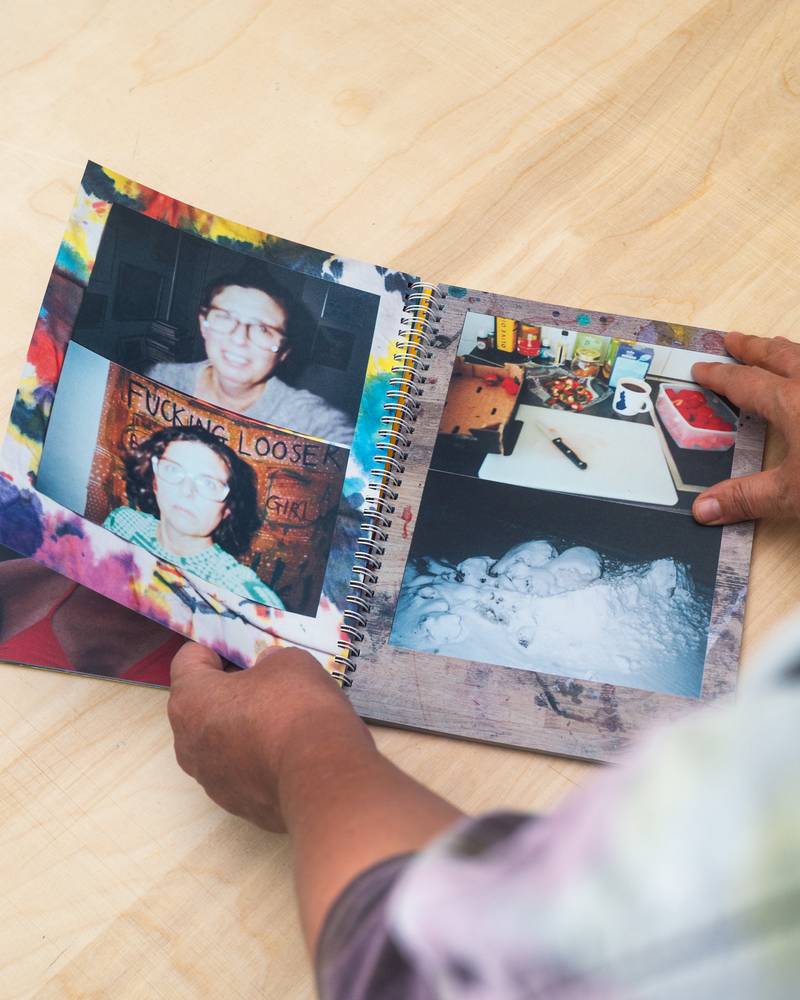
Good Feelings Every Day, 112 pages, edition of 200 Utu Press. Winner of the Finnish Photo Book of the Year (2025), Rencontres d’Arles Book Awards 2026.
At a smaller scale, with a different intensity but the same piercing vulnerability, Smith brings together analogue photographs of her daily life in Finland in her first photobook, Good Feelings Every Day, published in 2025 and the recipient of that year’s Finnish Photobook Award.
In its pages, Dirty Whore Likes Meat coexists with a morning kitchen, her sleeping daughter on the couch, her husband, and herself. I tell Smith that the photographs have an addictive quality for me. Emma Bowkett, photography director at FT Weekend Magazine, also praised the book, writing, ‘This vulnerability is not incidental to the project, it is the project.’ Indeed, the photographs feel so intimate, that I repeatedly wonder whether they are staged or entirely organic.
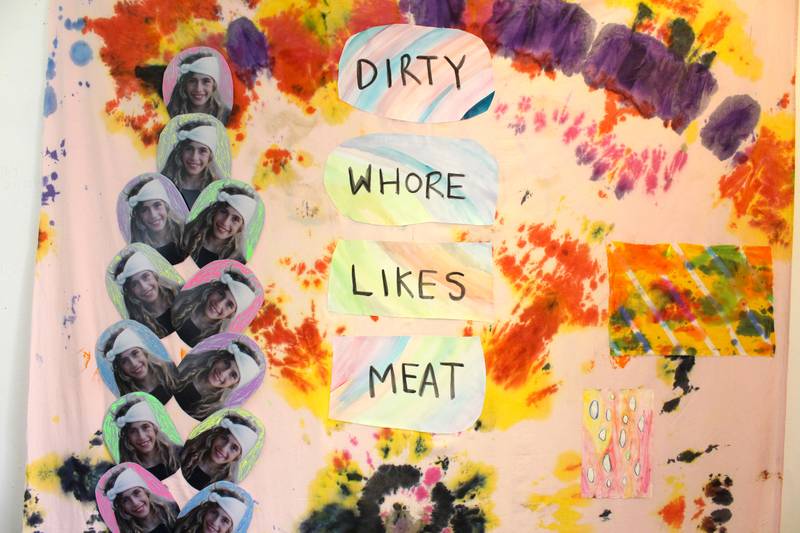
Detail from Dirty, 2025. Exhibited at Verkligheten Gallery, Umeå
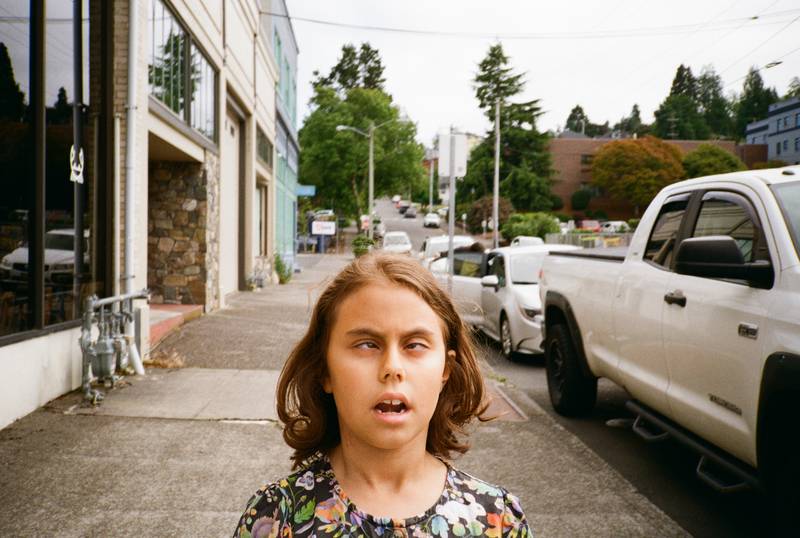
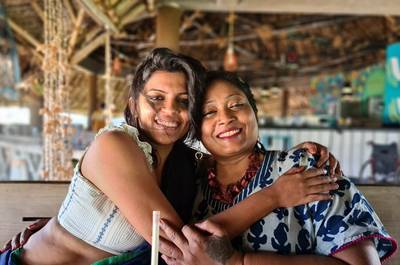
Frances, analog 35mm photo, part of an ongoing series titled Good Feelings Every Day (2025)
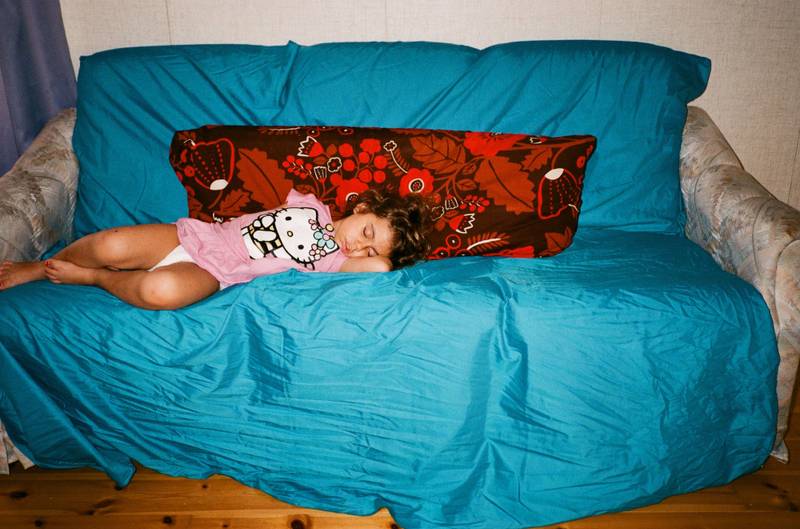
Frances, analog 35mm photo, part of an ongoing series titled Good Feelings Every Day (2021)
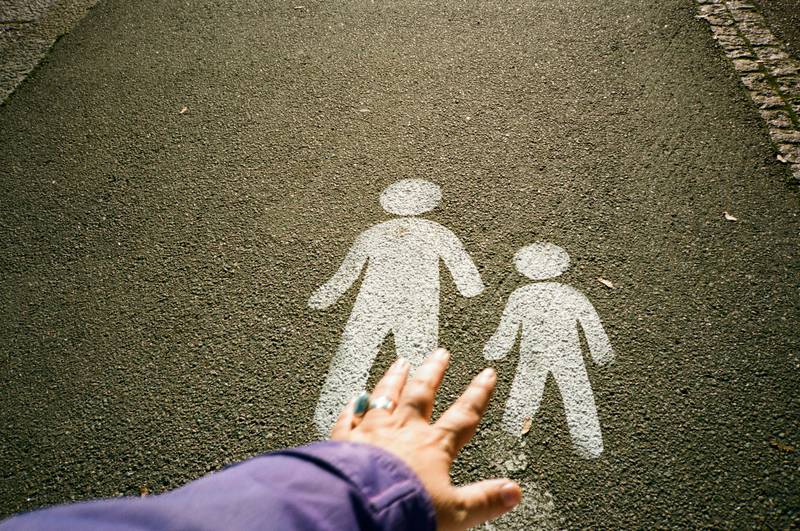
Family, analog 35mm photo, part of an ongoing series titled Good Feelings Every Day (2022)
‘I think this is your softest work. It felt a bit like a homecoming,’ I tell her.
‘It’s grounding,’ she replies.
I ask her how it feels to hold these apparently opposite sides together, to explore trauma through ordinary life.
‘Like you said, the work sometimes feels staged,’ Smith begins. ‘When I was visiting the US for the first time in almost thirteen years, I visited my aunt and uncle, who were the ones who took me in when I was a teenager. And sometimes I would [take a photograph] and say, ‘Don’t smile’.
And that’s the only thing I do to make it look staged.’
Her aunt, however, was upset at this instruction. Why would Smith disrupt such a beautiful moment? It took her a while to process the question.
‘But then I thought, because a photograph is a mirror of the artist. And yes, I quite often say don’t smile. All the family photos are smiling for the camera, but then, you wonder, what was going on behind the scenes?’
Photographs appear next to drawings, next to sharp words, including dumb bitch, as well as images of a younger Smith. In one of them, a traffic sign painted on the asphalt depicts two figures, an adult and a child walking side by side. Smith’s hand appears in the picture, positioned between the two figures, as if reaching to hold both hands. Intentionally or not, the image becomes a bridge between heartbreak and hope.
I tell Smith that one of my favorite works of hers is Who’s Your Daddy?, a series of photographic collages featuring repeated images of Smith wearing a fake moustache, sometimes smiling, sometimes not. A poster depicts a man’s photograph along with the words WANTED DADDY. In the almost fourteen-minute video Low-Fi Daddy, images of Smith’s childhood and family intertwine with a performance in which she portrays the absent paternal figure.
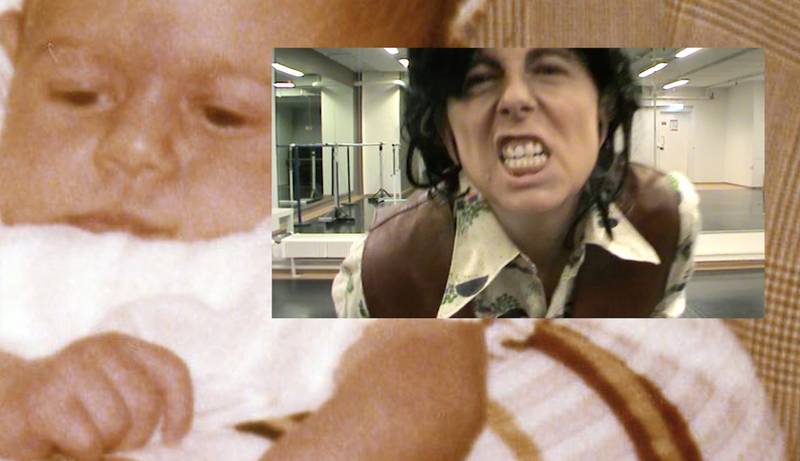
Video Still from Lo-Fi Daddy, 2026. Exhibited at Who’s Your Daddy? At Titanik, Turku 2026
Describing the work, Smith has written that “humour is a hero that he was not”. I ask whether humour works as a form of deflection across her practice, a way of bringing levity to difficult material.
‘Of course there is some deflecting,’ she answers. ‘I don’t get into the nitty-gritty details of what happened to me, because I want to allow space for people to relate to the work, and not be secondary traumatized by seeing it,’ she says.
Growing up in San Francisco, surrounded by queer culture, also informed the way she understands and uses language.
‘This way of reclaiming and owning words is very important to me,’ she explains. *‘*Which, you know, if you take ‘daddy’, it has a very queer connotation. Using ‘Hey bitch!’, reusing these words as armor, as punch back, is essential to me.’
‘I feel like it’s a strength to use humour. Yeah, I’m an ugly bastard, are you coming for me?’ she adds.
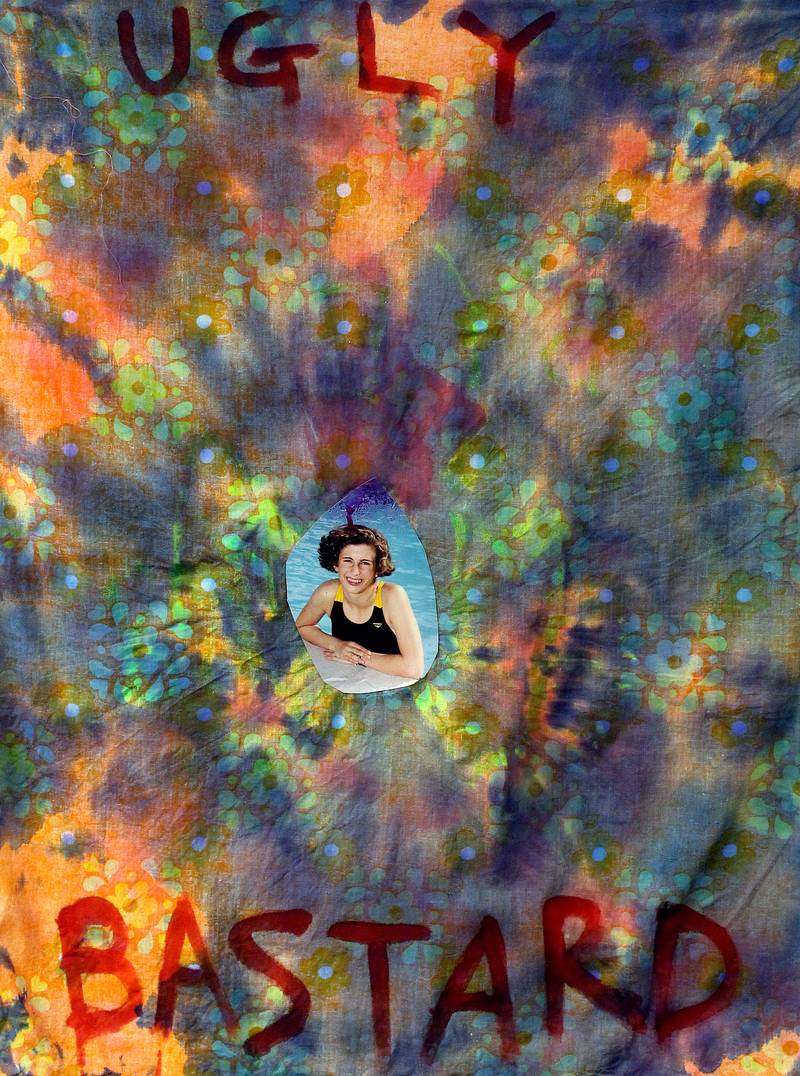
Ugly Bastard, 65 x 85cm, 2023. Exhibited in Lactose Intolerant, (solo) Hippolyte Gallery, Helsinki 2023
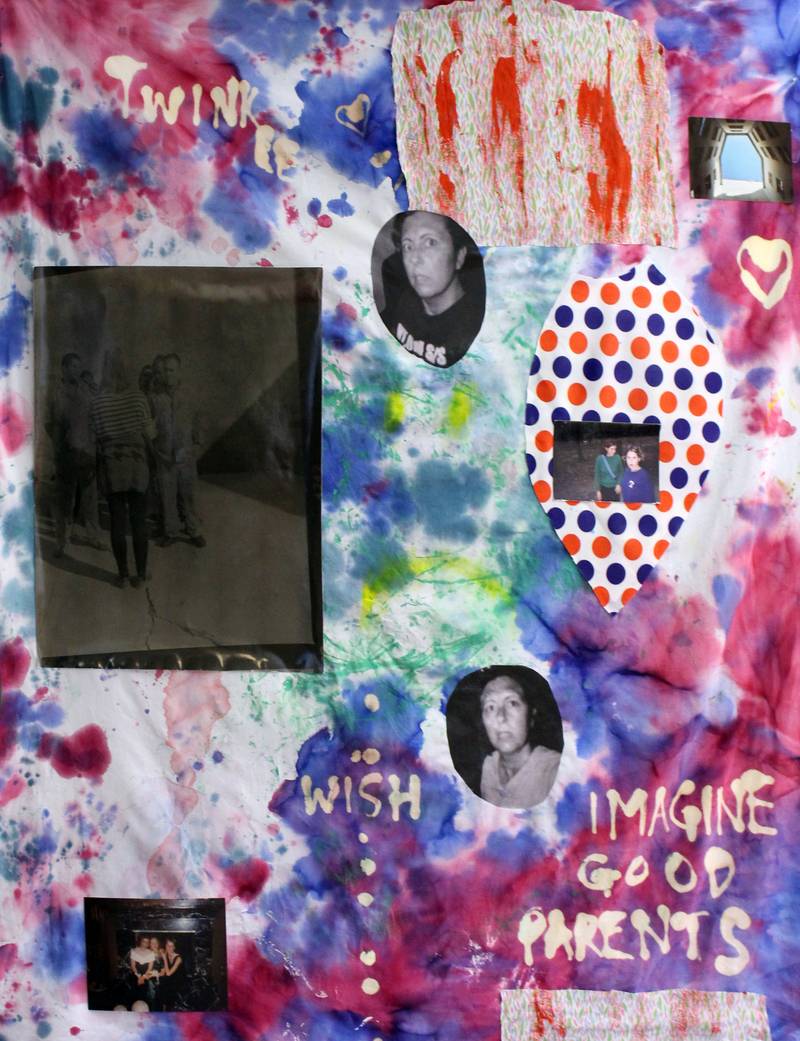
Imagine Good Parents 120 x 140cm, 2024 Part of the Rainbow Catharsis Series
I think here of researcher Natasha Silver’s examination of Louise Bourgeois’ work1, which might also offer a useful way of thinking about Smith’s. Silver reflects on how autobiographical material in art is constructed and selected, instead of offering an all-inclusive, transparent access to the artist’s inner life. In Bourgeois’s case, Silver argues that the parody she uses continuously complicates the narrative of victimhood.
Humour changes the terms on which the viewer encounters the subject. It doesn’t banalise her father’s absence; quite the opposite.
‘Do you think about your viewers when you work?’ I ask Smith.
‘A lot,’ she admits. ‘But I’m also 48. There’s part of me that just wants to be free and less afraid of what people think. I’m more confident than I have been in the past’.
She tells me about her training as a volunteer rape crisis counsellor in South Africa, which left her aware of the possibility of secondary trauma.
‘I don’t want to burden the viewer. I want them to feel something,’ she explains. ‘I hate that it’s taboo to talk about sexual violence. I hate that there’s shame behind being a survivor. But I do have boundaries, to protect myself and the viewer.’
At her upcoming solo exhibition, Final Girl, Smith plans to document a twelve-year-old girl rollerskating around the work the day before the exhibition opens, incorporating the footage into it. During curatorial discussions, someone suggested making the skating a live performance.
She refused to put a twelve-year-old in front of an audience.
Smith also tells me that her daughter asked whether she could be the one rollerskating around the work. She explained that she needed someone a little older. Her daughter is an integral presence in her art, though, and I ask her whether she thinks about her daughter as an adult, observing her mother’s work. Does she imagine the conversations they will have? Or the questions she might get?
‘I haven’t told her everything, of course. But already now I do explain things, keeping a language that she understands: I don’t speak to my mother because she didn’t protect me. When my stepfather died, I said, The bad man died. She might not know the details, but I am not hiding the story from her at all,’ she tells me.
‘My hope is that the trauma hasn’t gotten trapped, so she won’t have it as much. Maybe I am hoping I’m taking away some of that burden for her.’
‘When I had my daughter, I realized, oh, it’s so easy to love a child. It is so easy to protect a child,’ she says. ‘She is the reason I do all this, so that I don’t hold it in so tight. So I can let go of some of it, so that I can be more present.’
I ask Smith how she knows that making art is moving her through her history rather than keeping her inside of it. She points to Final Girl.
‘Even though I respect people who identify as victims. I personally want to say that I am a survivor. Even if often I feel like a victim. I want to make work that is about being the hero of your story,’ she says. ‘The exhibition is about survival, and that good conquered evil somehow. It embraces the mess, but it also gives a way out of it, because it says, Fuck you, I survived. It also says, You’re a piece of shit and I’m not.’
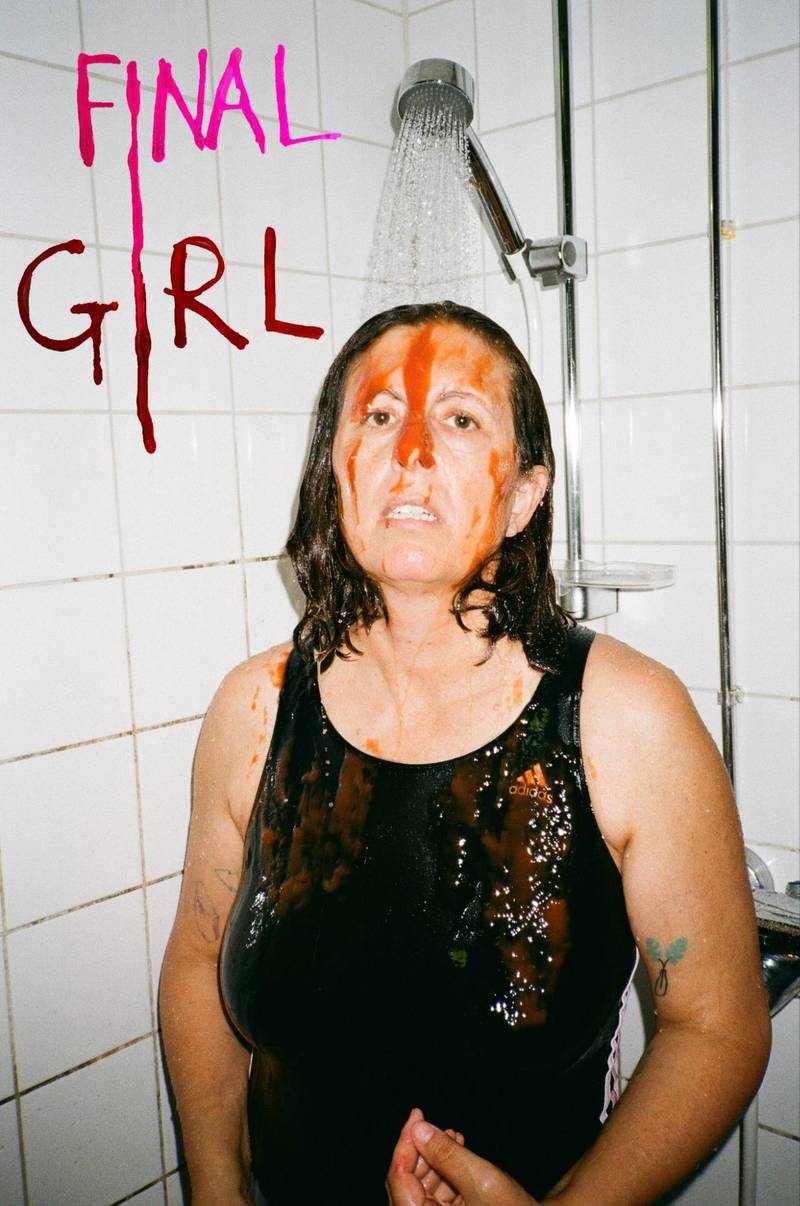
Final Girl 2026 Poster image for solo exhibition at SIC Art Space in Helsinki
Final Girl, as Smith describes it, sounds like an empty, eerie, place where children play. ‘It’s as if you were to go to an abandoned house and you would have the white dustcloths. All covered furniture. Imagine a combination of that and kids making forts in the living room,’ she tells me.
‘There’s fifteen pieces, with a sort of island in the middle of the space. And four videos that are placed amongst the island. I want people to go around it, I do not want to trap them. They can move around it, observing and leaving freely.’
There is a sound piece as well, as a result of Smith’s recent visit to the US. At the end, members of her family ask her, what she will do with her art, when she’s over all this. In the background, Safety Dance plays.
The question assumes a clean trajectory into a point where the work has done its job, and healing arrives cleanly; Smith then free to move into something else. I recognise the assumption since I almost asked her something similar myself. Perhaps the more useful question is not when an artist will be done, but what new forms and possibilities might emerge within the exploration of that ever-present trauma.
Smith is honest about what goes on inside her. ‘I don’t know what else to do with all of what I have inside. I have to get it out of my body, and this is how I get it out. It is also a form of solidarity, activism and camaraderie, and friendship,’ she explains.
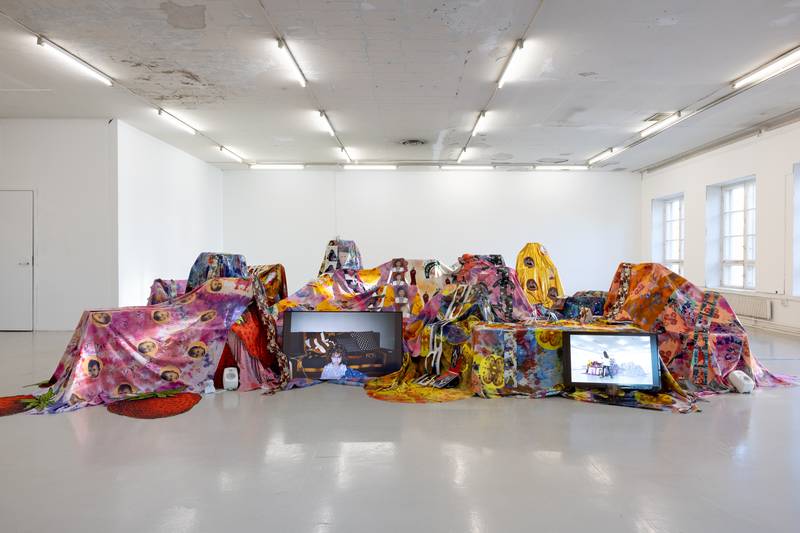
Final Girl, 2026 SIC Art Space Helsinki.
-
 READ
I felt we were living in a crisis within a crisis. I’m not very optimistic about the current systems that we’re living in and how much progress we are making in terms of getting out of this system. Still, the way that I deal with my disappointment and my despair is that I turn to music, underground art, and artist-activist communities.
Dancefloor is a Radicalising Kind of Moment: A Conversation with Ani Phoebe
-
 READ
Bulldozers, often seen as neutral tools of industrial demolition, are instruments of territorial domination, urban redevelopment, and political suppression. Yet within these acts of destruction, counter-narratives emerge—poetry, mourning, and collective remembrance—that reclaim agency in the face of state-sanctioned ruination. If ruination is a strategy of power, it is also a site of resistance.
On Bulldozer Politics: An Interview with Léopold Lambert & Shivangi Mariam Raj
-
 READ
This interview grows out of that ongoing process of working, thinking, and speaking together. While it takes the form of questions and answers on the page, in reality, it unfolded as a dialogue: her narratives of Palestine, her frameworks of hospitality and self-determination, and her reflections on Sweden intertwined with my own questions, concerns, and the shared struggles I see myself as part of.
Commoning Private Space: An Interview with Sandi Hilal
-
 READ
Dr. Aiswarya Rao on navigating hostile spaces for people-particularly women- with disabilities through the organization ‘Better World Shelter for Women with Disabilities’, building safe spaces, changing policies, and tying art into livelihood, fun, and friendship.
Blending Art, Friendship & Advocacy: A Conversation With Dr. Aiswarya Rao