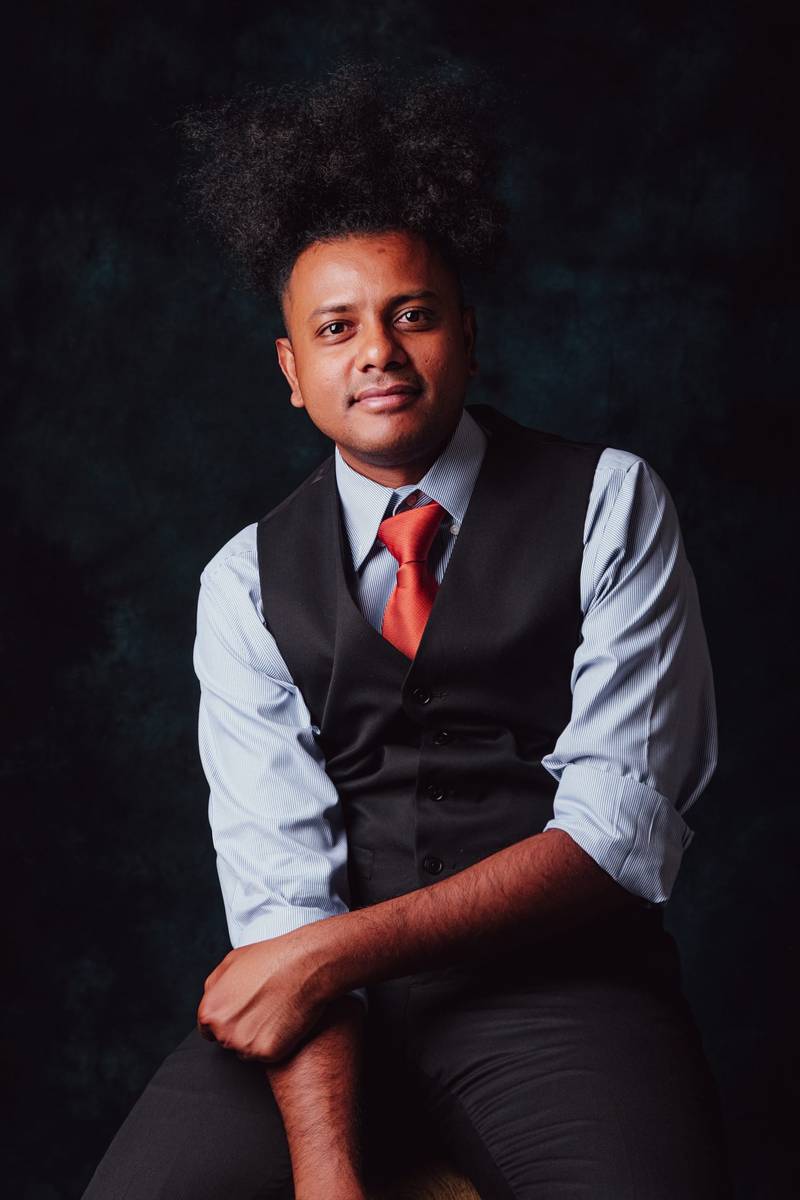
Ali Akbar Mehta (b. 1983, IN/FI) is a Transmedia artist, curator, researcher and writer. Through a research-based practice, he creates immersive cyber archives that map narratives of history, memory, and identity through a multifocal lens of violence, conflict, and trauma.
ALI AKBAR: How do you explain caste to those unfamiliar with its concept and systems? Can one do it without resorting to a long, drawn-out answer format?
SURAJ YENGDE: Caste is a practice of othering without announcing the “other”. It doesn’t create ‘othering’ in the same way as religion, race or gender; it uses different forms of distinction and differentiation. Hence, it cannot be footnoted as a structure without an elaborate explanation. The unique legacy of the caste system is that it is hardwired into society. The purpose of caste is to segregate people, organise them into hierarchies, assign them vocational rank, and give them a birth-based, fixed identity. There is hardly an escape from it. One lives by it. No matter how much it is denied, it imposes a pernicious hierarchy on people, one that persists to this day. The socio-economic parameters are predicated on this factor of birth. And this birth is the birth in your family. Family is part of a larger community, where community is a world that represents caste. That’s why you can belong to any community in India, other South Asian countries, or those in Africa or South America, and you still attest to a caste identity. Some societies explicitly acknowledge it; some don’t. Indian society does.
Walter Benjamin, in his text “The Author as Producer,” says that the role of the writer is to critique people of his own class or above – not to punch down, but to punch up. He elaborates this as a kind of ‘class suicide’. One may view atheism and agnosticism as a legitimised form of denunciation of religion – a type of religion suicide or a religiosity suicide. But it seems that committing ‘caste suicide’ may not be possible because it is not you who holds the power to make that decision. Social systems and structures uphold your caste, whether upper or lower. Even the relinquishment of power becomes impossible. As Dr Ambedkar stated, it only becomes possible when the entire system falls. In this kind of totalitarian scenario, how does individual action make a difference? And how much do we work to affect the system?
Caste is practised on a personal level by individuals. That’s why the refinement of the mind is important. Individuals will change when the system moves. Once people have caught on to the drive of the flow, they will move the system. That’s how it works.
You pointed out “classicide” and religious suicide; I wrote about this in Caste Matters, my first book. The Brahmins (people with caste privilege) have to commit cultural suicide. Unless they do that, they won’t be able to reinvent themselves in a new society.
India has not undergone genocide or civil war to start rethinking; it went through a peaceful process of constitution as a republic. Obviously, it’s prefaced by migration trauma, especially in Pakistan and the North-West parts of India. But the rest of the region, especially southern India and the Deccan, was not affected by it. Concurrently, it explains why we have not practised reconciliation – we don’t know what it looks like.
The colonial experience could have offered us more reflection (as it did for the national consciousness). It didn’t provoke a thorough re-examination of ourselves as individuals. In any novel you read, any piece of great literature, the individual undergoes a deep internal quest, a fight with and within themselves. The greatest books or literature are about the protagonists trying to find peace in their own selves, but it only happens when society provides that space, right? I’m thinking about Albert Camus, The Fall, or Nietzsche’s Superman, the Übermensch. Kierkegaard, not far from here. They are all looking at characters in a massive, epochal civilizational war they’re willing to take on.
India has not had that moment. If it did, it was only between the Hindu-Muslim question, which is a recurring question, not a historical one. It was a product of coloniality and therefore remains held in that idea. The way the history of India is interpreted as a binary of Hindu-Muslim is incorrect. There were empires across the world, and each came with its own artifices. Many of these empires were not local or caste-based. India never had that chance as a country except during the Mauryan times, Dhammavijayan – Ashoka the Great. We don’t have a soul in our nation like many other countries have, something that grips them. What we have is all recent, salvaged by notorious, toxic ways of demonstrating a commodified national sense: cricket and Bollywood, for example, cannot be your soul – this is where the rhythm of the nation tunes in – it’s not the soul.
Religion could offer that space because India is still a spiritual land, but that’s also getting too restrictive. It’s a pessimistic picture. A caste antidote can provide us a release from that stalemate and invite us to rethink. The soul of the nation then becomes caste when we breathe through it. And until we have serious focus, we will still be working on a very artificial surface, which will make you feel good and make me feel good, but it’s not going to do much.
In the nuanced stratification of the caste system, there is always someone below you, and you are always under someone, unless you are at the base of the pyramid or at the apex; Ambedkar called it “graded inequality”. There’s a malleability within power relations that creates an insidious system by fostering the illusion of flexibility. Given that caste functions as a highly developed apparatus of oppression evolved over several millennia, what is the science of the system, and what insights does a comprehensive study of it offer for understanding how anti-caste work can dismantle and abolish it?
Someone who buys into the idea of maintaining their supremacy does not realise that it has consequences. People who exercise hierarchical power have not been taught that it comes with a risk: like an inflammable object in their hands, it only needs a spark to burn them. Revolutions elsewhere may act as a guide for these people, but there won’t be any realisation or real insight unless they experience a revolution themselves. New devices and mechanisms introduced by people not in power are met with strong resistance. It’s like when you’re sitting in a bus or a form of public transportation. Usually, you occupy a seat for a limited time, your stop arrives, you get up and exit the bus. People with hierarchical power are those who sit there indefinitely, even though their station has arrived, just so that no one else can sit. For them, it’s like: “Okay, if I’m leaving, my son, my kid, has to replace me. Nobody else can sit.” This comes from a position of scarcity.
The caste system creates artificial scarcity. India is not a poor country. It has the richest temples and religious sites. Who are the people donating to these sites? It’s not a big secret. The revenue runs into billions for one institution, and individuals who control it. Sometimes they have trusts, but that’s not a democratic distribution of assets. Wealth is held onto and not made available to people. Sometimes, the government tries to intervene by creating a distribution policy through state methods.
The desires of people who are against caste are not being appreciated adequately because the caste system numbs your consciousness to any form of empathy. It beats you down.
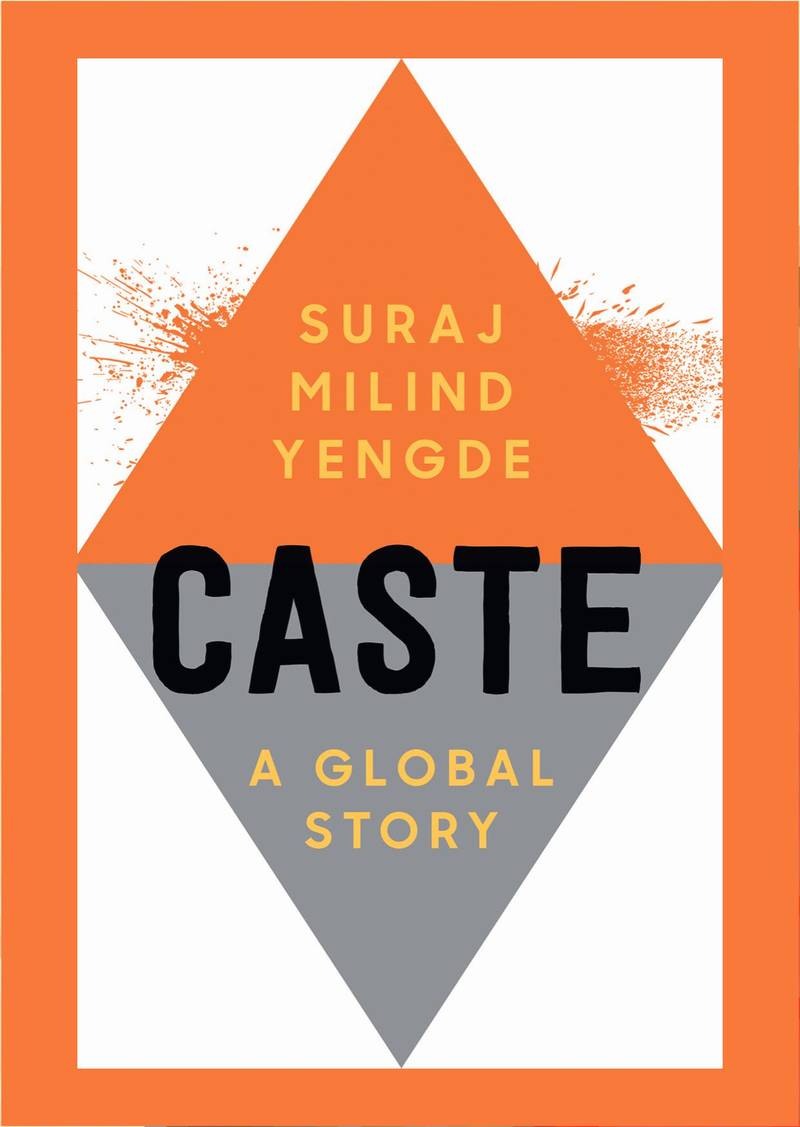
Caste: A Global Story was published in June 2025 by the Indian public intellectual and scholar Dr. Suraj Milind Yengde. It was published globally by different houses, including Allen Lane (in South Asia and the UK), Hurst & Co. (in the UK), and Oxford University Press (in North America).
You talk about how the period of coloniality just replaced pre-colonial oppressions. When coloniality left, those pre-colonial oppressions, amplified by a certain status of victimhood, resurfaced with vengeance. Ambedkar also spoke to this in the post-colonial moment: that ‘political reform’ will be impossible without ‘social reform’. That was his aspiration, which never really happened. And we see that more and more with the government since 2014: whatever liberal and flexible illusions we may have had have all shattered, and we see a specific hard-line religion and caste-driven wall being built. The Left in India is no real solution because it is governed by upper-caste, Brahminical ideology or aspirations. In which case, the whole question of the Left and the Right becomes irrelevant because both are casteist. How could anti-caste work actually function within this kind of socio-political environment, and what insights could it offer?
That’s a very interesting question. The journey is long. We are not paying adequate attention to the anti-caste struggle as something to emulate. We’ve not looked at it; we’ve just looked at it as a nuisance. It has never been cast in a positive light or as a source of significant insight. That’s the folly. That’s why we are suffering under our misgivings about it.
The world has poorly understood the caste struggle. It is deployed as a solution to studying its own deficiencies and limitations, as is the case today. It’s not this utopian, absolute example, but it certainly provides some space. The movement created music, poetry, and artwork. It created cultural commentary and its own genre of separate life. It didn’t decide to say, “We are not getting placed, so we’re going to quit.” It continued. And that’s the beauty of human beings and the struggle of this nature.
As you’re saying, colonial structures inherited pre-colonial directives. What a transition does is it does a little shake-up, but the structure remains. It didn’t eradicate it. The same holds for the 700 years of Muslim rule in India. It doesn’t violently shake up because it never does. And so we continue that. That’s why it’s very difficult for people to recognise why caste is so strong. Well, because the people who had to make changes didn’t do it. It’s not like it’s impossible to do it: it’s a human institution. But there was something more peculiar that they found better not to touch because it was too messy a topic.
The British created the census and established a standard framework for us to discuss today. But not just the British; colonial officials elsewhere as well. So from Ambedkar’s position as a post-colonial subject, it remains. After the first independent elections in ‘52, he thought this was the right formula: that you develop the people to be really ready. You call it the performance of democracy. Yes, I think he wanted to challenge the parliamentary primacy: “This is not going to work.” A journalist asked him, “So maybe communism?” because he was seeing that this was hijacked. There is an element of truth in his frustration because our nation began as heavily feudalised, with its own local satraps and fiefdoms. They have their own ways of collecting revenue by taxing peasants. Yes, the Republic of India certainly gave political rights, but Dr Ambedkar links this to social rights. Rights are not going to flow just from the stamp of political rights. He was realistic about it. The speech he gave in 1936, The Annihilation of Caste, is a monumental work for us to constantly realise as a nation. He’s going to the heart of how global cultures are also imposing their own defiant modes of resistance. This is it. What do we do with this?
Ambedkar threw a challenge to the nation. He deliberately asked us to search for that corner. The position of caste discourse is not thoroughly investigated. It is like when you’re cleaning the house, and there is that one corner you’ve not paid attention to. You’re like, “Yeah, that’s fine. It’s under the bed, it’s difficult.” So you just leave it. But one time, when you’ve got to do the overhauling, you’ve got to attend to that. We dealt with everything but that. That’s how we dealt with caste: everything but caste, because it’s too personal, too sticky, too real. And so it gets trickier the more we let it be.
The problem is also that we can’t let it be indefinite. We are also seeing the emergence of a moment in the last 11 years of the current government. But then we also see that the current heads of government are no longer the spearheads of the most radical right or the hardest-line positions. Others are waiting to take that seat on the bus. The ‘hardline’ is becoming increasingly hard. Extremist views are becoming more extreme. We are in a time and space where the question of caste can no longer remain unaddressed. What could be done to counter this?
For us, we need to go down the rabbit hole to find its root. Ambedkar did that, and so did the anti-caste movement. We have not mainstreamed the anti-caste movement. It forces itself into the nation’s consciousness by making its presence known publicly. Despite that, it doesn’t get adequate attention in the media, or in the artistic world, or in the positions of power where you can bear witness to it. I mean, how often do you see news about the Chaitya Bhoomi congregation in the next day’s newspapers? It’s only now that social media has forced newspapers to publish about it. Barely anyone even registered so many millions of people coming over in a week. But V S Naipaul did when he landed in Mumba in 6th of December, the death anniversary of Dr Ambedkar. I wrote about that in my new book, Caste A Global Story.
Besides, we have not really confessed to ourselves that that was our wrong. I think this public acceptance of our own limitations could provide specific guidance, such as, “Okay, these are mistakes we made.” But if you don’t do it, it will get misappropriated. That’s what every political party is doing now. And not just that: the people who support them are not only in India. They really reproduce that variety; they produce that angle. It’s dangerous, it’s frightening, and we’ve got to pay attention to that.
The analogy that you talked about—the risk of wielding power is like flammable equipment or a time bomb, and that you’re not taught that there is a risk involved. I think the problem is that you’re not even taught that you are wielding power.
The normalisation of the power that you wield as being the de facto state of affairs, and then when someone comes along and says, “Hey, you are actually wielding power negatively over me,” it comes as a shock. It can very easily start with the family. You challenge caste relations and power dynamics just within the family.
This has been talked about before: challenging it at home. Questions of caste are so invisible that it feels like you’re actually talking about class or gender issues. Yesterday, you talked about how people are not welcoming of domestic help that comes into your home.
The caste dynamic that you allude to, for a significant number of people, is a class issue. How can one be cognizant of the difference between the relations? The trained ignorance (what you would call in gender studies “performed incompetence”) that exists around caste is such that there seem to be fewer avenues for initiating that conversation.
We continue to inflict self-harm by not diagnosing the problem. This is something we need to chalk out seriously. A class issue becomes paramount because that’s how we are taught to understand class. We don’t pay attention to the caste within class. Once we establish caste in that location, we will be able to recognise inequality. Why is this inequality there? All these people from Bollywood to celebrities never talk about caste the way you will see people talk about the race problem in America. Probably it’s this Christian, liberal, democratic enterprise that gives you a thing of: “Okay, you know what? I’ve been a privileged person, and maybe I’ve done wrong, so let me confront it.” But that’s not given in a secualirsed brahmanical India–that has infected all religions on the land.
As you say, the people in power don’t see themselves as having power because there is the slavish mentality that comes with it.
At one point, you want to see yourself as an inheritor of a superior civilisation, and at the same time, a victim of the colonial experience. How do you reconcile that? That’s why caste gets dissolved in that matrix of power relations. And now it’s about time we do that, or else we are going to face a tenable challenge.
Under the guise of a performance of culture, a certain kind of hardening of those values is also very caste-driven.
Of course, culture is caste.
The progress made in India in anti-caste work is not reflected in awareness among the diaspora. Most members and communities cling to the performed superiority in other formats. You see a hardlining of cultural values. What suggestions would you have for people doing anti-caste work in diaspora locations?
People in the diaspora have a golden opportunity to build on the anti-caste work being done in India. The diaspora carries weight and power back in India as well as in the societal arena outside the country. They can start by challenging the spaces they organise and occupy in the diaspora. Barring a small percentage of people from working-class backgrounds, they pay a significant amount of tax into state coffers, probably in multiple countries. They relocate with families, they’re invested in the local culture and society and hold significant power. So they ought to do better.
We’re in the third term of the current Indian government. That means that many people leaving India, the diaspora, are characterised by a certain nationalistic impulse to fight for their rights. They carry a bloated sense of nationalism into another country, giving rise to another kind of nationalism. They become the default messengers of a nationalistic agenda. They feed information to the state, and the state feeds it back to them. The Indian state is not rich enough to fund this process directly, so it has outfits and offshoots that act on its behalf.
The best way to push back is to make caste the agenda. People can learn by understanding, listening, and prioritising victimhood with its proper identity, and calling it what it is. We need people acting as interlocutors, because there’s no dialogue otherwise. We must put ourselves between the diasporic community here and the community back in India, or within each community, within each income group. These kinds of unique interlocutory spaces have to be created. If you don’t create space, somebody else will hijack it and appropriate your ideas.
In my practice, I engage with necropolitics and geontologies because much of my work unpacks violence through archival practices, creating research-driven exhibitions that function as counter-violent strategies. Necropolitics reconfigures Foucault’s idea of biopolitics, where the state decides who may live and who may die. This question of dispensability is key to understanding caste. Geontologies of power reduce even the disposable bodies into resources, producing value even in death. Thinking about caste through this lens, I wonder how anti-caste work can engage these questions.
Even within the citizenry, some lives matter more than others. This logic is most nuanced in the context of caste.
Why does one subject exist while another is not even registered as a subject? When will the toilet cleaner, the sewage worker, and the municipal worker outside in the streets every morning register as bio-equal citizens? This gradual process of being considered equal citizens comes at the cost of around 55,000 Dalit deaths per year and is not even registered in the media or public memory. The Dalit body is not seen as a victim, only as a body that underwent violence. There is acceptance of that violence. It becomes public and demonstrative. It is reported as routine. Social media these days exposes some of them, but the outrage it garners is selective. Dalit deaths do not mobilise everyone, and that’s the depth of dehumanisation.
Indian state is a secular republic, however, the weight of caste is the functional diatribe. Therefore, Necropolitics in India is Secropolitics–the secularised passion of caste’s survival by the death of its vulnerable inherent subjects.
Global Development Studies hosted the book launch and talk of Dr Suraj Milind Yengde’s “Caste: A Global Story” on 10 December 2025 at the Faculty of Social Sciences, University of Helsinki.
-
 READ
READEveryone in Vilanismo is someone I met and grew close to within the contemporary art circuit. Some even earlier, through graffiti, like Robson, or São Paulo’s pixação scene. The idea was to understand how their practices could move forward collectively, while also allowing me to be part of that vehicle, amplifying one another. So the starting point was affection and mutual admiration.
Vilanismo: An Ethics of Care and a Philosophical Framework Emerging from Afro-Paulistano Culture
-
 READ
READI think of how many people are not able to be involved in social movements because of their own disability or their caring responsibilities, or the way that forms of social violence take away their capacity, or their ability to fight that social violence, because they’re simply trying to stay alive.
Dreaming of Liberation: An Interview with Lola Olufemi
-
 READ
READBulldozers, often seen as neutral tools of industrial demolition, are instruments of territorial domination, urban redevelopment, and political suppression. Yet within these acts of destruction, counter-narratives emerge—poetry, mourning, and collective remembrance—that reclaim agency in the face of state-sanctioned ruination. If ruination is a strategy of power, it is also a site of resistance.
On Bulldozer Politics: An Interview with Léopold Lambert & Shivangi Mariam Raj
-
 READ
READI felt we were living in a crisis within a crisis. I’m not very optimistic about the current systems that we’re living in and how much progress we are making in terms of getting out of this system. Still, the way that I deal with my disappointment and my despair is that I turn to music, underground art, and artist-activist communities.
Dancefloor is a Radicalising Kind of Moment: A Conversation with Ani Phoebe