
Most read
-
 READ
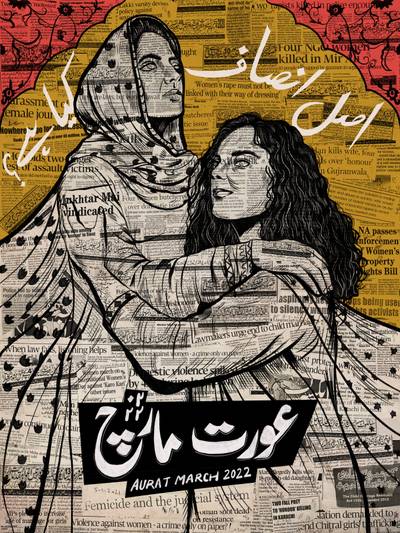
READIn 2018 three Aurat March chapters across different cities - ostensibly non-hierarchical, avowedly self-funded - announced their Aurat Marches in their respective cities. There was an effusion of radical feminist digital art and hashtags, fiery debate and declarations, and mobilization on the streets, including street art murals, posters and solidarity building with working-class women’s organisations and marginalized communities. That first year, the marchers were modest in number, but the idea of women marching, singing, dancing, and shouting on the streets that were otherwise hostile to them every other day of the year had an extraordinary impact. Pakistanis sat up and paid attention - but that wasn’t necessarily a good thing. The march has happened every year since and has spread to smaller cities, including Peshawar, Quetta, Multan, Faisalabad, Hyderabad and Sukkur. And the backlash against it from mainstream media, government institutions, and religious militant organizations has continued to escalate and exponentially exceed its own scale.
5 Years of Pakistan’s Aurat March: The Young Feminist Movement Shocked the Nation Into Paying Attention. But Where Is It Headed?
Hira Azmat on the meaning, losses, achievements, external threats, and internal conflicts of Pakistan’s young feminist movement, Aurat March.
-
 READ
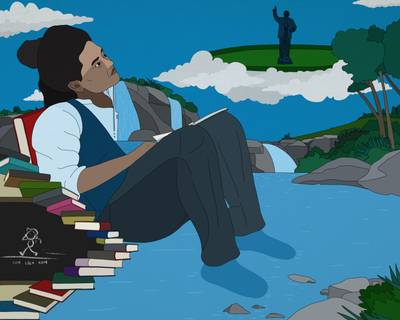
READThe time and energy it takes to apply myself and think about what I am reading swallows me into a world and leaves me suspended there, making me unavailable to people who aren’t comfortable with the idea of a Dalit person engaging in something that is not her humiliation. Reading is a way of being unavailable to a world that has taught you to remain outside. When we encounter stories about what being able to read and write did for people from the margins, we are essentially encountering the impact of close reading.
Love Is for the Ones Who Love the Work: How Close Reading Interrupts Caste in the Classroom
In close reading, the body is also learning to pay attention to itself when it responds a certain way to a line, a sentence, or a paragraph. Something that can perhaps only come from leisure and the luxury to sit and have the free time to be available to the text. How many Dalit teachers can afford this?
-
 READ
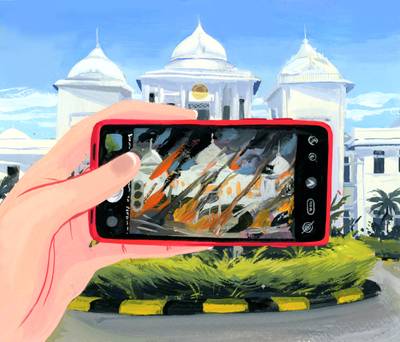
READWith the end of the war-genocide, a new type of tourism started emerging in Jaffna: war tourism. In this essay, சிந்துஜன் வரதராஜா looks at life inside of a new hotel in the former war zone and explores by way of it the intrinsic relationship of military-occupation with tourism in Eelam.
Long Before Justice, Tourists Arrive
Sinthujan Varatharajah looks at life inside a new hotel in the former war zone and explores by way of it the intrinsic relationship of military-occupation with tourism in Eelam.
-
 READ
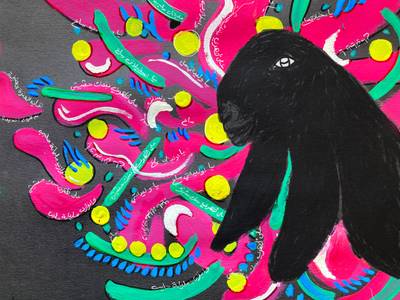
READAccused of being “shrewd, rogue, ill-mannered and undisciplined”, the black goat was constantly abducted and killed to prevent it from distorting the European landscape that Israel wished to create on the rubbles of the destroyed Palestinian one. In 1948, the year of the Nakba, Israel began importing a white Swiss goat to replace the black one. The white European goat was described as “polite, beautiful, healthy” and even “civilized”.
Approaches to Palestinian Liberation: Magical Realism as Resistance Literature
Can literary magical realism be considered a type of resistance literature in the Palestinian context?
-
 READ
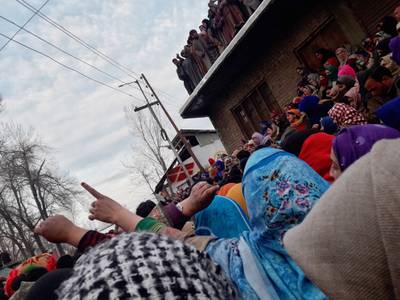
READRuination is the foundational violence that established the Indian nation-state. Long perfected in Indian-Occupied Kashmir over the last seven decades, camouflaged under the optics of democracy and development, it is ruination that has accelerated India’s settler-colonial project, setting the layout of demographic engineering across the region.
Locked in Atrocity Image: The Ruination of Muslim Space and Body in India and Kashmir
Shivangi Mariam Raj’s essay examines the ethical dilemma of using graphic imagery to raise awareness about atrocities in India, specifically brahmin supremacist violence and the situation in Kashmir, asking what measure of accountability can we honour to establish an ethic of seeing?
-
 READ
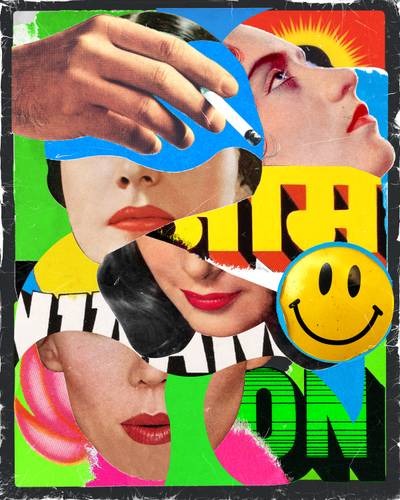
READFormal modes of engineering the well-being of the population are oppressive and exclusionary. Activists, scholars and citizens of the world have to find compassionate and strategic ways to enact their power of adaptability. Memes allow us to challenge conventional and restrictive forms of education, policy and collective action, fostering effective solutions for a broken system. Memes, as the new toolkit adopted by Internet users of India, has the potential to nurture democracy and pluralism, with the hope to preserve freedom of speech, freedom of expression, and freedom to resist.
POOJA, What Is This Behaviour?: Memes as Political Participation & Toolkit of Digital Resistance in India
Abhinit Khanna discusses meme culture, misinformation, trolling, and data-muddying in times of pandemic and war using the visual language of digital artworks.
-
 READ
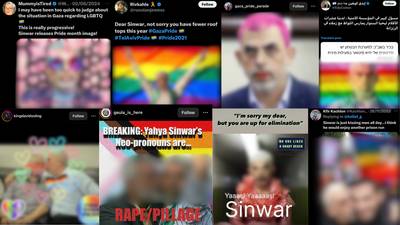
READMusa Shadeedi examines how the feminisation and queering of Palestinian resistance in Gaza are used as tools of justifying genocide and occupation. By situating this tactic within its historical colonial and anti-Islamic context, Shadeedi exposes the contradictions inherent in these narratives.
Queering Hamas: A Colonial Weapon
Musa Shadeedi analyzes the use of feminizing and queering Palestinian resistance in Gaza as a justification for genocide and occupation, contextualizing this tactic within historical colonial and anti-Islamic frameworks to reveal its inherent contradictions.
-
 READ
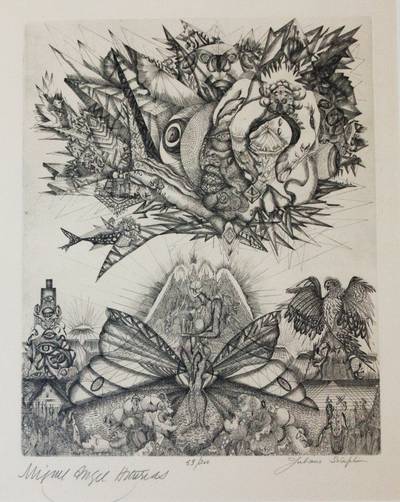
READThe settler-colonial Zionist project may have, for now, occupied Palestine physically, but its failure to occupy the dream of Palestine in the Palestinians inside and outside of historic Palestine not only signifies a failure of the project as a whole but foreshadows a mammoth failure in the future of the necropolitical state.
Occupying the Palestinian Dream
Sanabel Abdelrahman on the failure of the settler-colonial Zionist project of occupying the dream of Palestine among Palestinians.
-
 READ
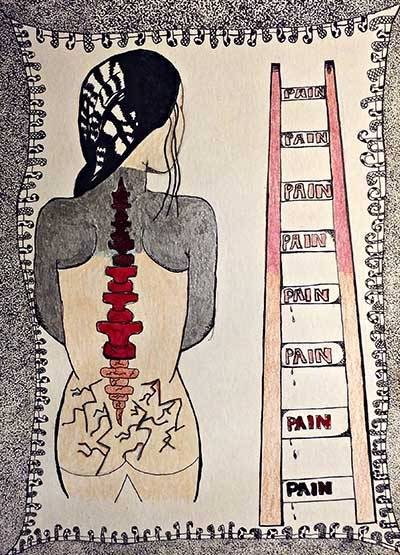
READChronic pain is a notion created within biomedicine that reduces it to a biological process—dismissing the cultural, social, economic, political, and technological relations that shape it. As might be expected, this standpoint has not proven fruitful for its bearers or society at large. Bear in mind that chronic pain differs from a general understanding of pain because it is not merely a physical experience but has an all-encompassing sensory and emotional effect, as well as long-term transformations in the intellectual and agential capacities of the ones that bear it.
Bearing Chronic Pain: What Can Art Offer?
Eva Tordera Nuño explores the potential of artistic expressions in revising deeper cognitive aspects of chronic pain.
-
 READ
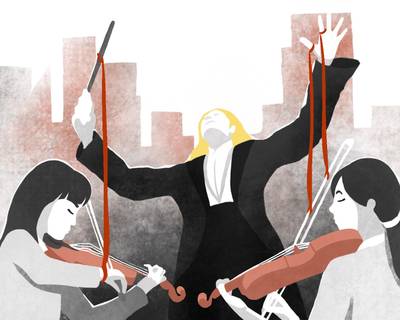
READEuropean modes of living and cultures have become globalised and naturalised, so much so that critical conversations around European traditions today focus more on questions of racial diversity in, say, orchestras, ensembles, and European music and dance schools rather than why and how European cultural productions have become such a global commodity and signifier for class and and “civilisational” ascend to begin with.
The Innocence of (European) Instruments
European modes of living and cultures have become globalised and naturalised, so much so that critical conversations around European traditions today focus more on questions of racial diversity in, say, orchestras, ensembles, and European music and dance schools rather than why and how European cultural productions have become such a global commodity and signifier for class and and “civilisational” ascend to begin with.
-
 READ
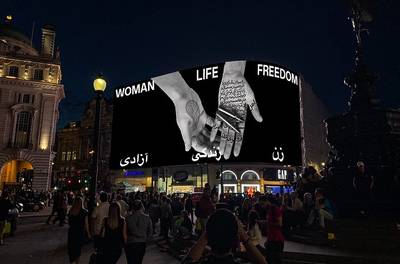
READKnowing the genealogy of women’s resistance in Iran since the turn of the century helps us see recent events not as unprecedented ruptures and a sudden awakening of women in an archaic patriarchal society but as the accumulation of multiple resistances throughout our modern and contemporary history in the face of an ever-shape-shifting patriarchy.
Representation of Disobedient Bodies: A Critical Reading of Shirin Neshat’s Visual Language
Shohreh Shakoory on the discrepancy between the representation of experiences of people’s protests in Iran, reflected in their own photographic and moving images, and the artworks of Shirin Neshat.
-
 READ
READCan we turn folklore into a source of learning - a knowledge source that informs us about social struggles that otherwise go unnoticed by the powerful?
“For All Wars to Come”: An Interview with Noor Abed
Can we turn folklore into a source of learning - a knowledge source that informs us about social struggles that otherwise go unnoticed by the powerful?