
Reviews
-
 READ
READIn Left-Handed Girl, every character is on an individual journey. The paths and decisions of the family of three barely overlap; each return comes with its own challenges. Beyond the logistics of finding an apartment, making it feel like a home, setting up shop, and creating a routine, there is the emotional journey.
Devil Hand, Dutiful Head: A Review of Tsou Shih-Ching’s ‘Left-Handed Girl’
The review unpacks and traces how cultural beliefs that may serve as charms to protect identities amid unpredictable change can inflict lasting wounds.
-
 READ
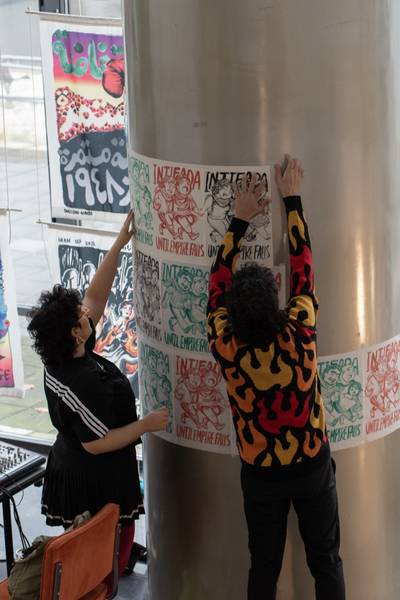
READAs we feel the icy breath of fascism looming over our shoulders we may find our strength in the labour of our partisan comrades, in the words of all of those who fought before us, proceeded in darkness with extreme rigor and clarity—peaking back from the archive it seems—with no hesitation.
What Could Be More Tragic for a Revolution Than to Become an Archive?
At Amsterdam’s IISH, Golrokh Nafisi and Ahmadali Kadivar’s After Storms turns a five-century archive into living witness, asking what solidarity still means when communication is cut and genocide is live-streamed.
-
 READ
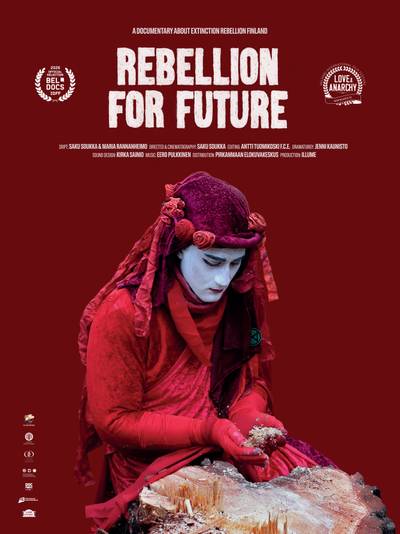
READSome of Elokapina’s actions have certainly been disruptive, but their overall effect is debatable. Even when they engage in disruptive civil disobedience, the main consequence is delay or inconvenience. Activists often go slack when being detained by the police, slowing things down by making it harder to move them—but the police eventually remove and detain them.
Protest, Perspective, and Pageantry: A Review of Saku Soukka’s ‘Rebellion for Future’
Saku Soukka’s documentary embeds viewers inside Finland’s climate movement — but the camera’s intimacy raises harder questions than it answers about what activism is actually for.
-
 READ
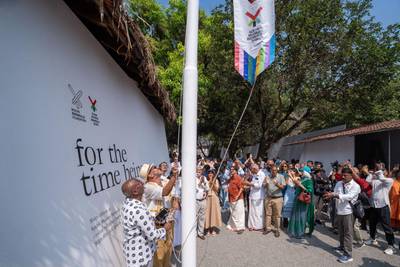
READThe city of Kochi itself has become a collaborator, its texture allowing multiple artistic voices and communities to coexist, interact, and resonate within the same space. But the city is also often indifferent to this performance: trees sway, humidity presses in, life moves at its own unhurried pace. For all its openness to change, Kochi imposes its own rhythms and constraints, complicating navigation of the Biennale and prompting the question: whose time is being used as the medium?
Temporal Claims vs. Institutional Realities: A Review of the Kochi-Muziris Biennale 2025-26
This review examines how the Biennale’s claims about time, friendship, and collaboration unravel when measured against its organisational realities, labour practices, and structures of accountability. Does the sixth edition of the Kochi-Muziris Biennale deliver on the ambitions it sets for itself through this year’s theme For the time being?
-
 READ
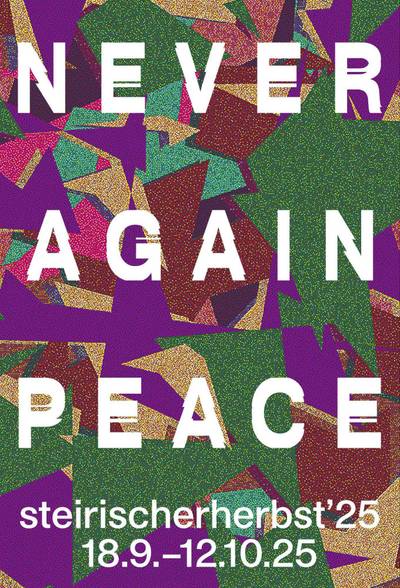
READIn several works, it was highlighted how past decisions and political deals still affect the present, or how long ago a political conflict actually started. It presented figures whose legacies could be relevant today or who parallel other dark times, such as the first part of the 20th century. It speculated on the reasons for the rise of the far-right, then and now, but did not really offer any solutions to overcome it.
If Such Future Exists: A Review of ‘steirischer herbst 25’
Is emphasis on historical haunting productive, or does it sidestep confrontation with the present? The review examines how viewing history as a continuum rather than as separate events can provoke and shape anarcho-futuristic scenarios.
-
 READ
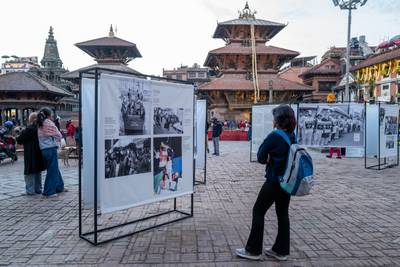
READThe curatorial team brings together international perspectives and local voices, ensuring that global conversations stay rooted in Nepal’s social and cultural context. Each edition invites and celebrates stories from around the world alongside narratives from Nepal’s diverse population across terrains and ethnic identities, centring on that edition’s theme to emphasize that “Kathmandu is the center of the world.”
Amidst Chaos, Comfort and Solidarity: A Review of PhotoKTM, Post Nepal’s Gen-Z Revolution
Just two months after the Gen-Z protests that overthrew the government in Nepal, the Nepal Art Council opened the 6th edition of PhotoKTM. Discussing the history of resistance and solidarity in regions of the global majority, the review examines how these efforts shape the process of reclaiming sovereignty in areas marked by colonialism, exploitation, and violence.
-
 READ
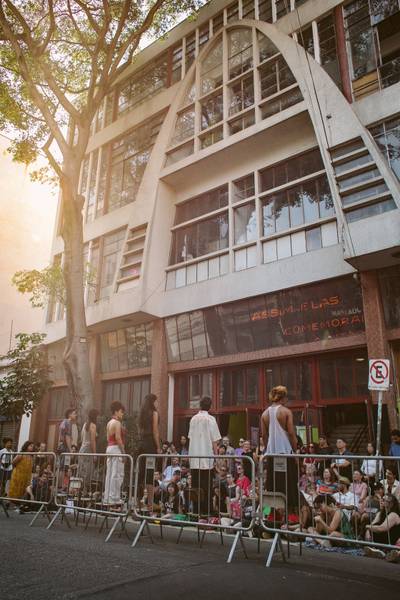
READFounded to preserve the culture of a historically oppressed group, Casa do Povo does not restrict itself to safeguarding Jewish traditions; it welcomes those who approach the house: trans performers in theatre collectives, migrant workers, designers, political activists, and many others. Judaism itself contains multiple currents, being, in a sense, a historically multicultural culture.
Casa do Povo: A Porous Institution
The book Modos de fazer [Ways of Doing] narrates the activities developed between 2013 and 2023 at Casa do Povo, an anti-zionist Jewish space in the center of São Paulo that brings together a Yiddish choir, a collective of trans actresses, boxing classes, political assemblies, and much more.
-
 READ
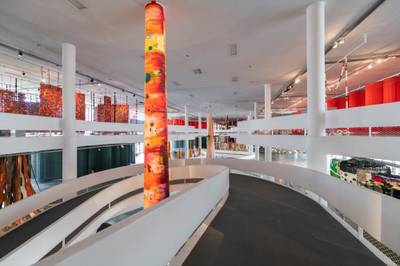
READThe bigger question is whether the 36th São Paulo Bienal — however brave and sincere its proposal — can actually shift what the Bienal is understood to be. Within the Bienal’s history, this edition stands out as predominantly non-white — nationally significant, directly challenging the white dominance of the Brazilian art world. Yet the Bienal could have been more explicit about the fundamental differences between people and the structural inequalities that follow from them; this was a conceptual absence I felt across the exhibited works.
Problematizing Universalism: A Review of The 36th São Paulo Bienal
The 36th São Paulo Bienal challenged the conventional white cube and the dominance of whiteness in bienials, demonstrating that globality can be conceived from non-Western perspective. However, rather than fundamentally challenging the hegemony of the biennial format or reconfiguring its existing logic, it raised a central problem of mega-scale exhibitions: universalism.
-
 READ
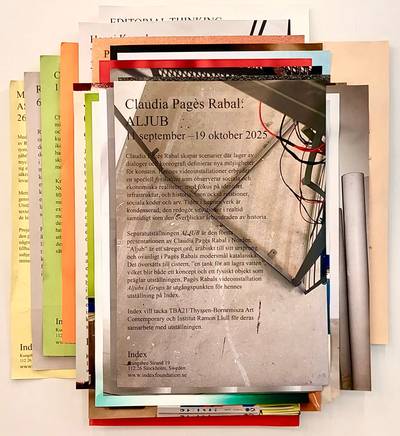
READALJUB is a thoughtful and enjoyable provocation, bringing together sensorial pleasure and a space for the expansion of critical thought. In doing so, it also projects onto broader conversations about the politics of language, its evolution and uses, and how colonial power shapes it in its own favour – how narratives are structured to legitimise specific histories while erasing others.
(Hi)story of Lies: A Review of Claudia Pagès Rabal’s ‘ALJUB’
ALJUB, presented at Index, probes how language, paper, and power flow through History much like water, quietly shaping, dividing, and legitimising. This review also considers how Index’s curatorial approach and institutional framework support politically engaged projects, reflecting on the role of critical thinking within independent art institutions and the critical outcomes that can emerge from sustained collaboration between artists and curators.
-
 READ
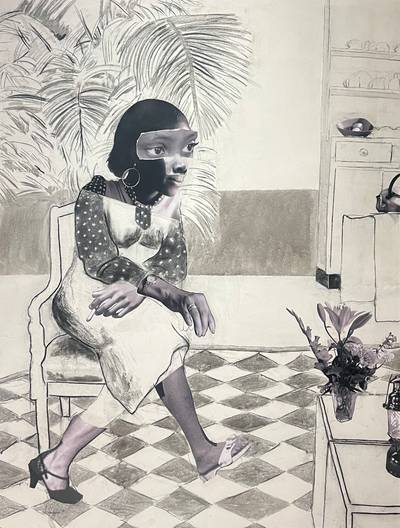
READThe struggle and violence that When We See Us attempts to circumvent is not self-inflicted. The exhibition as a format presents liberal humanism’s trajectory, highlighting how it is, at its foundation, a vehicle for a particular genre of being. To highlight joy through liberal humanist grammars contributes to this trajectory. In times of concurrent genocides, in an effort to interrupt liberal humanism, it would be more honest to acknowledge and take a critical position against it.
Black Joy™ in the White Cube: A Review of ‘When We See Us’
Bringing over a hundred years of Black portraiture into view, the exhibition’s tonal optimism about Black self-representation belies the complex histories of race, power, and visibility it mobilises. What does it mean to celebrate “Black joy” within the architecture of liberal humanism and under the shadow of corporate complicity?
-
 READ
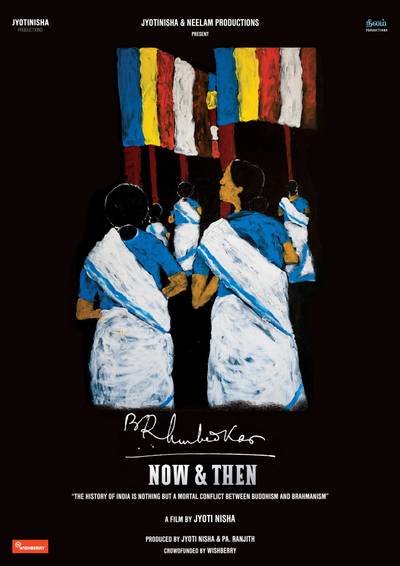
READBahujan narratives in media and popular culture are invariably mitigated through a savarna gaze that disregards Bahujans as people with agency, complexity, and vibrant histories of resistance. In such a milieu, Jyoti Nisha undertakes the immense and multifaceted task of unpacking the historical denial of Bahujan stories in media and popular culture, interrogating how history and mythology collude with contemporary violence.
Futures Held Together by Memory: A Review of Jyoti Nisha’s ‘Dr. B. R. Ambedkar, Now and Then’
Jyoti Nisha’s feature-length homage is a compelling love letter to the Ambedkarite-Bahujan community. It is an act of care, archiving, and resistance, preserving intergenerational stories of anti-caste struggle, both historical and contemporary.
-
 READ
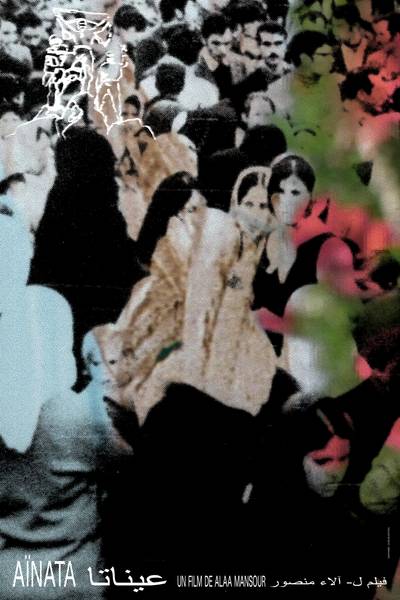
READAïnata (2018), shot in South Lebanon, is the debut documentary by the Lebanese research-based artist and filmmaker, Alaa Mansour. The memories being reconstituted in the film are those of Aïnata, a town in South Lebanon nestled within olive and tobacco farms, plagued for decades by Israeli occupation and violence.
Memory and the Fractured Image: A Review of Alaa Mansour’s ‘Aïnata’
In her review, Shams Hanieh explores how Alaa Mansour’s film Aïnata (2018) uses visual fragmentation and reconstruction to more truthfully represent memory under colonial violence. When our world and histories feel so distorted, what other form could their representation take?