
Interviews
-
 READ
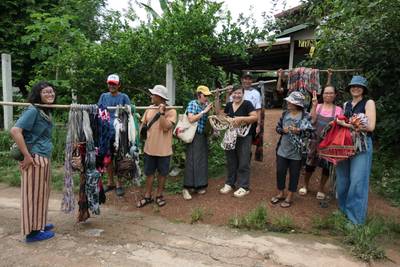
READWomanifesto gatherings and projects have always been inherently socially, politically, and culturally embedded, responding to events and changes without pigeonholing them. It is, in a way, a form of resistance: finding a way to keep gathering, creating, documenting, and putting work out there, even when external forces make it harder.
“There Is No One Way”: The Womanifesto Perspective
In this conversation, Womanifesto members recount the collective’s socially and politically embedded practices, discussing its philosophy and commitment to maintaining autonomy while focusing on friendship, care, and connection.
-
 READ
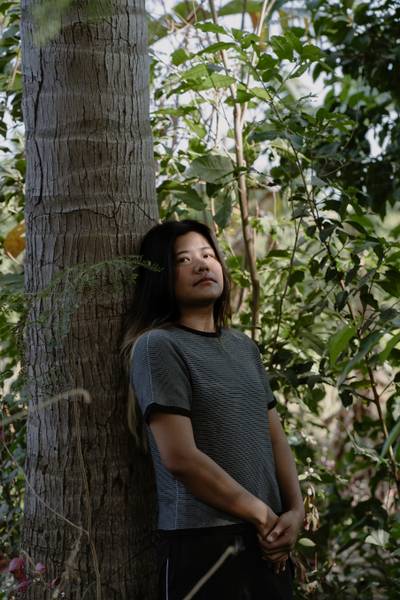
READWar always takes away people’s everyday lives. That loss remains. Over time, my work has become more focused on the experience of losing family members through war and remembering who they were through personal stories, loss, love, and my desire to comfort both those who are gone and those who are still here.
Present Through What Is No Longer There: An Interview with Marisa Srijunpleang
Thai-born multidisciplinary artist Marisa Srijunpleang talks to Fahmui Pimpakaporn Pornpeng about her practice, which explores family memories connected to the Cambodian genocide and eventually leads her to question her identity as a descendant who grew up with questions about borders and how they are drawn.
-
 READ
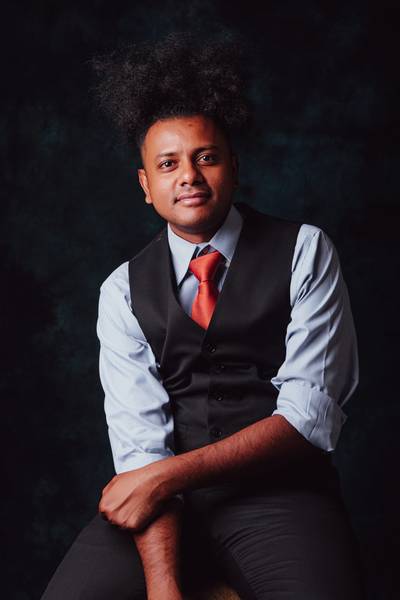
READCaste is a practice of othering without announcing the “other”. It doesn’t create ‘othering’ in the same way as religion, race or gender; it uses different forms of distinction and differentiation. Hence, it cannot be footnoted as a structure without an elaborate explanation. The unique legacy of the caste system is that it is hardwired into society.
Speaking Between the Silences: An Interview with Suraj Milind Yengde
On the occasion of the launch of Suraj Milind Yengde’s latest book, Caste: A Global Story, in Helsinki in December 2025, Ali Akbar Mehta interviewed him, discussing questions of individual action, political failure, colonial legacy, and the responsibility of the diaspora in how the anti-caste struggle must be centred, named, and made the agenda for actual change.
-
 READ
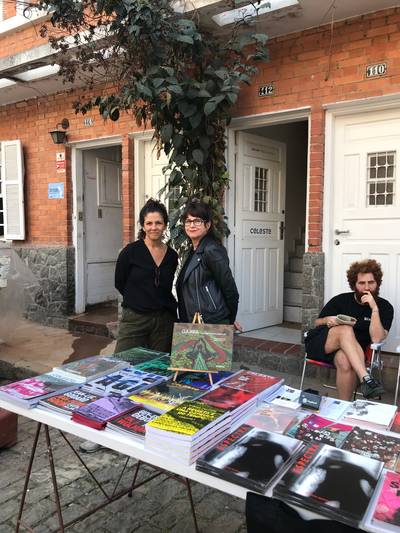
READThe cultural periodical is a means of collectively organizing ideas, of practicing and cultivating political and artistic education, and of intervening in concrete situations. None of this is possible without duration, continuity, and organization. Paradoxically, the conditions for duration and continuity in artistic and editorial activity are virtually unviable within a neoliberal context marked by the precarization of artistic labor and the fragility of public cultural policies.
Acrobatic Skills: 15 Years of Celeste
This conversation between editor Paula Alzugaray and special reporter and art critic Juliana Monachesi offers a fragment of the history of a Brazilian art magazine that could be likened to a trench—or to an urban guerrilla.
-
 READ
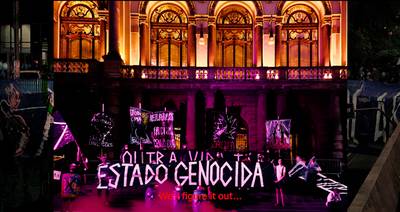
READThe rules of the game. Considering that declared theft produces a fracture in the very concept of authorship, and that the procedure of copying is central to Dora Longo Bahia’s practice, this is an interview in which both questions and answers are composed of modified, copied, or plagiarized texts—drawn from articles, lectures, and texts from videos and films—just as the artist, in fact, operates in her own work.
The Writing of a Manifesto of Political Imagination: An Interview with Dora Longo Bahia
Artist Dora Longo Bahia and critic Paula Alzugaray return to their Manifesto of Political Imagination through an interview where every question and answer is plagiarized, and the theft is the point. What does it mean to make art politically — not political art, but art made politically — when fascism is again at the door?
-
 READ
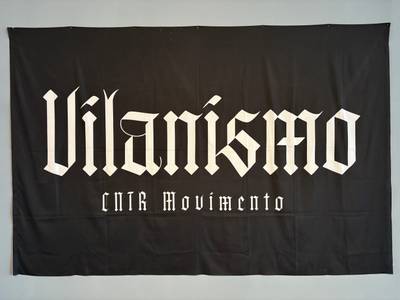
READEveryone in Vilanismo is someone I met and grew close to within the contemporary art circuit. Some even earlier, through graffiti, like Robson, or São Paulo’s pixação scene. The idea was to understand how their practices could move forward collectively, while also allowing me to be part of that vehicle, amplifying one another. So the starting point was affection and mutual admiration.
Vilanismo: An Ethics of Care and a Philosophical Framework Emerging from Afro-Paulistano Culture
The Brotherhood of Black and Favela Men in Contemporary Art [Irmandade de Homens Pretos e Favelados Das Artes Contemporâneas] is reshaping and radicalising forms of political engagement across the Brazilian visual arts scene.
-
 READ
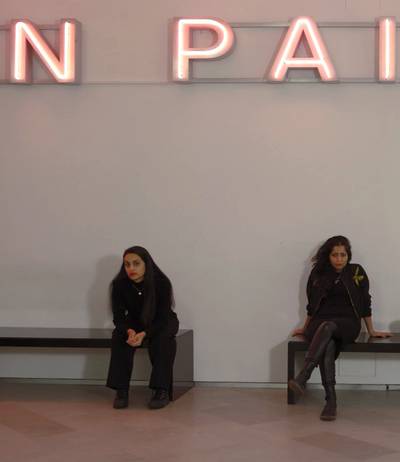
READOppression is not always visible in the Nordics. Many believe they have come far, but it becomes clear who truly faces the systematic stripping of identity. This is especially evident for non-white people. While others assume progress has been made, it is we who reveal that their successes are often an illusion.
A True Artistic Sisterhood: A Conversation Between Saadia Hussain & Nayab Noor Ikram
What does it mean to create from in-between worlds? In this intimate conversation, Saadia Hussain and Nayab Noor Ikram reflect on artistic freedom, intergenerational sisterhood, and the search for belonging. Drawing on their Nordic roots and Pakistani heritage, they reveal how art becomes both personal and political.
-
 READ
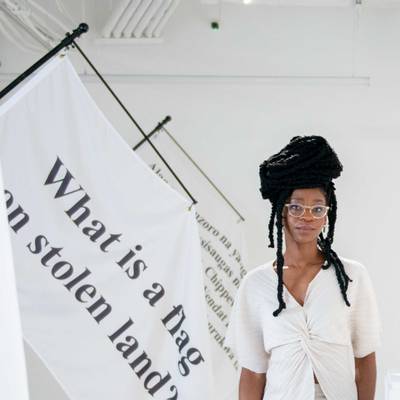
READColonial narratives, however, warped these histories, fetishizing these women, printing their images on postcards, and erasing the real story. I’m interested in uncovering these histories of ingenuity and resilience, how Black and Indigenous peoples made something out of nothing—and connecting them to the present. My work asks, what can we learn from these acts, and how might they shape the way we engage with each other today?
Revealing a Quiet Slip in the Archive: An Interview with Kosisochukwu Nnebe
In a conversation with Golrokh Nafisi, Kosisochukwu Nnebe speaks of how she transforms food into living archives, tracing Indigenous and African knowledge through cassava and bananas, uncovering histories of resilience, resistance, and Black women’s ingenuity.
-
 READ
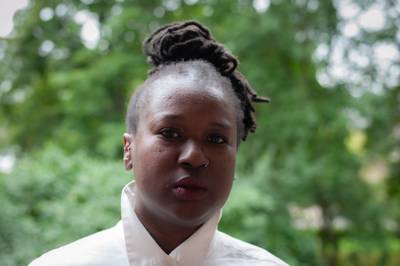
READSimply using the material is an act of resilience – it asserts that bark cloth still holds significance for Ugandans today. In Uganda, I purchased a large quantity of it and visited the farmers who cultivate and care for the mutuba trees. This is generational work—many of these trees were planted by their fathers, their grandfathers, and even further back.
Migration and the Politics of Belonging: An Interview with Sarah Nakiito
Ugandan-Swedish artist Sarah Nakiito discusses the evolution of her artistic practice, shaped by migration, the pandemic, and shifting notions of home. In this conversation, she reflects on her use of indigenous materials, the intersections of Swedish and Ugandan craft traditions, and the emotional weight of diasporic identity in her work.
-
 READ
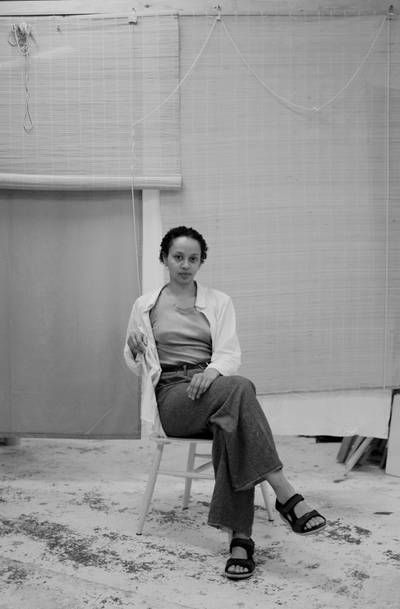
READWhen a state is under attack and must defend itself, national identity becomes much clearer and more urgent. In contrast, in Finland, where we are not currently experiencing an immediate crisis, it is easier to question the role and necessity of national identity from such a privileged position. I’ve been reflecting on this in relation to places like Palestine and Ukraine, where national identity is deeply tied to survival and resistance.
The Shifting Grounds of National Identity: An Interview with Liisa-Irmelen Liwata
Liisa-Irmelen Liwata explores the intersections of body, land, and national identity through her art. In this conversation, she reflects on Finnishness, heritage, and the material transformations that shape her work, questioning both physical and conceptual borders along the way.
-
 READ
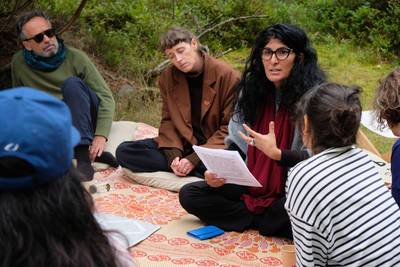
READThis interview grows out of that ongoing process of working, thinking, and speaking together. While it takes the form of questions and answers on the page, in reality, it unfolded as a dialogue: her narratives of Palestine, her frameworks of hospitality and self-determination, and her reflections on Sweden intertwined with my own questions, concerns, and the shared struggles I see myself as part of.
Commoning Private Space: An Interview with Sandi Hilal
Palestinian architect, artist, and educator, Sandi Hilal, reflects on hospitality as a political practice, showing how private spaces – from living rooms to summer houses – can become sites of agency and collective self-determination.
-
 READ
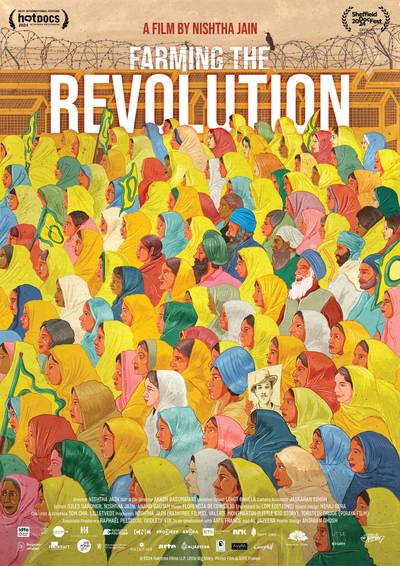
READIn her most recent work, Inquilab Di Kheti (Farming the Revolution, 2024), which is also her most ambitious, Nishtha traces the year-long farmers movement (2020-21) against the three unjust farm laws announced by the Indian Government in June 2020. Nishtha’s film opens up the everyday textures and rhythms of this massive and ultimately successful movement.
Cultivating Resistance: An Interview with Nishtha Jain
Ananya Parikh, a professor at the Symbiosis School for Liberal Arts, interviews India’s leading documentary filmmaker, Nishtha Jain, on her documentary Inquilab Di Kheti and the cinematic language of revolution.