
Interviews
-
 READ
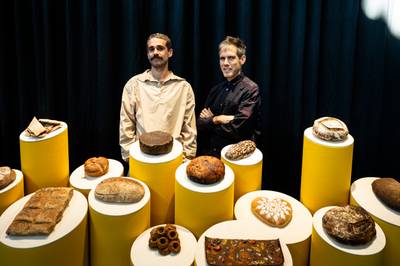
READCooking Sections’ recent visit to Finland was centred around the IHME Helsinki Commission 2024 Maaleipä Challenge, which invited home bakers, bakeries, restaurants, schools, and communities in Finland to create bread recipes that combine the well-being of land, water and people’s guts. Cooking Sections’ projects use food as a medium to question global food production and also confront the inequities within food systems. The core of their modus operandi is gathering the latest scientific knowledge by meeting researchers and experienced experts.
Rethinking (Climate) Security Through Food: An Interview with Cooking Sections
Ines Montalvao talks to Cooking Sections about the impact of linking food to broader definitions of security and resilience through projects that challenge global food systems and engage local ecologies and communities to inspire change.
-
 READ
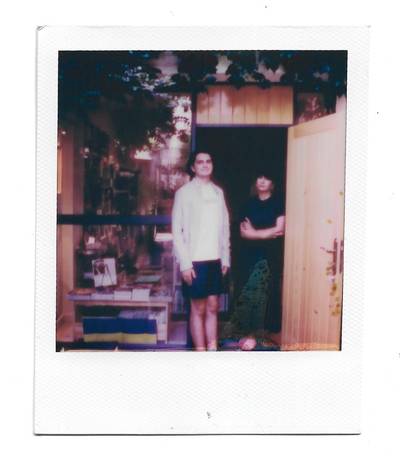
READFinally, someone was addressing the complicated questions around contemporary ‘Eastern Europeanness’ and what often felt like a misrepresentation, misunderstanding or complete omission of the region and its identity in the ‘Western’ discourse. Through Kajet – a Journal of Eastern European encounters – Laura and Petrică offer a space for speculative reformulation of Eastern European identities, narratives and imaginaries, as an attempt towards what they call ‘a representation without purity’.
The Futures That Never Came Into Being: An Interview with Kajet Journal Editors
Martina Šerešová in conversation with Kajet journal editors Petrică Mogoș and Laura Naum on re-contextualising the region of Eastern Europe and the generative potential of time, complexity and utopian thinking.
-
 READ
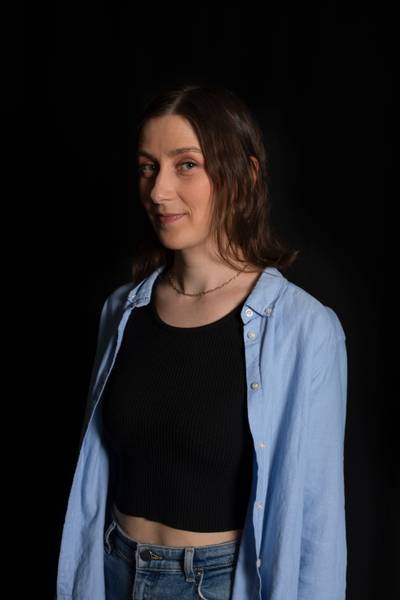
READWhen experienced as an uninterrupted single-channel projection, they collectively transformed into a poetry book bound within a single cover. This collection of poetic videos invites the viewer to explore the delicate interplay between emotion and intellect, where the vastness of the sea becomes a metaphor for unspoken, uncontrollable desires—touching on themes of solitude, longing, and the deep connection between women and the sea. Observing these elements, I became eager to learn about the background and thought processes behind this work to better understand the emotional and conceptual depth of Nastja’s creative process.
On Personal and Imaginative Narratives Set at Sea: An Interview with Nastja Säde Rönkkö
Eveliina Tuulonen interviews Nastja Säde Rönkkö, an artist working with video, performance, installation, and text, on the sea’s mythic resonance, and about the processes and fascinations behind a project.
-
 READ
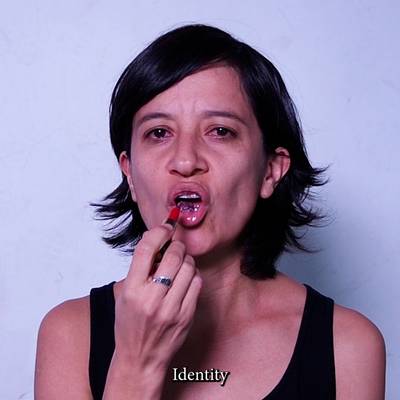
READPerformance is a space for something else. I am interested in what can turn around words and enter through different senses without a rational filter. I believe we have less protection for gestures and less digestive capacity for actions. In that way, performance can creep into the audience through the rational walls, perhaps affecting the spectator in other ways.
Looking for the In-between: An Interview with Diana Soria Hernandez
Lois Armas interviews Diana Soria Hernandez on the nature of the spaces created in her performance art, her artistic processes over the years, and her need for exploring through performing what cannot be put into words.
-
 READ
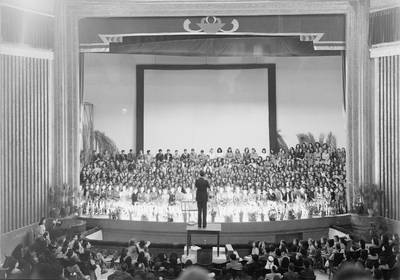
READA 15-year long project researching Arabic music in historic Palestine has unearthed many stories, records and musicians that have been lost, forgotten and suppressed after the Nakba. Headed by Nader Jalal, the Ramallah-based institute Nawa has not only collected this history, but brought it to a new life by organising concerts and recording albums.
Exploring Palestine’s Musical Heritage Before 1948: An interview with Nader Jalal
A 15-year long project researching Arabic music in historic Palestine has unearthed many stories, records and musicians that have been lost, forgotten and suppressed after the Nakba. Headed by Nader Jalal, the Ramallah-based institute Nawa has not only collected this history, but brought it to a new life by organising concerts and recording albums.
-
 READ
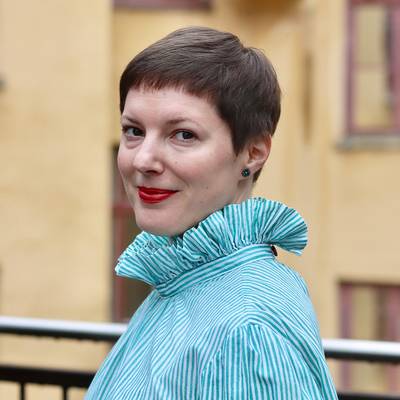
READI met Anna Möttölä in early April, not long after she finished her seven-year term working as the executive director of L&A. Before that, I had mainly seen her introduce some of the films at the festival or lead some of the Q&As with filmmakers. In all that, something that shined through so clearly was how much she loves cinema and that, for her, this is not merely another job. I admire this quality, as I find it quite rare these days in people with higher institutional positions. Among the many things we discussed were what this job meant to her, the decision to leave it, the challenges and learning curves of the job, L&A as a political institution, and the struggles of running a festival in times of austerity.
Directing Helsinki’s Beloved Film Festival: An Interview with Anna Möttölä
A conversation with Anna Möttölä on the occasion of her finishing a seven-year term as Helsinki International Film Festival: Love & Anarchy’s executive director.
-
 READ
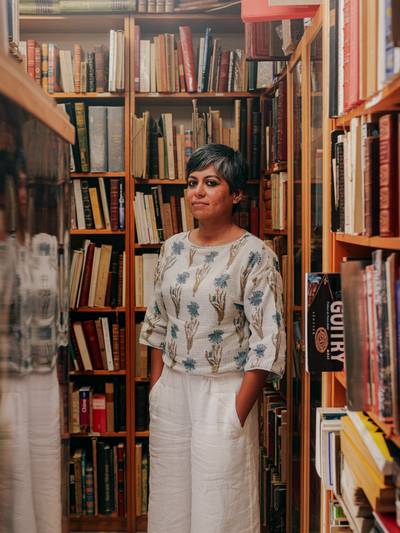
READChallenging the notion of the singularity of meaning and traversing the zones of fidelity and accuracy of an image, Tanvi Mishra switched to image-making after pursuing an economics degree, realising that the issues that interested her in the social sciences, like policy-making and social justice, were more imaginatively possible through image-making. Our conversation follows her keynote titled Translational / Transnational : world-building beyond bordered identities for the Out of the Metropolis seminar Artists and Curators Working Together: How and With Whom? organised at The Finnish Museum of Photography in mid-February.
Disrupting Rhetoric, Defining Tenor: An Interview with Tanvi Mishra
NO NIIN’s co-editor Vidha Saumya interviews curator, photo editor, writer and occasional educator Tanvi Mishra about the role of images, how photography speaks beyond temporal and spatial locations, and how a practice’s genealogy can be framed.
-
 READ
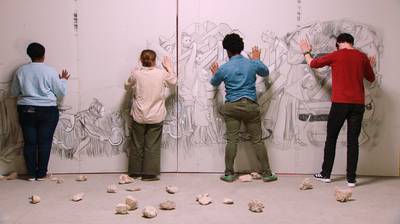
READOn social change, collective processes and radical pedagogy, with pandemics as a backdrop.
These Conditions (Are Only Worsening): An Interview with Adelita Husni-Bey
On social change, collective processes and radical pedagogy, with pandemics as a backdrop.
-
 READ
READSometimes it feels like the system is designed for you to fail. It seemed that the only way to understand and interact with this system was by gathering as much information as possible from those in similar situations. So our peer group became a place where we could all get together and share our collective knowledge on how to deal with residence permits and other immigration processes as artists, art students, and arts workers.
A Shared Responsibility: Mutual Support and Allyship Amongst non-eu/eea Art Professionals
A conversation about networks, support, and transnational alliances in the context of hostile policies that non-eu artists and art workers face in Finland and Norway.
-
 READ
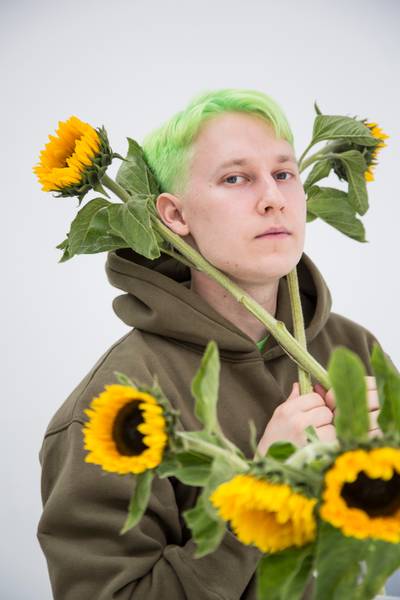
READAnd isn’t this something that we keep saying, that we are tired of discussing these very rudimentary questions about what is and what isn’t queer? We can go back and forth, we can ask presidential candidates what they think, and we might get some answers, but those answers are really not all that intriguing to us. I think we already know what we are!
Interior Designs, Drains, Poetic Approaches: An Interview with Artor Jesus Inkerö
On pushing queer agenda forward in some way or bringing something new to it.
-
 READ
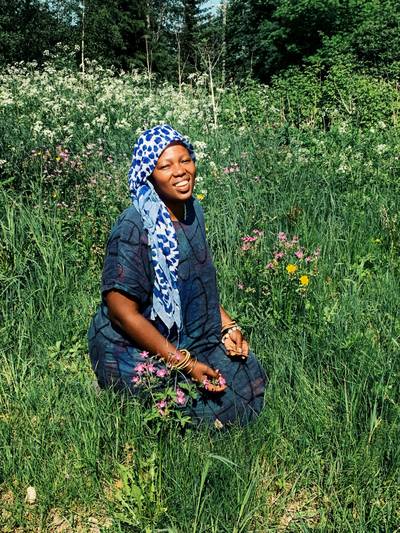
READBetween Mud, Matter and Mother: A Conversation with Dineo Seshee Bopape
In a conversation with Lotta Petronella, Dineo Seshee Bopape explores the meeting point of ancient and future, highlighting the connection between mud, matter, and motherhood—a reminder to recharge, resist, and dream.
-
 READ
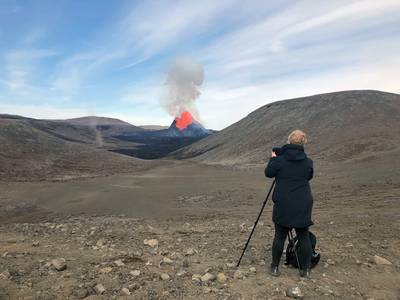
READI see returning themes, such as the fragility of our lives, cycles of growth and death, and the destructive and nourishing power of time. I’ve moved from filming organic materials, rotting plants and blooming flowers to more complex matters, such as architectural structures, buildings with historical significance and buried meanings. Even if they seem far apart at first glance, these works circle the same topics: memory, oblivion, change, collapse, and growth.
To Carve A Tunnel Through Yourself: A Conversation with Saara Ekström
Artist Saara Ekström talks to Taru Elfving about her longterm enquiries into the intimate connections and irreducible differences between bodies, temporalities and cycles of change.